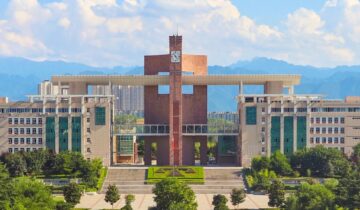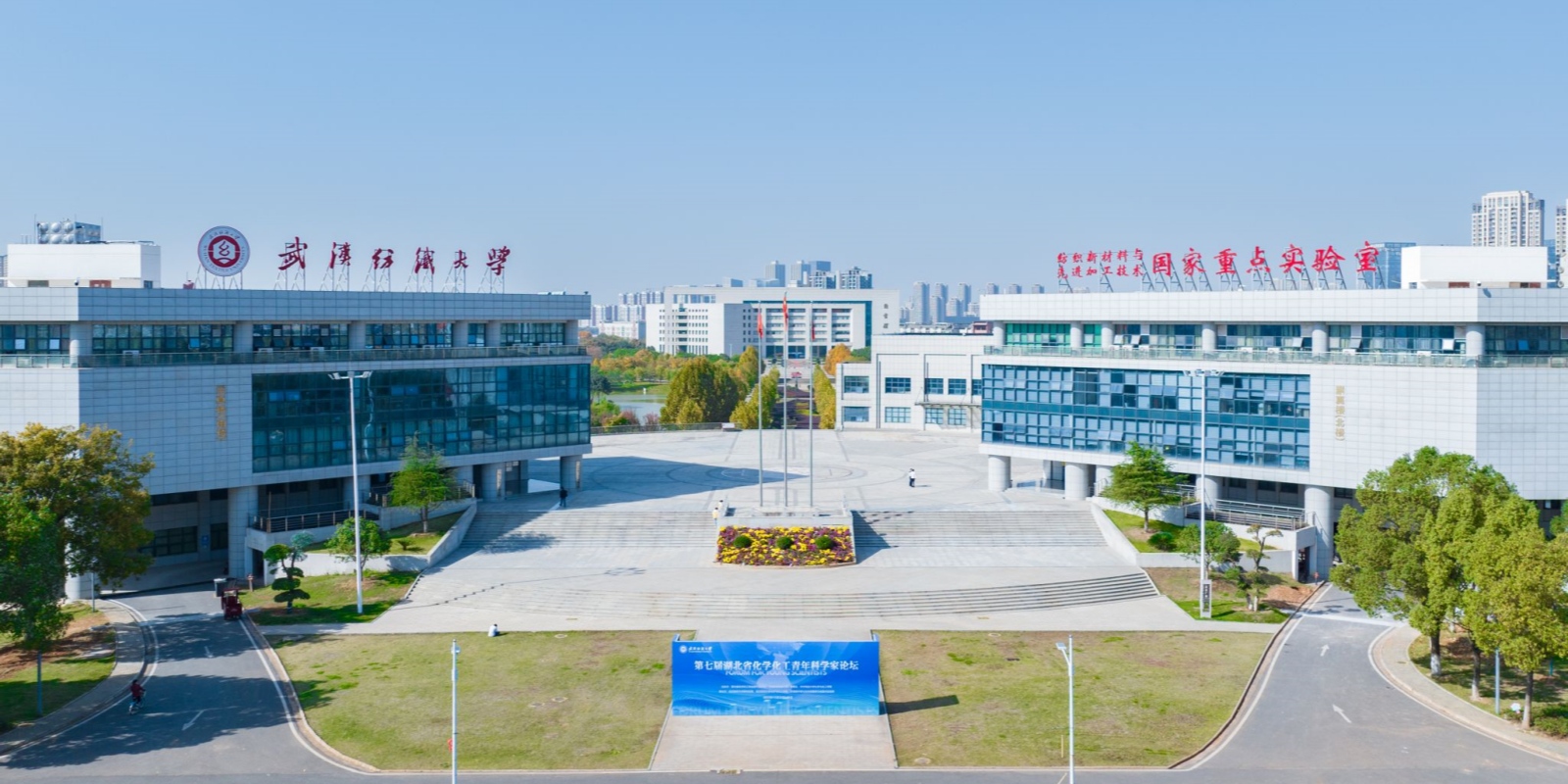
In 1999, the school now known as Wuhan Textile University decided it no longer wanted to sound like a textile school, and dropped the word from its name. Eleven years later, it put it back. The return was not nostalgia: by then the university’s fashion and fiber programs were its strongest claim to fame, and the old word had come to look like an asset rather than a liability. The name, the school had learned, was the honest one.
The institution began in 1958 as Wuhan Institute of Textile Engineering, created to supply engineers to a country rebuilding its light industry. Renamed Wuhan University of Science and Engineering in 1999, after absorbing a foreign-trade school and a college of finance and economics, it took its present name in 2010. The brief detour through a generic “science and engineering” identity is now remembered as a detour: the university’s motto, “striving for truth and perfection,” speaks to craft, and its reputation rests on the discipline that never left.
That discipline, textile science and engineering, sits at the top of the ShanghaiRanking subject table for China and ranks second worldwide, with materials science, chemistry, and engineering also in the ESI global top 1 percent. As lead institution, the university runs a national key laboratory for new textile materials and advanced processing technology. Two doctoral programs and 16 master’s programs in first-class disciplines support 68 undergraduate majors, 17 of them national first-class.
The fashion side is equally serious. The university is counted among China’s ten most prestigious fashion schools, and its Birmingham Institute of Fashion and Creative Art, the first Sino-foreign undergraduate institution in Hubei, trains designers with a British partner university. Its students have won national challenge-cup awards 32 times, including two grand prizes, and the broader student body has grown to nearly 27,000 across 22 schools and colleges, taught by more than 1,600 full-time faculty, including three academicians, one of them cultivated at the university itself.
Internationally, Wuhan Textile University was the first mainland Chinese member of AUTEX, the European association of textile universities; it has trained 500-plus international students from 64 countries and, under a commerce-ministry program, has run 115 training sessions for about 3,200 government officials and technicians from close to 100 countries. Employment among its graduates has held above 94 percent.
The research record is a quiet accumulation of national honors — one first prize and three second prizes in the National Science and Technology Progress Awards, two second prizes in the National Technological Invention Awards — built around fibers, dyes, and garment manufacturing. From a 1958 engineering institute to a university that wears its craft in its name, Wuhan Textile University has done what few schools manage: it spent eleven years trying on a blander identity, then came home to the discipline that made it, and never looked back.
Data Source: WTU Official Website (as of 2026)