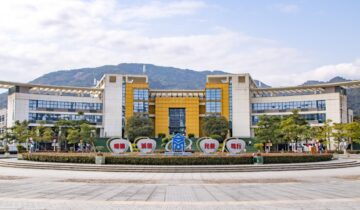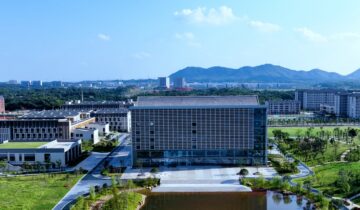
In 1941, deep in the revolutionary base of Yan’an, a small college opened with a simple purpose: to train cadres from China’s ethnic minorities. That college grew into South-Central Minzu University, which today runs a comprehensive campus on the shore of South Lake in Wuhan, directly under China’s National Ethnic Affairs Commission and jointly supported by the Ministry of Education and the provincial government. Between its Yan’an founding and its present home lie eight decades of moving, renaming, and reinventing.
The university reached Wuhan in 1951, when a branch of the central ethnic college system was established on the city’s southern edge. It developed into a college for ethnic nationalities and took its current name in 2002. Along the way it has educated more than 200,000 graduates, many of them working in the ethnic regions of central and western China.
Academically, the university’s calling card is ethnology, the only discipline in its field rated A-class in the Ministry of Education’s evaluations. Around that core sit six doctoral programs, 26 academic master’s programs, and 26 professional master’s programs spanning 12 fields, from history and law to chemistry and pharmacy. Seven subjects, including chemistry, engineering, and materials science, rank in the world’s top 1 percent of the ESI database.
The student body is a map of China in miniature: more than 30,000 students drawn from all 56 officially recognized ethnic groups. That diversity is not decoration. The campus has been named a national model for ethnic unity and progress, and its research centers, including a national base for studying the sense of community for the Chinese nation, work directly on the questions that diversity raises.
Research output has grown with the university’s ambitions. In the past five years SCMU has taken on nearly 300 national-level projects, published 3,000-plus high-quality papers, and registered 748 patents, with a second prize of the National Technology Invention Award won in 2024. Both editions of its university journal sit in China’s core journal indexes.
The university’s network reaches across the country and beyond. It belongs to alliances of Chinese universities, including the Yangtze-Volga group, and cooperates with over 70 overseas universities. Closer to home, it runs long-term partnerships with ethnic regions from the Wuling Mountains to the Guangxi borderlands, sending teachers, students, and research capacity where they are needed most.
From a Yan’an classroom to a Wuhan lakeside campus, the mission has not changed: serve the country’s ethnic communities, and educate the people who will serve them next. The name has changed twice; the purpose has not moved.
Data Source: SCMU Official Website (as of 2026)