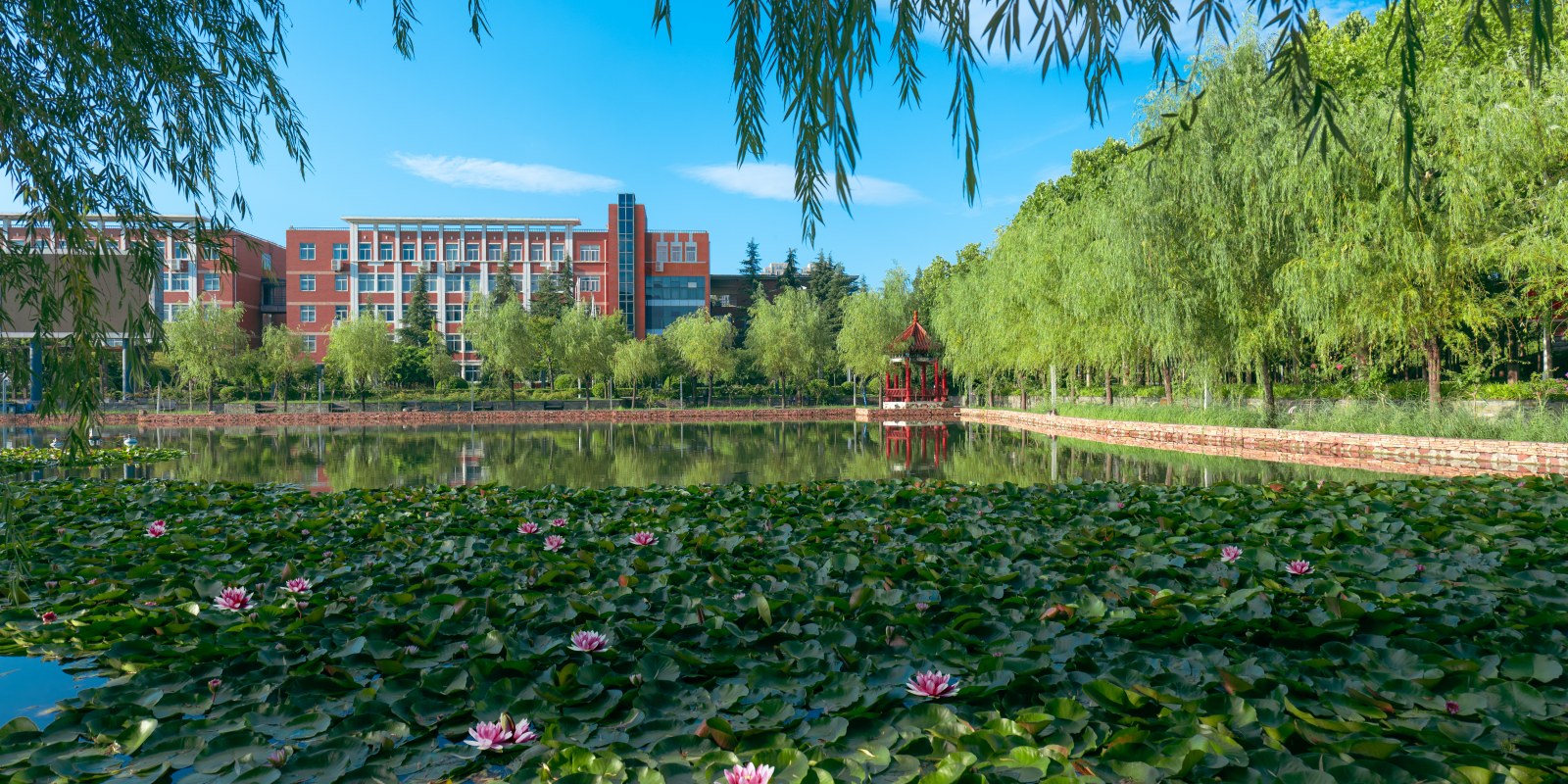
Zhengzhou University of Technology is a young university built on a simple idea: make the curriculum follow the city’s industries. Its laboratories track Zhengzhou’s automotive and electronics sectors, its research centers sit beside the province’s food and new-materials firms, and its newest campus is planned for the city’s airport economy zone.
The school’s roots are older than its name. It began as Zhongzhou University, and the old name on campus, inscribed by Chen Yun, a senior Chinese leader of the era, is a reminder of its standing. What did not change was the applied mission: the university describes its path as two transitions, from a specialist college to an undergraduate university and from a comprehensive school to an applied one.
Today six discipline groups cover 32 undergraduate and 33 vocational programs. Three programs, electronic information engineering, special education and intelligent science and technology, hold provincial first-class status, and 256 labs and 140 training bases anchor hands-on teaching, including three national-level training bases. A faculty of 1,184, with more than 700 full-time teachers, keeps classes small and industry-connected.
Research follows the same logic. Thirty-five platforms include a Henan engineering laboratory for electric-vehicle battery network technology, a provincial big-data maker base, and a postdoctoral innovation practice base, and two provincial engineering research centers work with firms in food, new energy vehicles, electronics and new materials. The Zhengzhou Sino-German College, founded in 2018 with Tongji University, links the university to one of China’s leading engineering schools, and partnerships with universities in Canada, Britain, Australia and Russia extend the network abroad.
The university is planning for growth. Four current campuses in Zhengzhou cover about 99 hectares, and a fifth, an airport zone campus of about 167 hectares, will more than double that footprint. For a school whose name changed to carry the word “technology,” the direction is clear: keep the classroom close to the factory floor, and let the city’s next industry write the next chapter.
Data Source: ZZUT Official Website (as of 2021)