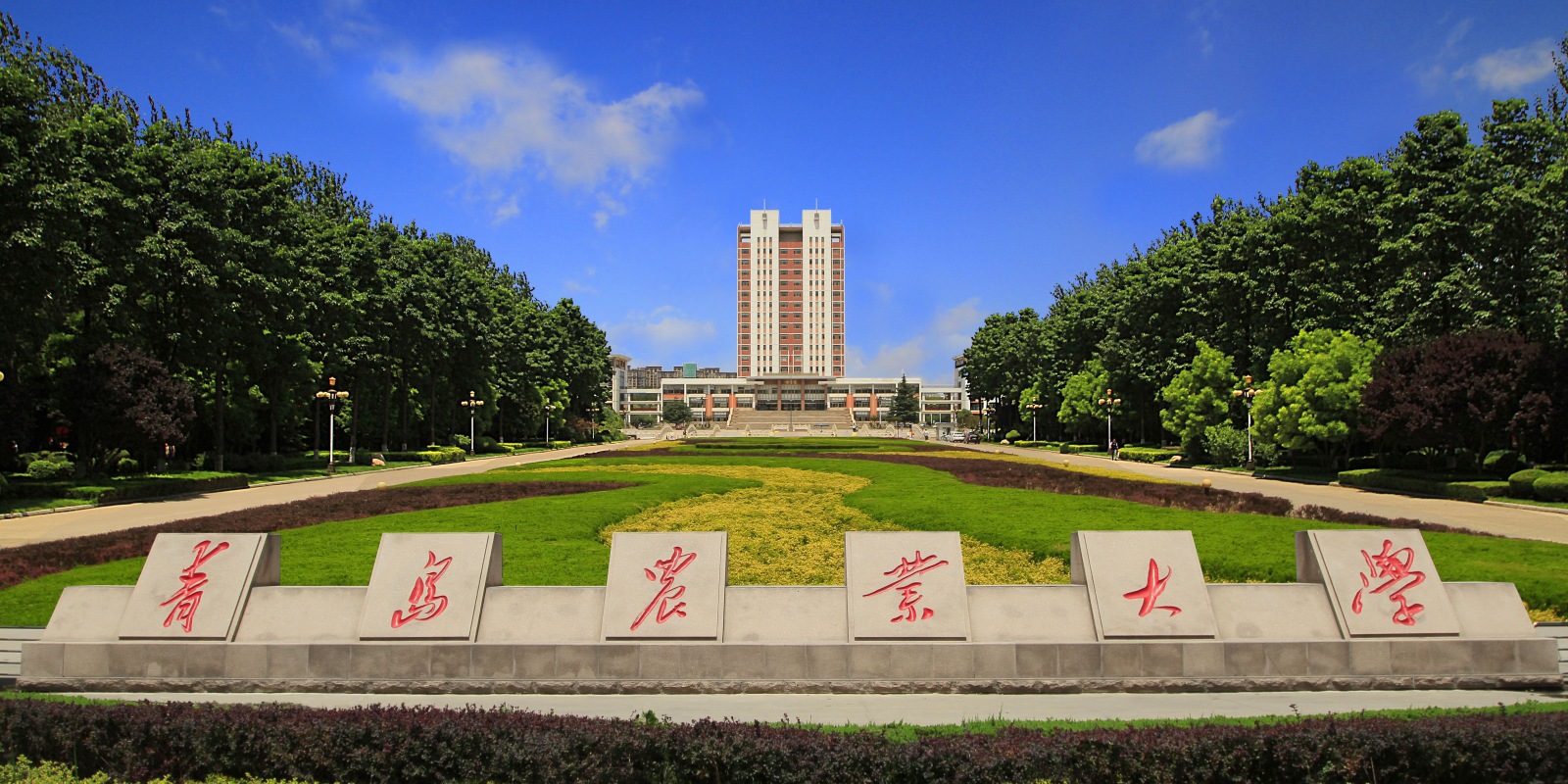
Before hybrid rice made headlines, another Chinese agricultural breakthrough was filling northern granaries: in the 1970s and 1980s, agronomists from this university worked out how to push winter wheat, summer maize and dryland wheat past 7.5 tonnes per hectare and peanuts past 6 tonnes, yields once thought out of reach for northern fields. Qingdao Agricultural University, founded in 1951, has spent seven decades turning lab results into harvests, and its newest frontier is the salty soil of the Yellow River delta.
The academic profile matches a national agricultural heavyweight. Agricultural science sits in the ESI global top 1 per mille, with eight disciplines in the top 1 percent, and aquaculture and agricultural engineering hold provincial high-level status. Four doctoral programs, 15 first-level master’s programs and 85 undergraduate majors run across 26 schools, with 14 national first-class programs and two programs certified through engineering education.
Research follows the region’s hardest problems. The university is a co-builder of the national innovation center for comprehensive utilization of saline-alkali land, hosts a ministry-level agricultural research base for the Yellow River delta, and keeps a ministry observation station for animal diseases in Dongying. Nine national platforms, 40 provincial and ministerial ones and 79 municipal-level centers make up the lab network, and since 1978 the tally of provincial-and-above science awards has reached 253, including 14 national prizes.
The school’s roots reach back to 1951, and its service record is written across the countryside. It runs the first cooperative college in China, has built 62 science-and-technology backyards under a national program, and serves 26 provinces through 12 regional research institutes. Its technology-commissioner model, built on a “1 plus 5” framework, earned the university a rare commendation from the Ministry of Science and Technology as the only university organizer of such teams in Shandong.
International work carries the university’s name across the Shanghai Cooperation Organization. QAU is a Chinese member institution of the SCO University, co-runs the China-UK Sustainable Agriculture Science Park and a China-Uruguay grassland and livestock joint laboratory, and has hosted the SCO poverty-reduction training program for two consecutive years, an event cited in China’s chairmanship achievements. Partnerships span over 100 institutions in 20-plus countries.
The campus network spreads across Qingdao’s Chengyang, Pingdu and Blue Valley districts plus Laiyang, covering about 427 hectares and housing more than 30,000 full-time students. Four foreign academicians and 69 national-level talents lead a faculty that has twice been honored by the province for its talent work. From the 1970s wheat fields to the salt-alkali test plots of today, science still goes where the soil is.
Data Source: QAU Official Website (as of 2026)