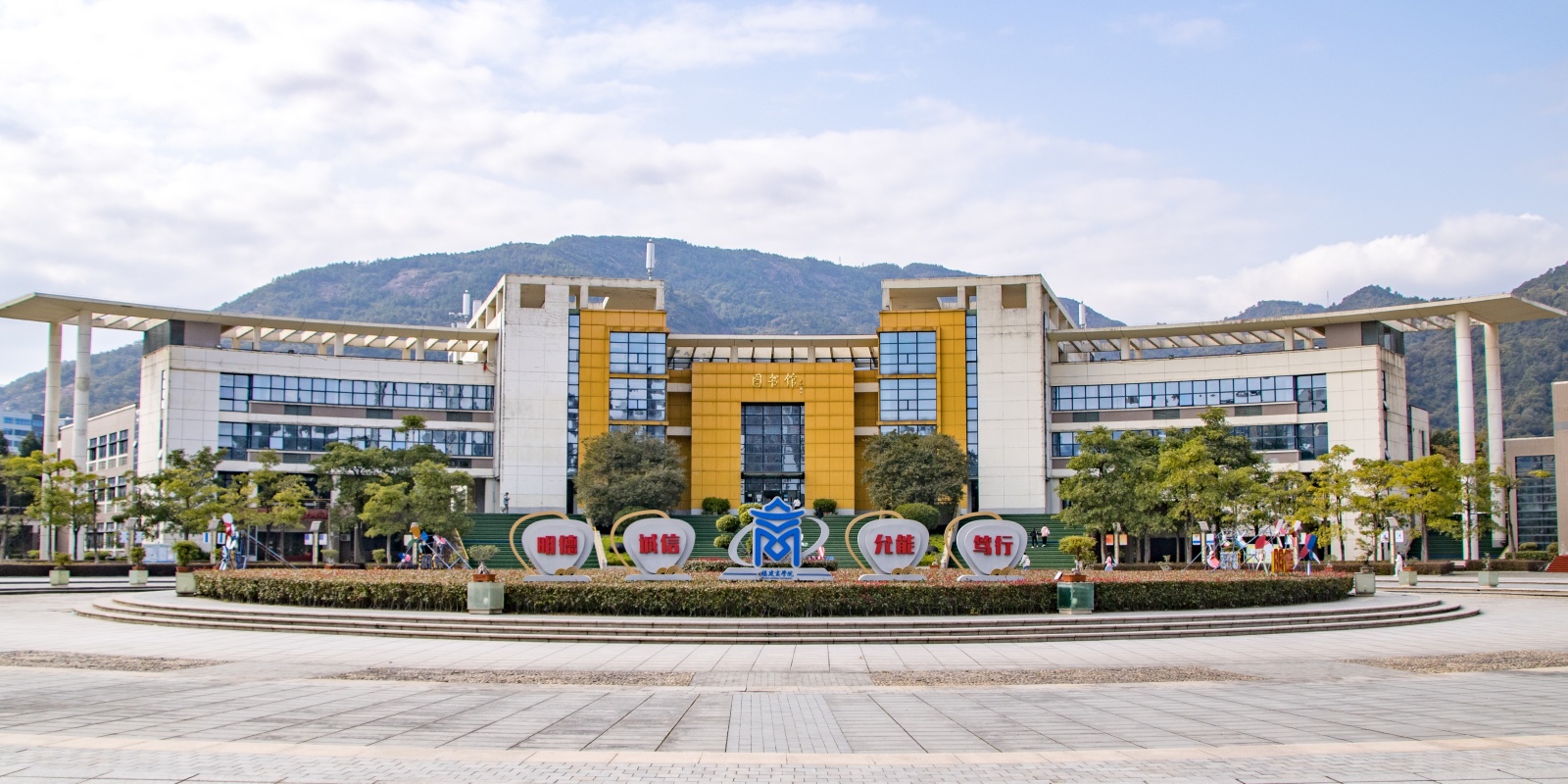
Two institutions founded in 1906 gave Fujian Business University its double heritage: a commercial school opened by Chen Baochen, the late-Qing scholar and imperial tutor, and an academy started by Huang Naishang, an overseas Chinese leader. Out of that pairing grew a school known across the province as the cradle of Min merchants, and later as a cradle of foreign trade.
Fujian Business University took its present form in 2016, when the Ministry of Education approved an upgrade from the Fujian Commercial College, and absorbed the Fujian Foreign Trade and Economic Cooperation Vocational College a year later. Between the 1906 founding and today it has sent 100,000-plus business graduates into commerce and trade, and its two roots, one scholarly and one mercantile, have never fully separated.
Four campuses in Fuzhou cover 1,451 mu, about 97 hectares, where 14 teaching units offer 40 undergraduate programs to 14,418 full-time students. The faculty of 611 full-time teachers includes 286 with senior titles and 571 with doctoral or master’s degrees, and more than half hold dual professional and teaching qualifications. Two applied disciplines anchor the provincial plan, supported by six provincial first-class programs.
Teaching and research run on a modest but steady scale: three national first-class courses, 40 provincial ones, and 18 research platforms. Since 2020 the university has carried out 240 provincial-level research projects, including seven at national level, and its think tank has produced 43 policy reports endorsed by provincial leaders.
Industry ties are the school’s signature: 4 industry colleges link teaching to retail, supply chains, digital commerce and catering, one of them named a provincial modern industry college. Internationally, the university was among the first to enroll students from Papua New Guinea in 2019, now hosts undergraduates from Pacific island, Central Asian and Southeast Asian countries on provincial government scholarships, and runs exchange programs with partners in the United States, Britain and Romania. It also offers a 4+0 bachelor’s program with Yu Da University of Science and Technology in Taiwan.
The university’s graduates have long kept close to the economy: recent annual placement rates stand above 94 percent. From a commercial classroom in 1906 to a business university serving Fujian’s trading networks today, the mission Chen Baochen and Huang Naishang set out has stayed remarkably consistent.
Data Source: FJBU Official Website (as of 2026)