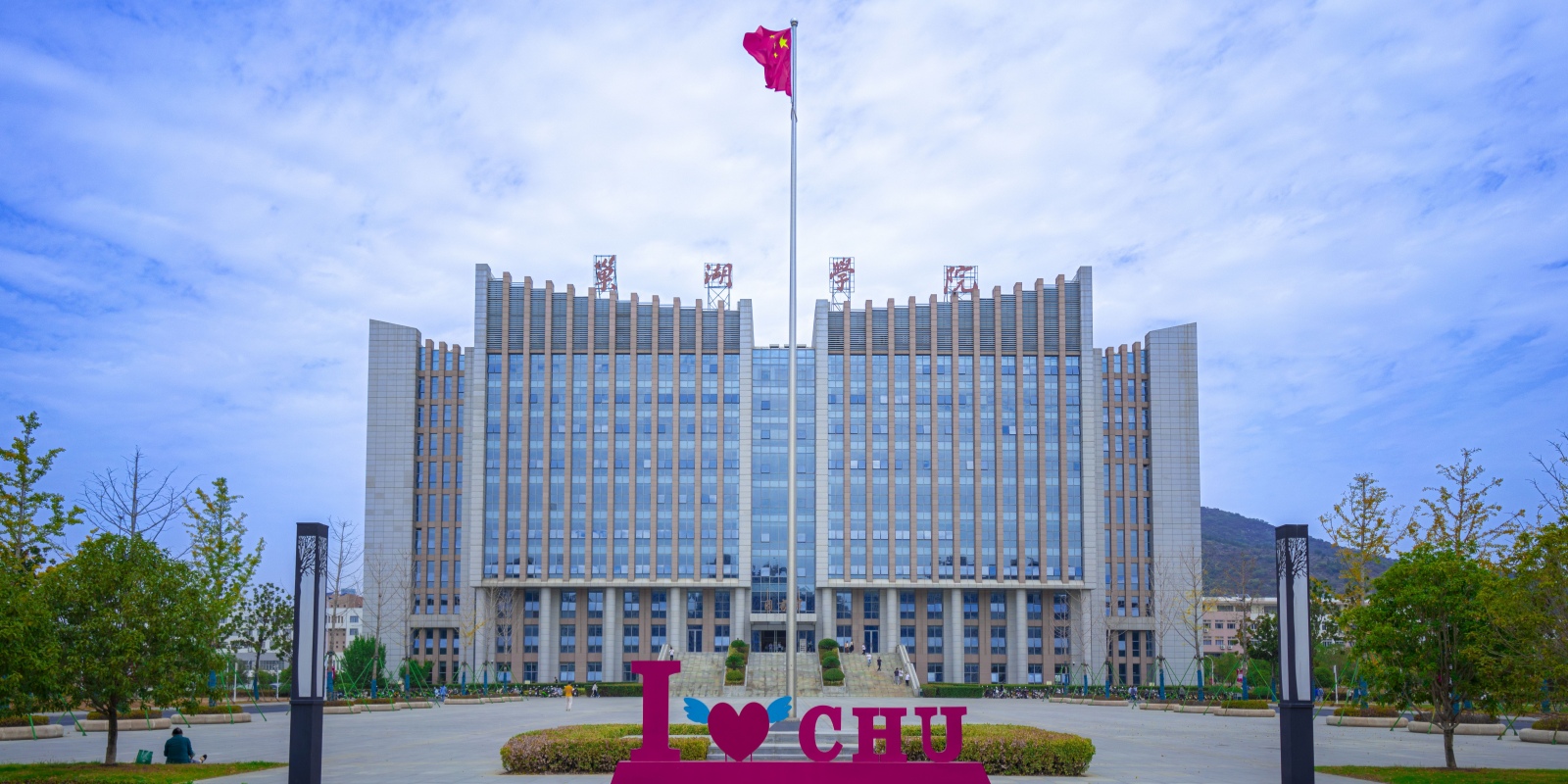
Chaohu University carries a second name on its campus: Anhui Volleyball Academy, a province-wide training base that shares the school’s grounds in the city of Chaohu. The university’s other research subject is the lake itself, one of China’s five largest freshwater lakes, through centers for rural revitalization around its shores and for the culture and economy of the lake region.
The school began in 1977 as a normal college, was elevated to undergraduate status as Chaohu University in 2002, and in 2024 became a key master’s-degree cultivation unit of Anhui. It is building postgraduate programs in electronic information, materials and chemical engineering, and sports.
Fifty-four undergraduate programs, fifteen of them rated national or provincial first-class, serve nearly 17,000 students across fifteen colleges. Materials science and sports science both enter the province’s applied peak-discipline list, and a specialty in the sports industry reflects the school’s unusual athletic bent.
Research orbits the region: five provincial research institutes, a think tank for cultural and sports industry, and a key laboratory for new photoelectric systems, alongside the lake-focused centers. Forty national projects and more than 530 provincial ones have been completed, and 1,400-plus industry agreements have brought in nearly 230 million yuan. The teaching side is backed by 200 invention patents and 66 national and provincial teaching awards.
Volleyball leads the sporting identity, with a provincial volleyball college and a training base for the traditional sports of ethnic minorities. The faculty of 1,253, including more than a hundred postgraduate supervisors, teaches 80,000-plus alumni across the years, and the school’s exchange network reaches 18 institutions in countries from Ireland to Korea, including a 3-plus-1 hotel management program with a university in Ireland.
What does a university do with a lake and a volleyball net? Chaohu University teaches its students to win at sports and to care for the water that gave the city its name, an identity built since a normal college of 1977 became a master’s-track university of 2024.
Data Source: CHU Official Website (as of 2026)