Hefei Institute of Technology reads like a list of industries before it reads like a university: its colleges are named for AI vehicles, new energy and aerospace information, alongside biomedicine, electronic information and materials. A public university run by the Hefei municipal government, it traces its roots to a college created in 2003 under Anhui University and describes its own style as small, focused and specialized, built to serve the industries of its region.
Its history begins with a college founded in 2003, and today the school stands as an independent, ministry-approved public undergraduate university organized around thirteen colleges and departments, from schools of AI vehicles and new energy to aerospace information engineering and international education.
Forty-one programs across seven fields, from engineering and science to economics and management, are designed with a “technology-industry” orientation in mind: teaching is tied to enterprise through university-industry partnerships, joint schools and joint research, drawing on the resources of Hefei’s science city. The planned scale is about 10,000 students, including postgraduates and international students.
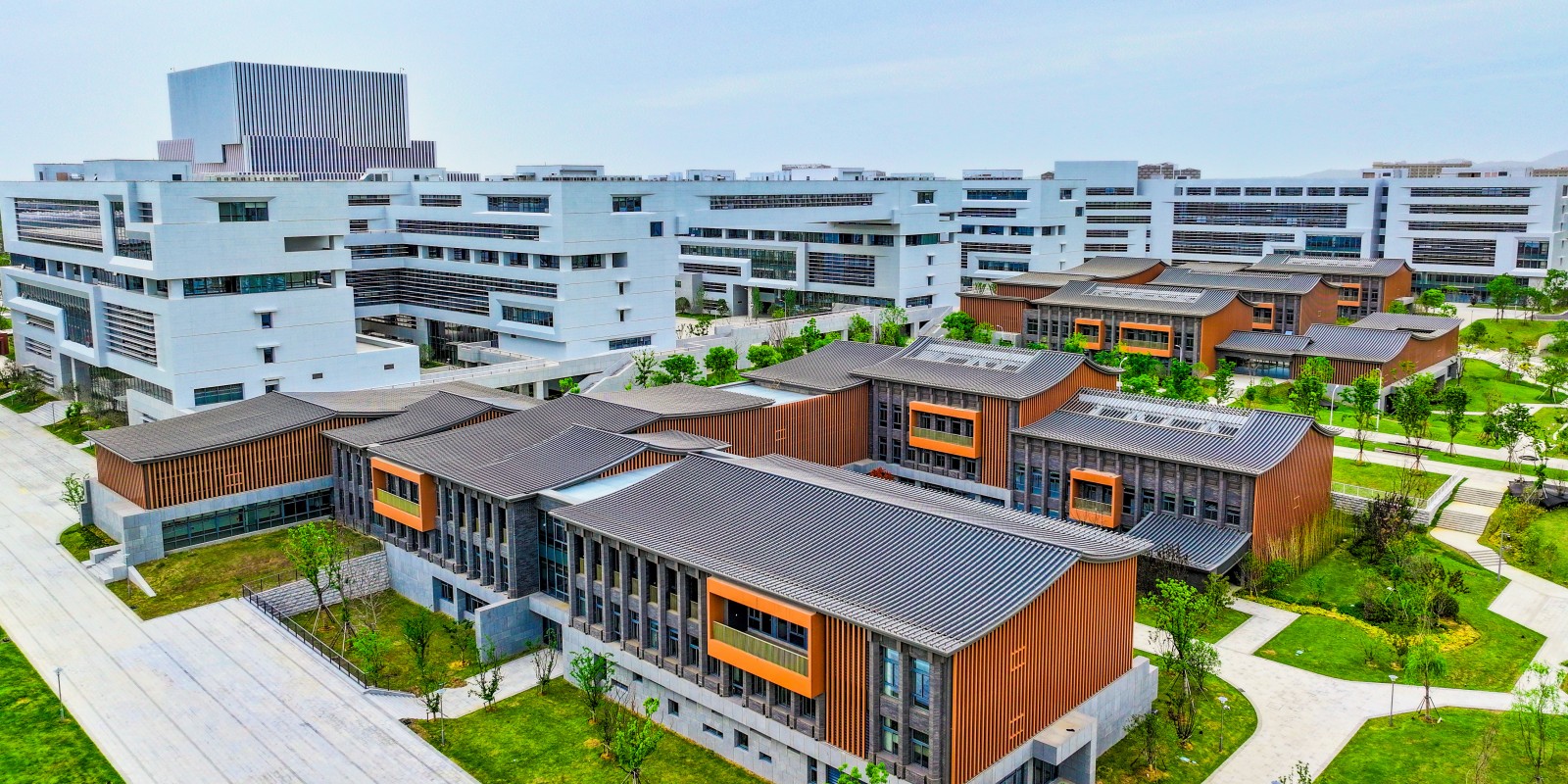
A campus of 890 mu, some 59 hectares, with 550,000 square meters of buildings, sits in the ecological science city on the Chaohu peninsula, beside Chaohu Lake, one of China’s five largest freshwater lakes. The location is deliberate: the school anchors itself to the Hefei Comprehensive National Science Center and the research institutes and companies gathered in the city.
As a university built for a specific time and place, Hefei Institute of Technology has chosen the risky but clear path of betting its identity on the region’s fastest-moving industries: electric vehicles, new materials, aerospace and biomedicine. Whether those bets pay off will be measured over the coming decades, but the school has already answered the question every new university faces, which is what it wants to be when it grows up.
Data Source: HFIT Official Website