The university that keeps setting China’s seabed drilling records sits far inland, in the middle of Hunan. Professor Wan Buyan and his team at Hunan University of Science and Technology have developed the “Hainiu” series of deep-sea drilling rigs, repeatedly setting new depth records for seabed drilling and driving China’s deep-sea mineral exploration equipment from nonexistent to leading. The school behind that record was itself assembled only in 2003, from a mining institute and a normal university, though its roots run back to a college founded in 1949.
Its roots trace to the Xiangbei Construction College of 1949; in 2003 the Xiangtan Institute of Technology and Xiangtan Normal University merged to form today’s HNUST. It is co-built by the Hunan government with the ministry of natural resources, the national defense science and technology administration, and the former state work safety administration, and it stands among the province’s double first-class universities. Its motto, Realism, Innovation, Honesty and Ambition, fits a school that mines and teaches in equal measure.
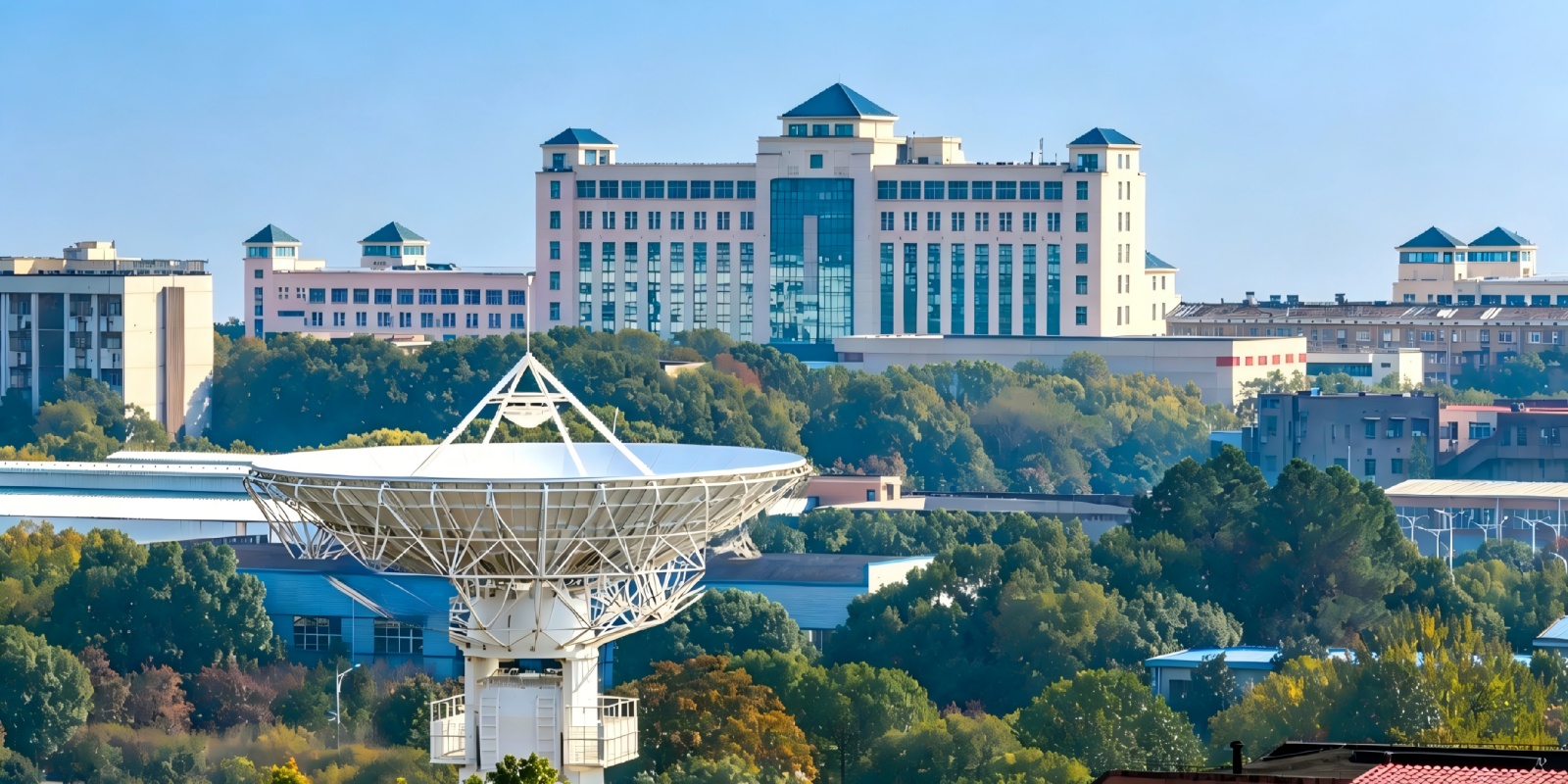
Twenty-one colleges offer 95 undergraduate programs, 24 of them national first-class, with nine first-level doctoral disciplines, thirty master’s disciplines and seven postdoctoral stations. Six subjects, from engineering and chemistry to computer science and materials, sit in the ESI global top 1 percent. Some 40,500 undergraduates and 7,200 postgraduates are taught by 1,840 full-time faculty members, 72 percent of them with doctorates, on a campus of about 3,004 mu, some 200 hectares, in Xiangtan.
Research mirrors the double inheritance of mine and school: 50 national-and-provincial science platforms and 23 provincial social-science bases, 407 national projects since 2021, 92 science awards including a national second prize for technology invention, and 4,369 patents and software copyrights. The Hainiu drilling program remains the flagship, a marine engineering feat born in a landlocked province.
International links reach more than 100 universities in over 30 countries, and students from Hong Kong, Macao and Taiwan of China study alongside international classmates from 30-plus countries. The university also publishes two journals rated as national core publications, one in social sciences and one in natural sciences.
Hunan University of Science and Technology has made a habit of combining opposites: land and ocean, industry and education, history and new records. The pairing began with a 1949 construction college, sharpened in a 2003 merger of mining and teaching, and now reaches a drill biting the seabed thousands of kilometers away. The Hainiu rigs, like the university itself, keep going deeper.
Data Source: HNUST Official Website (as of 2026)