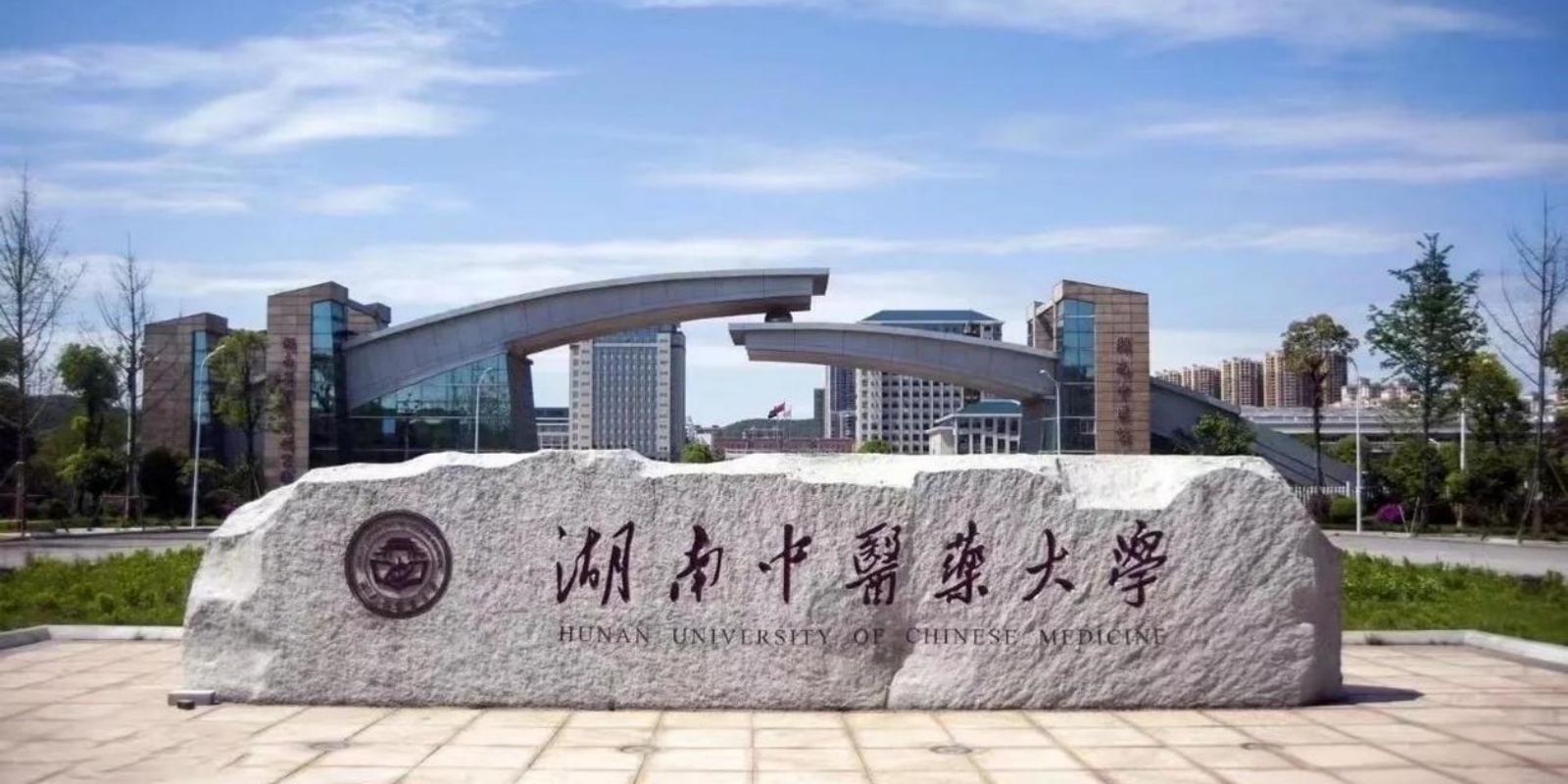
Hunan University of Chinese Medicine runs the world’s first research-oriented Confucius Institute for traditional Chinese medicine, in South Korea, and its laboratories have produced medicines that now sell across China: a slow-release tablet that was the country’s first of its kind, an anticancer formula that was another first, and dozens more that together have generated more than 30 billion yuan in cumulative value. The school behind this record began in 1934 as a national medicine college in Changsha.
It became a degree-granting institute in 1960, absorbed a provincial medicine research institute and later a former science and technology university along the way, and took its present name in 2006. It was among the first TCM schools in China to run national key disciplines, and among the first to admit doctoral students and students from overseas and from Hong Kong, Macao and Taiwan; it entered the province’s double first-class list in 2022.
Thirty-four undergraduate programs across six fields include eight national first-class programs, and clinical medicine, pharmacology and toxicology, and chemistry all sit in the ESI global top 1 percent. Three first-level doctoral disciplines and three postdoctoral stations support 32,625 students, including some 4,200 postgraduates and 308 international students, taught by 1,569 full-time faculty, among them over 100 senior specialists trained on campus, including national masters of Chinese medicine.
Research platforms number 98 at provincial level and above, from a state-local joint engineering laboratory for TCM powder technology to a national engineering research center for individualized diagnosis and treatment. The school has won three national second prizes for science and technology, holds 578 patents, and publishes a flagship English journal on digital Chinese medicine, the first high-start journal of any Chinese TCM university.
This pipeline feeds an industry: 70-plus new TCM medicines developed, 30 billion yuan of cumulative output across flagship products, and a university science park in the Xiangjiang New Area of Changsha. Abroad, ties reach over 40 universities in countries from Canada and France to Australia and Egypt, some 2,000 overseas students have trained here, and the university has opened TCM centers in Pakistan, Cambodia, Dubai, Zimbabwe, Madagascar and Egypt, alongside the Confucius Institute in South Korea and the only foreign academician workstation of its kind in China, hosted at the university.
Nine decades after it opened as a medicine college in 1934, Hunan University of Chinese Medicine has proved that the oldest system of medicine in the world can still be the newest export: its tablets stock pharmacies, and its name hangs on Confucius Institute signs overseas. The century-long bet, that a province’s herbal tradition belongs to the world, is paying off in pills, papers and partnerships.
Data Source: HNUCM Official Website (as of 2025)