Safety human-factors engineering, the study of how people make errors in high-risk workplaces, sits at the center of Hunan Institute of Technology’s research profile. The specialty links the school, based in Hengyang, the second-largest city in Hunan, to the country’s nuclear industry, with cooperation reaching plants at Daya Bay and Ling’ao, and to safety research for the kinds of jobs where a single mistake can be very expensive.
The school itself is young: created in 2007 from a branch campus of Hunan University and a building-materials college, it absorbed a staff university for industrial technology in 2009. It is an early member of the ministry’s excellence engineer training program, a provincial master’s-degree cultivation unit, and a member of the national CDIO engineering education alliance, an international framework for teaching engineers by doing.
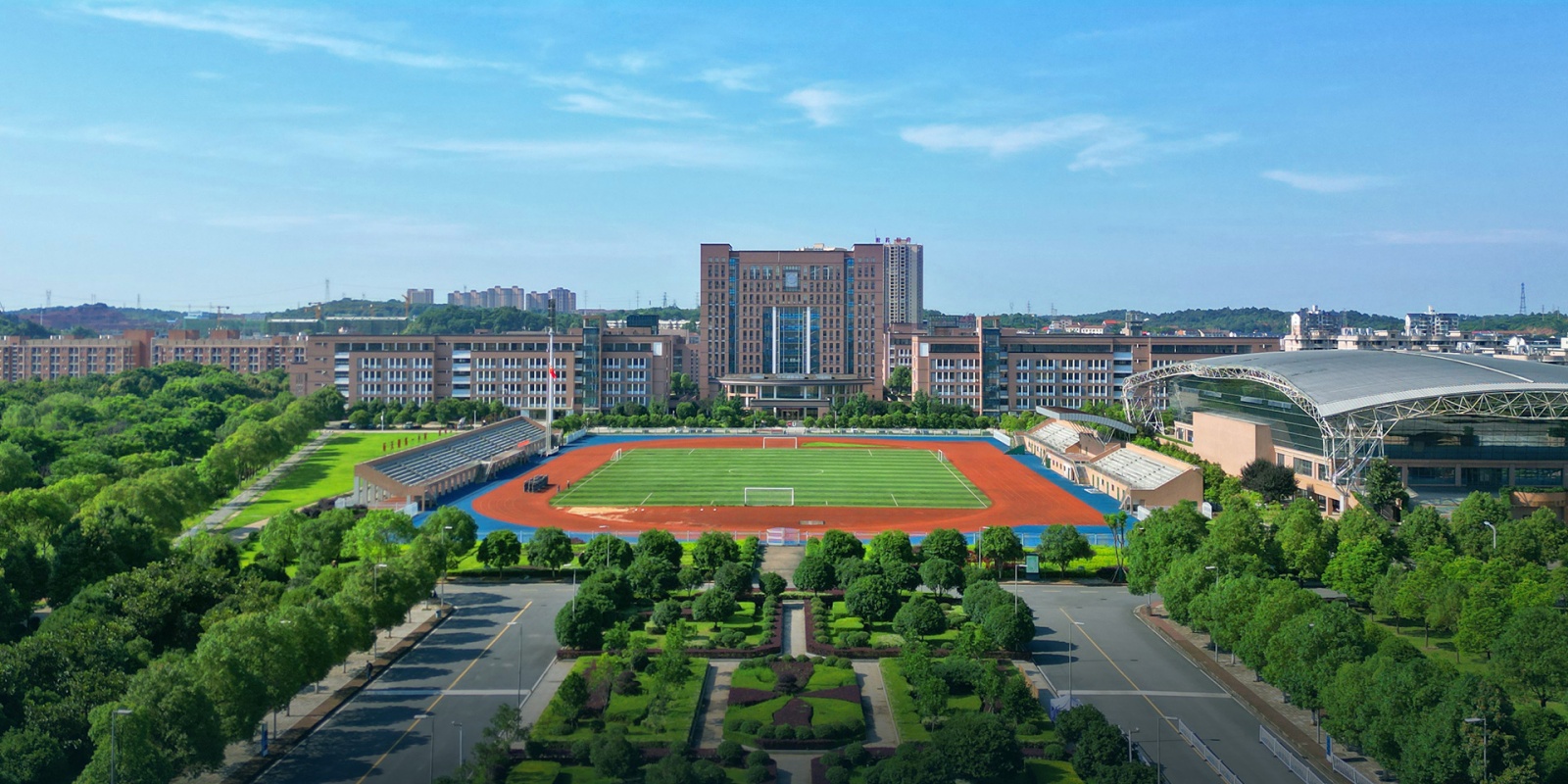
Seventeen colleges offer 40 undergraduate programs organized into six application-oriented clusters: advanced manufacturing, new materials and energy, smart safety and equipment, electronic information, intelligent construction, and modern logistics. Eleven programs hold national-level status, from national first-class programs to ministry-accredited engineering majors, five disciplines rank as provincial key fields, and some 20,000 students study across three campuses of about 1,500 mu, roughly 100 hectares.
Its faculty of 1,300-plus, more than 30 percent of them with provincial or national talent titles, includes 11 specialists recognized at national level and four distinguished scholars, among them a highly cited researcher listed by Elsevier. Teaching leans on practice through 213 training bases, 8 national first-class courses, and a competition record of 1,800-plus national and provincial student awards in the past three years.
Research clusters around the school’s three signature fields: automobile pump components, human reliability, and green building materials. The first is anchored by a national joint engineering laboratory, the second by a safety human-factors laboratory tied to the national nuclear energy research system, and 23 provincial platforms support the rest, alongside more than 3,400 completed research projects and 513 patents. Abroad, the school works with over 30 universities in over 10 countries and hosts some 50 international students from 18 countries.
What began as a branch campus of Hunan University and a building-materials college has grown, in less than two decades, into a university with a national joint engineering laboratory and a specialty in the kind of work where mistakes are expensive: nuclear power, automotive parts, and the design of things that must not fail. Hengyang gave the school its home; the school gave itself a harder assignment.
Data Source: HNIT Official Website (as of 2025)