Counties around Pingxiang University make more insulators than anywhere else on earth, the district beside them calls itself China’s capital of industrial ceramics, and a third corner of the region is the country’s firework home. Pingxiang University, founded on these industries, can also point to a rare alumnus: Liu Tianquan, a founding academician of the Chinese Academy of Engineering, elected in 1994.
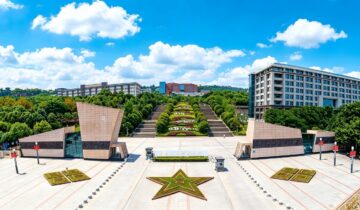
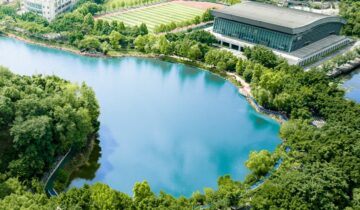
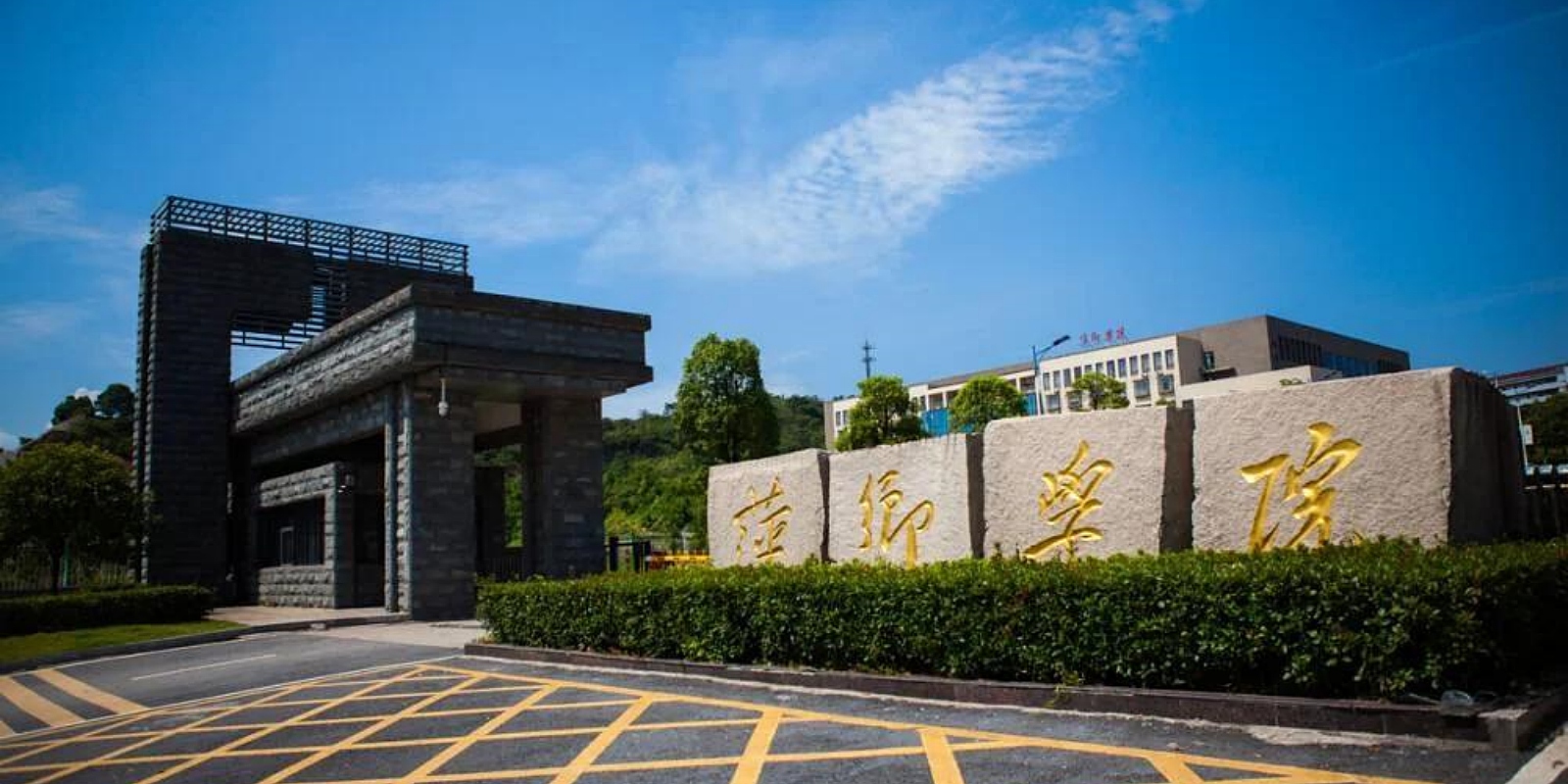
It began in 1941 as a provincial normal school, passed through an education college and a junior college, and was elevated to undergraduate status as Pingxiang University in 2013, winning the right to grant bachelor’s degrees in 2016. In 2022 it entered the province’s master’s-degree cultivation list. The campus covers 796,500 square meters, about 80 hectares, in the city where China’s modern industrial history began.
Thirty-five undergraduate programs span ten fields of study across 11 colleges, serving 12,938 full-time students, with two national first-class courses and a provincial first-class program leading the teaching side. The faculty of 612 full-time teachers is built for applied work, 45 percent of them holding dual academic and professional credentials and 86.6 percent holding master’s or doctoral degrees.
Research mirrors the local economy: a provincial engineering research center for environmental materials and equipment, a provincial standard innovation base for mining machinery, and a provincial intangible heritage research center are among 16 platforms, alongside a collaborative research center with the Anyuan mining workers memorial, a site from the early labor movement. Since upgrading to a university, faculty have led 785 provincial-and-above projects, including 24 national natural science funds, and published nearly 350 papers in SCI journals.
Culture gets a scholarly stage too: the university has hosted a Han-Ye-Ping international symposium, named for the three sites of China’s first modern steel complex, and cross-strait academic conferences on Nuo culture, the ancient masked ritual that survives in the region. Students have collected 963 provincial-and-above competition awards in five years, and the school’s employment record keeps its admission scores 30 points above the provincial cutoff year after year.
Fireworks, insulators, mining machinery and a masked folk ritual: the industries and traditions that made Pingxiang are the subjects that keep its university busy, and the engineering academician on the alumni list is proof that a city of workshops can raise a university of researchers.
Data Source: PXU Official Website (as of 2025)