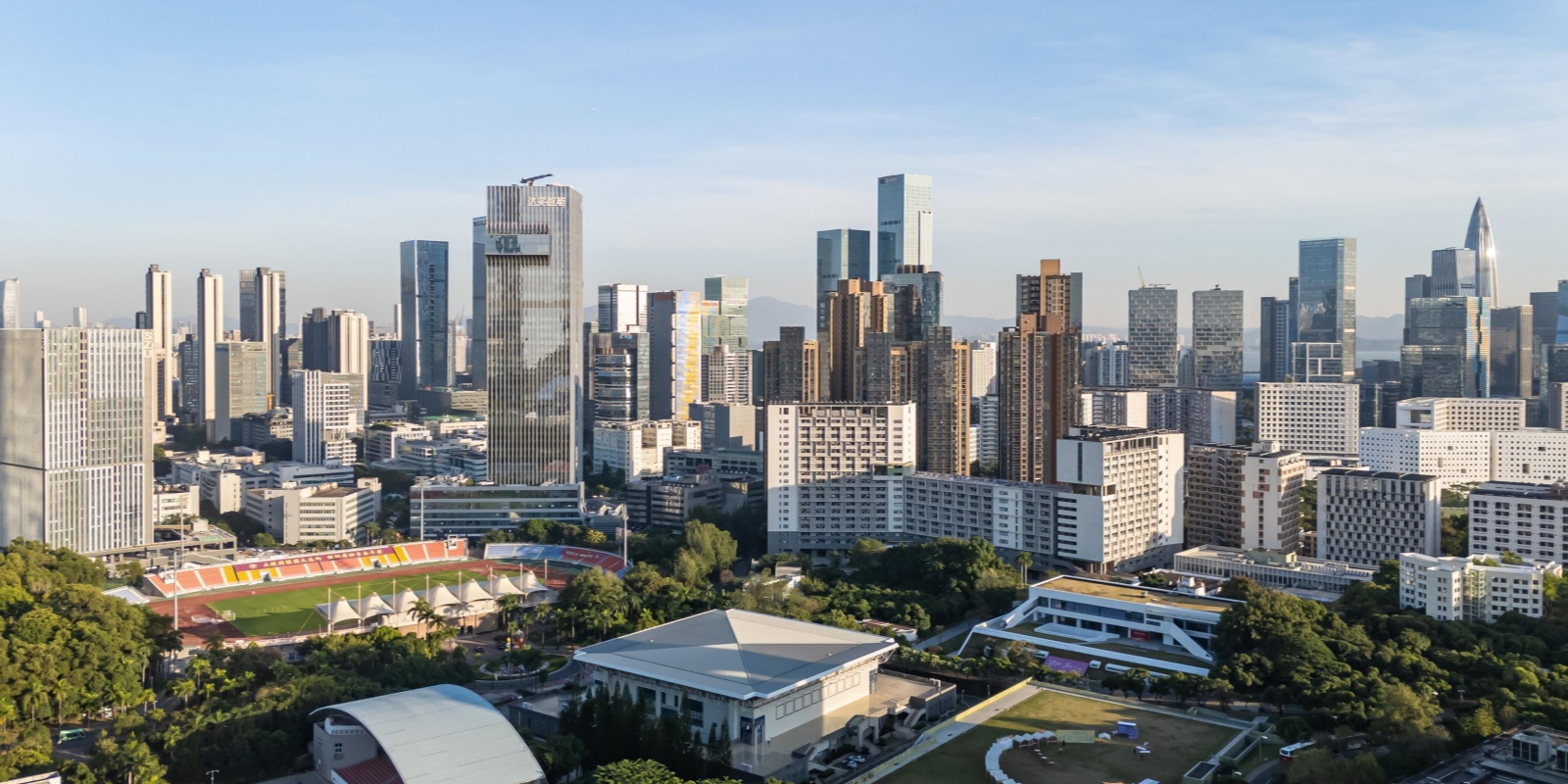
The university and the city grew up together. Shenzhen University was founded in 1983, three years after China’s first special economic zone opened next door, and the two have risen in step ever since: the city from a fishing town to a technology capital, the university from an experiment to one of China’s fastest-climbing comprehensive universities. Its founders reached into China’s top schools for help, with Peking University building its humanities programs, Tsinghua its engineering and architecture, and Renmin University its economics and law.
The experiment was institutional as well as academic. Shenzhen University was among the first Chinese universities to end guaranteed job assignments, letting graduates and employers find each other, and among the first to introduce competitive faculty hiring, credit systems and campus work-study. The city that had been built on trial and error gave its university the same license, and the phrase that stuck, an experimental university for the special economic zone, still appears in its own description of itself.
Today the university fills two campuses in Yuehai and Lihu, covering 2.72 square kilometers, with nearly 49,000 full-time students, about 17,900 of them postgraduates. Twenty of its disciplines rank in the ESI global top 1 percent, four of them in the top 1 per mille, and it placed 57th among world universities in the Nature Index, 31st in mainland China.
The faculty of about 2,960 full-time teachers includes 277 national-level talents, and the research budget has passed 10 billion yuan over five years. Five national key laboratories, one led by the university, anchor a platform system rivalling the province’s best. Its 106 undergraduate programs include 34 national first-class programs.
The alumni list reads like a roll of the Shenzhen economy. Its graduates founded Tencent, and the university says more than 95 percent of its alumni work or start companies in the Greater Bay Area, keeping the campus wired into the city’s technology industry. The university also launched a MOOC alliance of 139 local universities that has served millions of students.
From a bold experiment of 1983 to a comprehensive university of 2026, the school has grown at the speed of its city, and the two still share a motto: keep moving, keep trying, keep proving that in Shenzhen, nothing is impossible.
Data Source: SZU Official Website (as of 2026)