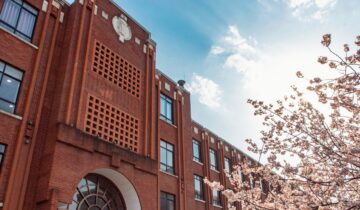
East China Normal University: When Shanghai Met New York in Higher Education

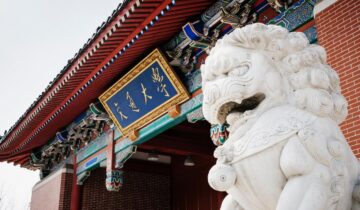
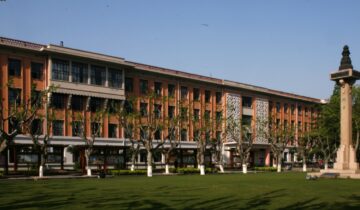
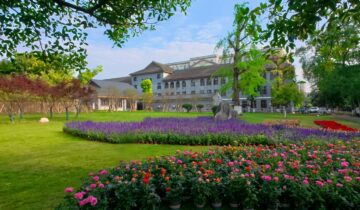
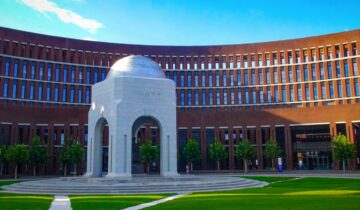
Two private universities founded in the 1920s — Daxia and Guanghua — merged in 1951 with departments from Fudan, Tongji, Zhejiang, and St. John’s to create what New China called its first “normal” university. The institution born on the Daxia campus in Shanghai’s Putuo district is one of 36 Class A Double First-Class universities in the country, the co-founder of NYU Shanghai, and a comprehensive research institution with three national Double First-Class disciplines. As of June 2025, East China Normal…
Donghua University: The Global Number One in Textile Science

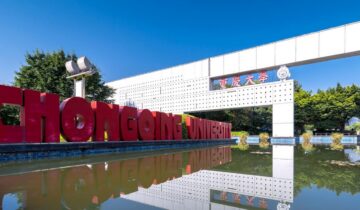
The university that makes the antennas for China’s BeiDou navigation satellites occupies its original industrial roots: textiles. Donghua University, founded in 1951 as the East China Textile Engineering Institute, leads the world in textile science — its discipline holds the global number-one position in the ARWU subject rankings. But Donghua’s expertise has moved well beyond fabrics. Its researchers developed the metal mesh reflector for satellite communications, produced the world’s first non-von-Neumann-architecture smart fiber (published in Science), and won 32 national…

East China University of Science and Technology: The Chemistry-Born University That Outgrew Chemistry

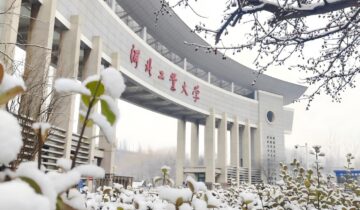
Five chemistry and chemical engineering departments from universities across eastern China came together in 1952 to form a single institution — the first university in the new People’s Republic dedicated entirely to chemical engineering. What began as East China Chemical Engineering Institute now enrolls 32,000 students across three campuses in Shanghai, fields 12 ESI top-1 percent disciplines (three at the 1 per mille level), operates six national key laboratories, and employs 11 academicians. ECUST joined the 211 Project in 1996,…

Shanghai Jiao Tong University: 130 Years, One Split, Two Enduring Legacies

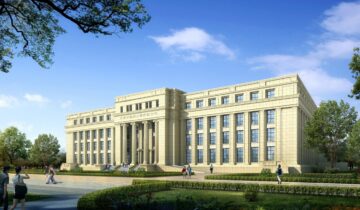
When the pioneering industrialist and educator Sheng Xuanhuai opened the Nanyang Public School in Shanghai in 1896, his goal was straightforward: train talents to save a nation in crisis. The institution that grew from that foundation, now Shanghai Jiao Tong University, has more than fulfilled the ambition. Over 130 years, SJTU has produced more than 400,000 graduates — including former president Jiang Zemin, rocket scientist Qian Xuesen, and six of the 23 national heroes of China’s two-bomb-one-satellite program — and…

Tongji University: The German Clinic Growing Into Shanghai’s Engineering Giant

A German doctor named Erich Paulun opened a medical school in Shanghai in 1907. That school — Tongji German Medical School — became Tongji University, and it is now one of China’s most comprehensive engineering-centric institutions, with 47 academicians, six national key laboratories, and a graduate further-study rate among the highest in the country. Tongji carries the distinction of being a Double First-Class A-Class university, a 985 Project school, and a member of the elite C9-associated group, with a campus…

Naval Medical University: The PLA Navy’s Medical Anchor With 7 Academicians

A military medical university tucked into Shanghai’s Yangpu district has accumulated strengths that rival the best civilian medical schools in the country. The Naval Medical University, formerly the Second Military Medical University and still known by its SMMU abbreviation, is the only full-time medical university under the PLA Navy. It fields seven ESI top-1 percent disciplines — the most among all military universities in China — and counts seven academicians, including the legendary hepatobiliary surgeon Wu Mengchao. In national science…

Shanghai University: Carrying a 1922 Revolutionary Legacy

The Chinese Communist Party’s first formal university opened in a lane house on Qingyun Road in Shanghai in 1922, staffed by professors that included the founders of the Party itself. Shanghai University was shut down in 1927, reconstituted in 1983 from six branch campuses, and merged again in 1994 into the comprehensive 211 institution it is today. What emerged from these three distinct lives is a university with 11 ESI top-1 percent disciplines, four national key laboratories, nearly 40,000 students,…

Southwest University: The Hybrid Rice Father’s Alma Mater

The man who fed a billion people studied here before he changed the world. Yuan Longping, the father of hybrid rice, graduated from Southwest Agricultural College, four decades before it merged with a normal university to become today’s Southwest University. But the institution that claims Yuan as its most famous alumnus is far more than an agricultural school. Spanning 8,200 mu across two campuses in Chongqing, SWU enrolls 59,400 students across 13 academic fields, holds two Double First-Class disciplines, and…

Chongqing University: The Engineering School Above Two Rivers

A mountainside campus above the confluence of the Yangtze and Jialing Rivers has produced some of China’s most durable engineering talent. Chongqing University opened in 1929 with the ambition of becoming a “comprehensive and profound” institution, and by the 1940s it had grown into a full-spectrum university covering arts, sciences, engineering, business, law, and medicine. The nationwide reorganization of 1952 stripped it to an engineering core, dispersing most of its non-technical departments to other schools. But over the following seven…

Hebei University of Technology: The Cross-Border 211 That Flies Its Own Satellite

A university that belongs to Hebei Province keeps its main campus inside Tianjin municipality — an administrative quirk that makes Hebei University of Technology the only 211 project university in China whose physical home sits in a different province than its nominal one. Yet this cross-border identity has become a strategic advantage rather than a limitation. Since its founding as the Beiyang Craft School in 1903, HEBUT has grown into a Double First-Class institution with seven ESI top-1 percent disciplines,…

Tianjin Medical University: New China’s First Medical School

The newly founded People’s Republic of China established its first higher medical school in Tianjin in 1951. Named Tianjin Medical College, its founding president was Zhu Xianyi, an internationally recognized endocrinologist who would shape Chinese medical education for decades. In 1994, the college merged with Tianjin Second Medical College to form Tianjin Medical University. Today, TMU is the only independent medical university in China with national 211 Project status, a Double First-Class institution with 12 ESI top-1 percent disciplines, 13…

Tianjin University: The Original Pioneer of Modern Chinese Engineering

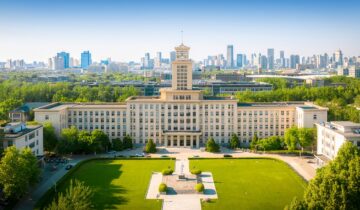
A decree from the Guangxu Emperor established Peiyang University in Tianjin on October 2, 1895 — China’s first modern institution of higher education. Its founding superintendent, Sheng Xuanhuai, envisioned a school that would train engineers, lawyers, and miners to rebuild a nation humiliated by the First Sino-Japanese War. One hundred and thirty years later, that school is now Tianjin University, a Double First-Class A-Class institution ranked 257th globally with 11 national key laboratories, 18 ESI top-1 percent disciplines, and a…

Nankai University: China’s North Star of Academic Excellence

The May Fourth Movement of 1919 swept across China as a new university opened its doors in Tianjin. Among its first 96 students was a young man with student number 62 — Zhou Enlai, who would later become China’s first Premier and one of the most respected statesmen of the 20th century. That institution was Nankai University, founded by educators Yan Xiu and Zhang Boling with a mission to strengthen the nation through modern education. Today, with 19 disciplines in…

Central South University: Where Mining, Rail, and Medicine Converge

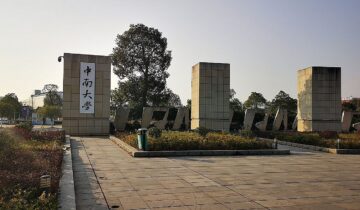
Three institutions that shared little on paper — a mining and metallurgy institute, a railway engineering college, and a Western medical school — came together in April 2000 to form a single university of extraordinary breadth. Central South University inherited the non-ferrous metals dominance of the former Central South Institute of Mining and Metallurgy, founded in 1952, the rail-transit expertise of the former Central South Institute of Civil Engineering and Architecture, established in 1953, and the century-old prestige of Xiangya…

Hunan University: A Millennium of Learning Under Yuelu Mountain

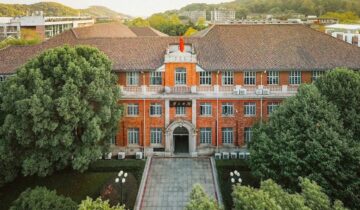
A stone gate dating to 976 AD still stands at the foot of Yuelu Mountain, bearing witness to a thousand years of lectures. The institution behind it — Yuelu Academy, founded in the Northern Song Dynasty — evolved through dynasties, wars, and revolutions to become Hunan University in 1926. No other Chinese university traces its lineage to the same uninterrupted thread of classical education. When President Xi Jinping visited in 2020, he called Yuelu Academy the birthplace of the Communist…

Close