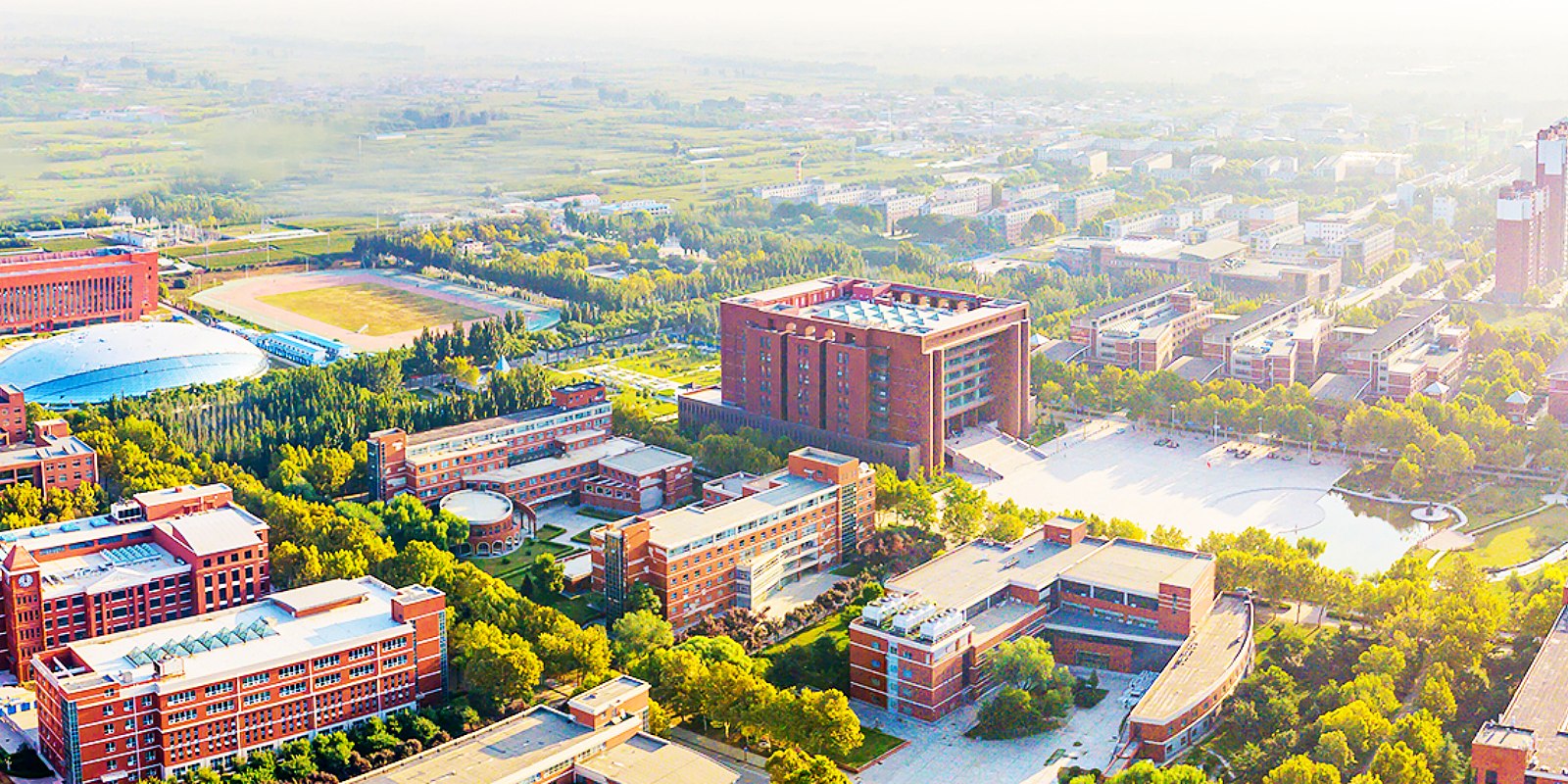
Hebei University began in one city and came of age in another. It opened in Tianjin in 1921 as Tianjin Industrial and Commercial University, and after nearly five decades there the provincial government moved it to Baoding in 1970. The double address, Tianjin roots and a Baoding present, runs through the university’s history.
Between those dates the school changed name and character several times, passing through identities as a college, as Private Jingu University, National Jingu University, Tianjin Normal College and Tianjin Normal University before the province re-founded it in 1960 as a comprehensive university carrying the provincial name. National support then arrived in stages: one of five universities backed by the finance and education ministries in 2002, a province-ministry co-construction university in 2005, one of fourteen universities in a national plan to strengthen institutions in central and western China in 2012, and since 2018 a ministry-province co-built university.
Twelve fields of study, from literature, history and philosophy to medicine, engineering and agriculture, support 89 undergraduate programs, 41 of them rated national first-class, alongside 18 first-level doctoral programs, 44 first-level master’s programs and 13 postdoctoral stations. Nine disciplines sit in the ESI global top 1 percent, including chemistry, materials science and engineering. About 28,600 undergraduates, 12,900 postgraduates and 460-plus international students study here.
Its faculty of 2,265 full-time teachers among 3,409 staff counts 72.4 percent with doctorates and 55 national-level high-caliber talents, from academicians to distinguished young scholars. Research rests on a national key laboratory, a ministry key laboratory, ministry engineering research centers and a key base for humanities and social sciences research. Since 2021 the university has secured 174 National Social Science Fund projects, ten of them major, alongside 244 projects funded by the National Natural Science Foundation.
Internationally, Hebei University has ties with 130-plus universities, runs three Confucius Institutes on three continents, and hosts Hebei’s first Sino-foreign cooperative college, built with the University of Central Lancashire and named a national Top 20 case among such institutions. It was also the first university in the province to receive Chinese Government Scholarship students.
Nearly half a million graduates over a century, and the address has moved from Machang Road in Tianjin to a campus in Baoding: the university has outgrown its first city, yet still teaches with both hands, one reaching back to 1921 and one toward the next hundred years.
Data Source: Hebei University Official Website (as of 2025)