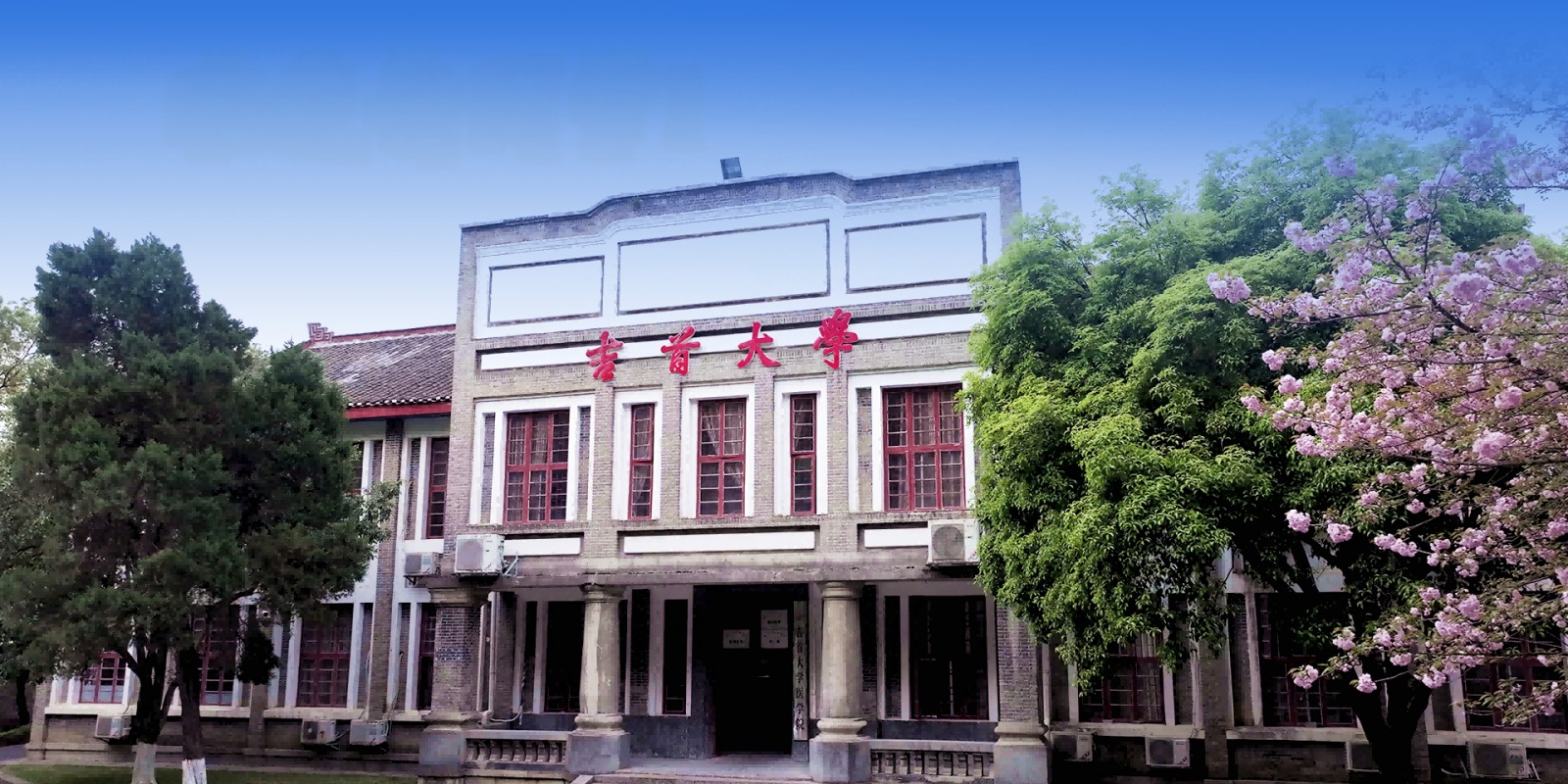
Jishou University is the only comprehensive university in the Wuling mountains, and it has spent nearly seven decades answering to that position. Founded in 1958, it teaches across two cities in western Hunan, Jishou in the Tujia and Miao Autonomous Prefecture of Xiangxi and Zhangjiajie, and it has built its scholarship around the region it serves: the cultures of its ethnic communities and the plants, animals and minerals of its mountains.
The university is co-built by the national ethnic affairs commission and the Hunan government, holds the right to award doctorates, and stands among the province’s double first-class construction universities. Sixty-eight years of teaching have produced some 390,000 graduates, from a full ladder of programs that runs from preparatory and undergraduate study through master’s, doctoral and postdoctoral training.
Twenty-three colleges offer 75 undergraduate programs across eleven fields, with three first-level doctoral disciplines, eighteen master’s disciplines and twenty professional master’s categories. Sixteen undergraduate programs hold national first-class status, and among 84 first-class courses, eleven are rated national. Some 36,000 full-time students study here, supported by 1,800 faculty members, more than 900 of whom supervise doctoral and master’s students, including twelve recipients of the State Council special allowance.
Research carries the mountain’s signature. In the social sciences the university focuses on ethnic studies, from traditional sports and ecology to regional economics, and its work on the writer Shen Congwen is known well beyond Hunan; it also runs a research institute for the Liye Qin slips, the Qin-dynasty bamboo manuscripts unearthed in the region. In the natural sciences it has proposed a “three belts” theory for developing the area’s resources and bred the Miliang No.1 kiwifruit and other varieties suited to local hills, alongside work on eucommia, the giant salamander and other regional specialties, with a university science park to carry results to market.
Campus culture keeps the same roots. The university maintains an art museum honoring Huang Yongyu and a memorial hall for Shen Congwen, alongside the Wuxi Academy, and its museum complex has been named a national science popularization base. Its student ethnic-arts troupe has performed in the United States and Hong Kong, China. Cooperation reaches dozens of universities in the United States, Britain, South Korea, Australia and the regions of Hong Kong, Macao and Taiwan, and the school holds the right to enroll international students.
Whatever grows on the slopes, whatever its communities remember, whatever the excavated slips record: Jishou University’s discipline is its geography, held across 36,000 students and three doctoral disciplines since 1958. For the only comprehensive university in the Wuling mountains, serving the region is not a slogan but the syllabus.
Data Source: Jishou University Official Website (as of 2026)