It takes a moment to connect the Hugo Award-winning author of The Three-Body Problem with a university whose name begins with water resources. But Liu Cixin studied at North China University of Water Resources and Electric Power (NCWU) in Zhengzhou, and the alumni roll holds more surprises: three consecutive ministers of water resources, Chen Lei, E Jingping and Li Guoying, also came from its classrooms. Wherever water flows in China, the saying goes, a Hua Shui graduate is at work.
Research gives the school its hard edge. NCWU has won six National Science and Technology Progress Awards and the Volker Medal of the International Hydrology Prize, the highest honor in global hydrological science, and it launched China’s first inland-water remote sensing satellite, the Huashui No. 1, to watch rivers from orbit. Its platforms include a UNESCO chair, a ministry-level collaborative innovation center for Yellow River water resources and some 190 research institutes, and its teams have taken on national projects from rapid closure of breached levees to groundwater monitoring by satellite gravity.
International work started early. It has enrolled international students since 1958, among the first Chinese universities to do so, and in the same years it helped build a water-resources university in Vietnam. Today it partners with 140-plus universities abroad, runs a joint institution with Russia’s Ural Federal University, five Sino-foreign programs with British and other partners, and a Confucius Institute in Malaysia, where its first overseas campus, Hua Yu College, also operates. Some 500 international students from Belt and Road countries are currently enrolled.
The graduate record gives the campus its identity. NCWU claims 45 national and provincial first-class programs, 145 first-class courses and 18 accredited engineering programs, and its teaching is built around a credo the university translates as “Humble, Hardy, Reliable, Practical and Capable”: engineers who go where the projects are. The alumni list runs from water ministers to Wu Xinfen, a national moral model, and Liu Cixin, whose novels now sell in dozens of languages.
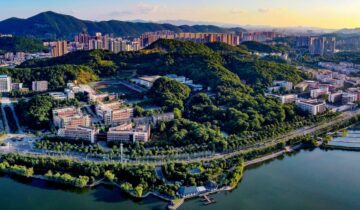
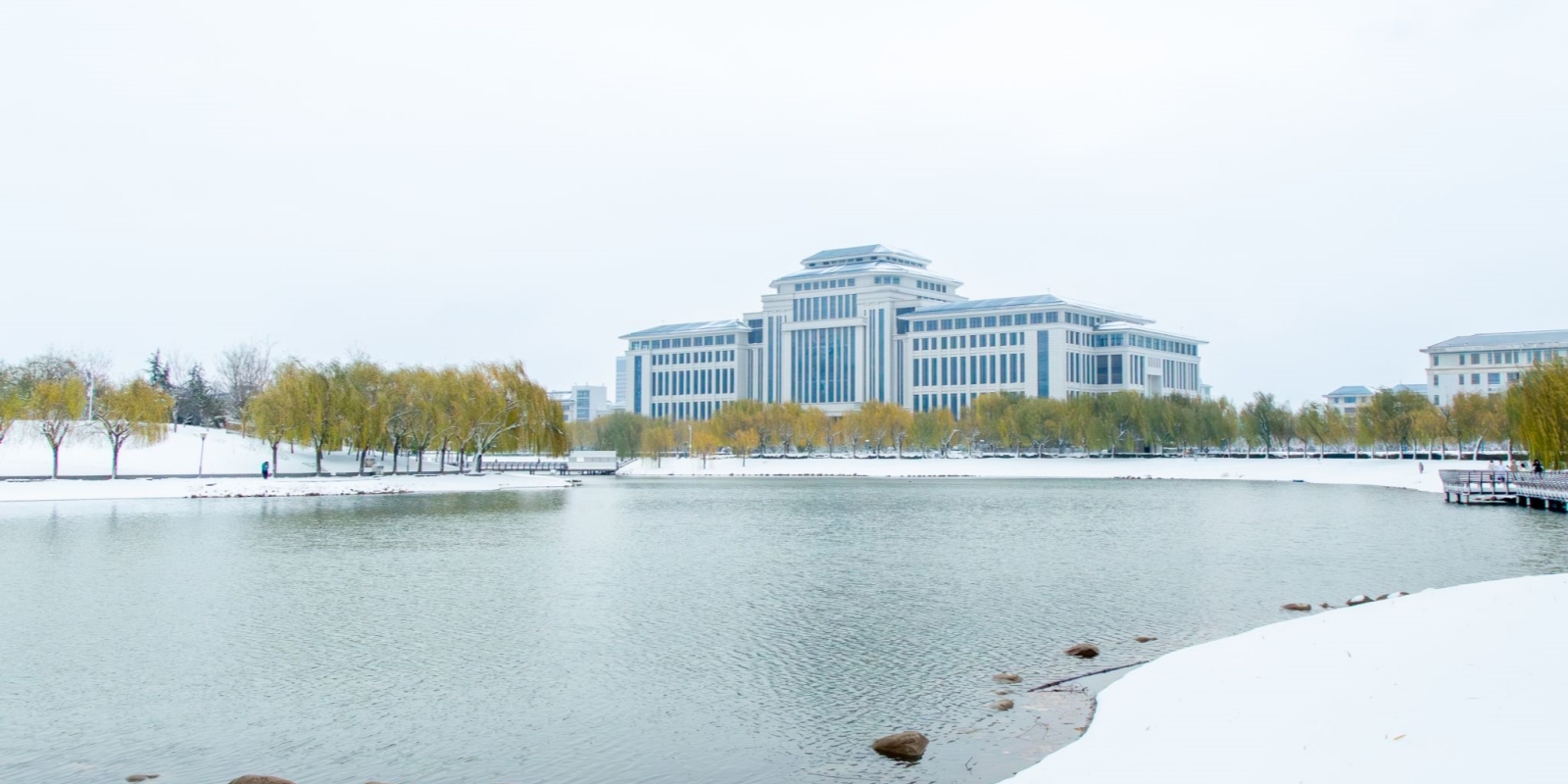
Behind the names sits a full university. About 256 hectares spread across three campuses hold 30 teaching units, more than 37,000 students and over 2,800 staff, of whom 2,200-plus teach and 1,300-plus hold doctorates. The curriculum runs to 69 undergraduate majors, four first-level doctoral programs and a professional doctorate, 23 first-level and 19 professional master’s programs, and 22 provincial key disciplines, with engineering ranked in the ESI top 0.5 percent and four more fields in the top 1 percent.
The water identity was there from the start. It opened in Beijing in 1951 as the Water Conservancy School of the Ministry of Water Resources, moved through a reservoir site and a city in Hebei during its early decades, took the name North China Institute of Water Resources and Electric Power in 1978, settled in Zhengzhou in 1990, and was renamed a university in 2013. Management passed from the ministry to Henan province in 2000, with a joint-building agreement following in 2009.
The school’s story can be read in its names: born of the Ministry of Water Resources, it now feeds the ministry’s ranks; rooted in one of China’s driest regions, it monitors rivers from space. Its motto is plain, “diligence, rigor, truth-seeking and innovation,” and the alumni saying is plainer still: wherever there is water, there are Hua Shui people.
Data Source: NCWU Official Website (as of 2026)
Visit North China University of Water Resources and Electric Power