Look at China’s newest infrastructure and you keep finding the same university’s fingerprints. The C919 airliner, the trains that climb the Tibetan plateau, and the bridges and tunnels of the eastern seaboard all carry research from Qingdao University of Technology, a school that has spent seven decades as an invisible partner in the country’s big builds.
The discipline map is built for that role. Sixty-five undergraduate programs run under 23 first-level master’s programs and 2 doctoral programs, with civil engineering a peak discipline for the province and mechanical engineering a featured one. Twenty national first-class programs lead the teaching side, five disciplines sit in the ESI global top 1 percent, and six national platforms, from a 111 talent-introduction base to a national-local joint engineering center, anchor the research floor with 50 provincial-and-above partners.
The faculty of 2,517 includes 1,794 full-time teachers, more than 1,000 of them with doctorates, plus two foreign academicians and 46 national-level talents spread across the engineering disciplines.
Its research has traveled unusually far beyond campus: work from the university sits inside the Winter Olympics venues, the Chang’e lunar program, and the ecological protection of the Yellow River basin, and its engineers have backed the Jiaodong International Airport, the coastal high-speed rail and the tunnels beneath Jiaozhou Bay. Its 290,000 graduates have carried the same habit into factories and design institutes across the country.
Its lineage is a construction story. Founded in 1953 under the old ministries of heavy industry and metallurgy, the school passed through the Shandong Metallurgical Institute and the Qingdao Institute of Architectural Engineering before taking the name Qingdao University of Technology in 2004; it began undergraduate teaching in 1960, won master’s authorization in 1993 and doctoral authorization in 2005.
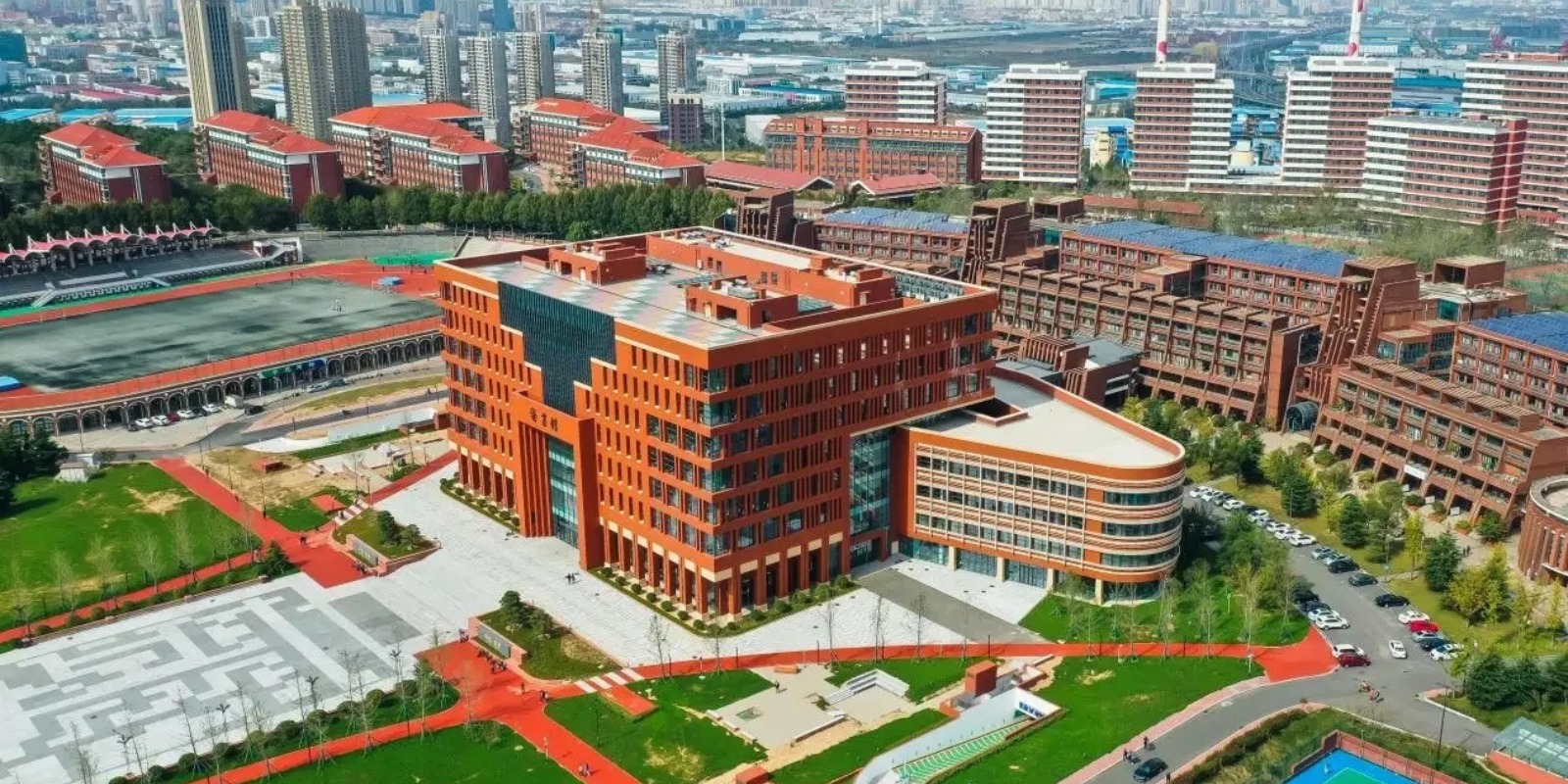
Internationally, QUT has agreements with 120-plus universities in 30 countries, four Sino-foreign undergraduate programs and one master’s program with 1,500-plus students, and a post-graduate training base in New Zealand. Its three campuses cover about 161 hectares in Qingdao and Linyi, with more than 35,200 full-time students, including a campus in Linyi that trains engineers for the local economy.
Seventy years on, the university’s graduates number 290,000, and its research is still inside the national projects being built right now. The invisible partner has never needed the spotlight; the infrastructure is the resume.
Data Source: QUT Official Website (as of 2026)