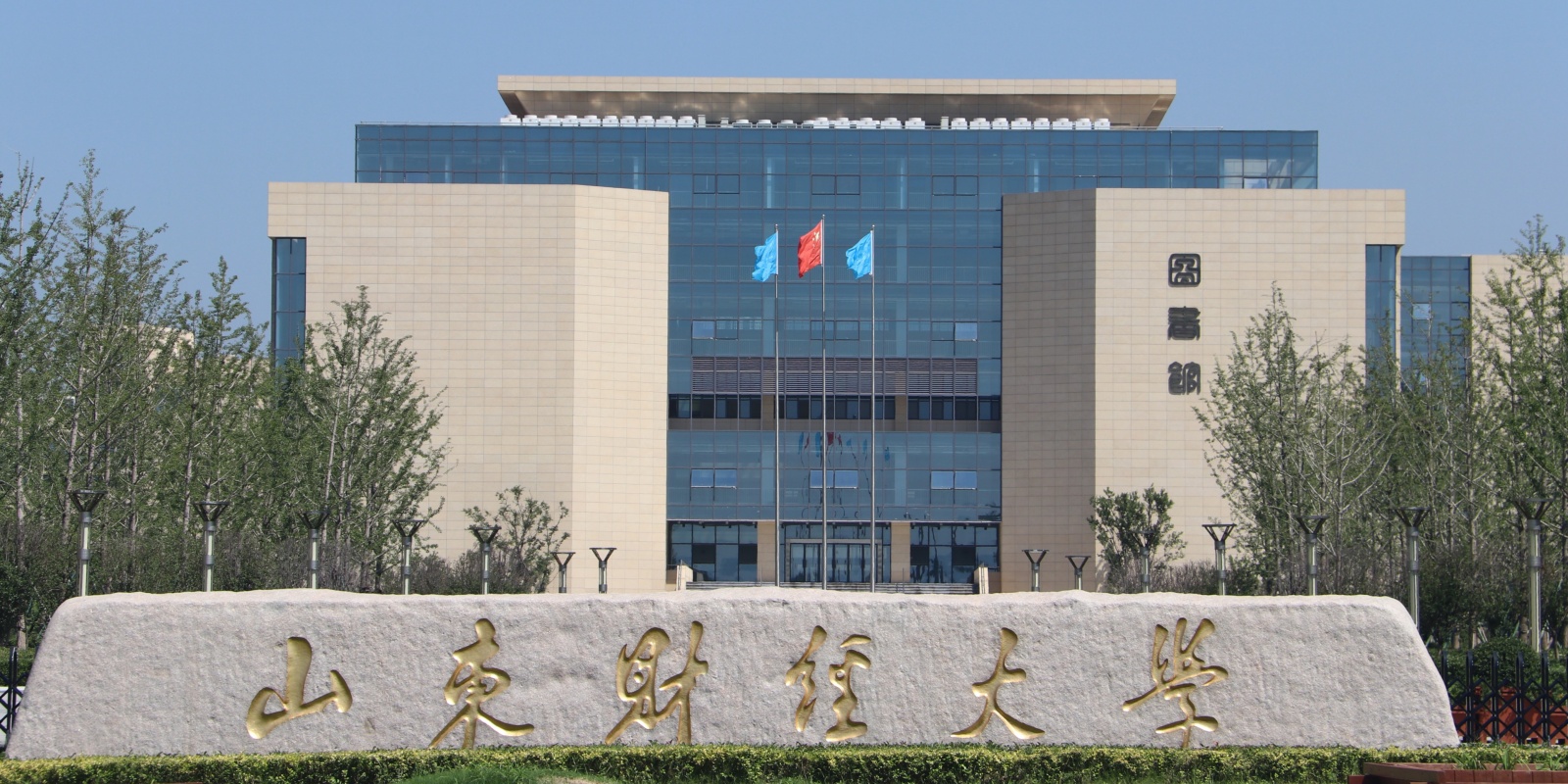
One of China’s most influential economists of the 20th century ran this university when it opened in 1948: the economist Gu Zhun, later a byword for independent economic thought, served as its first head while he was the province’s finance director. The commerce college he launched has grown into Shandong University of Finance and Economics, the province’s leading finance university and one of three in China co-built by the finance ministry, the education ministry and a provincial government.
The lineage is written in two institutions that merged in 2011. The Shandong Economics Institute grew from a college founded in 1952 and restored in 1978 after the Cultural Revolution, while the Shandong Finance Institute, established in 1986 as one of the six universities directly under the finance ministry, carried a plaque inscribed by Deng Xiaoping. Their 2012 merger created today’s university.
Applied economics is first in Shandong among all the province’s universities and a peak discipline in its own right, with three post-doctoral stations, five doctoral programs and 29 national first-class undergraduate programs. Engineering, computer science and social sciences all sit in the ESI global top 1 percent, and the university ranks among the top 10 finance universities in China by A-rated programs.
Teaching matches the rankings: 53 national first-class courses, second among the country’s finance universities, and research has produced four national social science major projects, with a first-ever listing in the global top 1,000 of the ShanghaiRanking academic ranking, fourth among Chinese finance universities.
Think tanks carry the school’s voice into policy. The China Economics Research Institute and institutes for rural culture and marine economy have issued the country’s first blue books on rural culture and the marine economy, and consulting reports have drawn approval from the central and provincial governments.
Internationally, the university runs a business-focused Confucius Institute in France, the first of its kind for Shandong, cooperates with 150-plus institutions in 30-plus countries, and holds membership in AACSB and other global business education bodies. Joint programs with partners from Minnesota to Queen Mary London span the full degree ladder.
The economist who shaped China’s market reforms gave the university its name; the students who carry it forward now number nearly 31,000 full-time across three campuses, taught by a faculty that keeps the school’s founding discipline, finance and economics, at the center of its teaching.
Data Source: SDUFE Official Website (as of 2026)