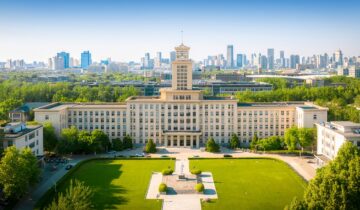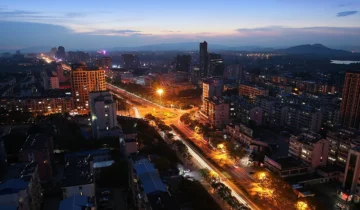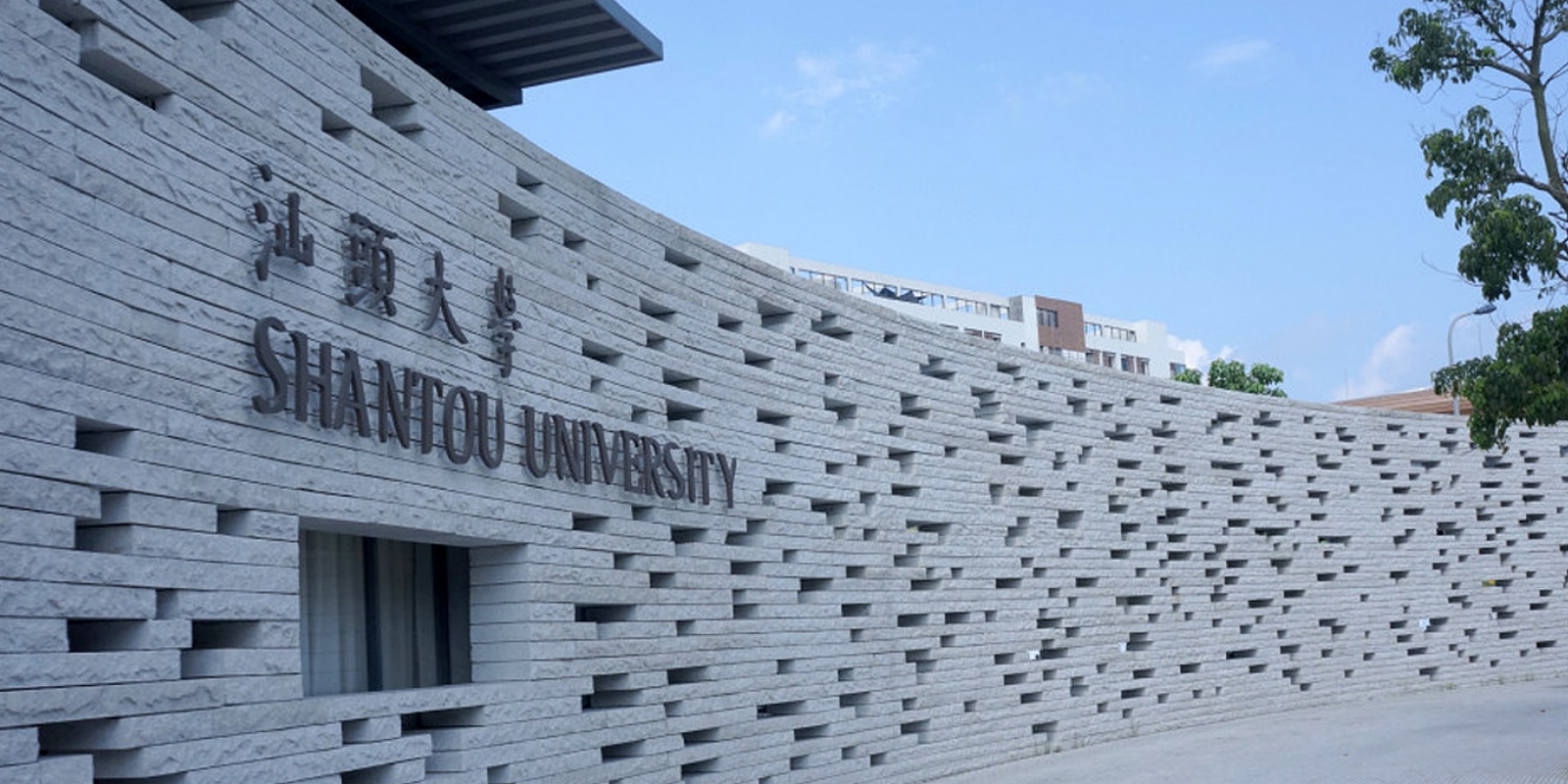
The world’s only public university sustained by a private foundation sits in Shantou, a port city on the South China coast. Shantou University, founded in 1981, is jointly run by the education ministry, Guangdong province and the Li Ka Shing Foundation, which has earmarked over HK$10 billion for it, and the arrangement has made the university a long-running pilot for higher education reform in China.
The university was born with the reform era, approved by the State Council in 1981 and enrolling its first students a few years later, and from the start it experimented. It was the first university in Guangdong designated for institutional reform, moved to international credit systems, reshaped its medical curriculum, and built a system of twelve residential colleges on the Oxford model, with students living and learning across disciplines rather than by department. The phrase Chinese educators attached to it, a test plot for university reform, stuck for four decades.
The academic map grew with the experiments. Six first-level doctoral programs, twenty first-level master’s programs and six postdoctoral stations sit under thirteen colleges, and eighteen undergraduate programs hold national first-class status. Fifteen disciplines rank in the ESI global top 1 percent, led by clinical medicine, chemistry and marine science, and the university placed 71st among mainland Chinese universities in the 2026 Times Higher Education world ranking, a strong result for a school barely past its fortieth year.
Medicine is the strongest thread. An integrated medical education system has trained clinicians through a 5-plus-3 program, and in 2016 the university became a partner in the Guangdong Technion Israel Institute of Technology, a Sino-Israeli science and engineering institution on its campus that now shares its reformist DNA. More than 2,400 faculty teach about 24,000 students, among them a growing share of postgraduates.
Philanthropy runs through the institution. The foundation that funds it was built by Li Ka-shing, one of Asia’s most famous industrialists, whose family name the university’s College of Arts and Design and Journalism carries, and his stated belief, that good governance supports academic freedom, is written into how the campus works. In 2022 the East Coast campus opened on the coast east of the city, built for interdisciplinary and emerging engineering programs.
Forty-five years on, the university has graduated about 180,000 people, many of them now working across the Pearl River Delta and beyond. A university created by a philanthropist’s gift and a government’s gamble has spent four decades proving the model works, and the only question left is how far the experiment will run.
Data Source: STU Official Website