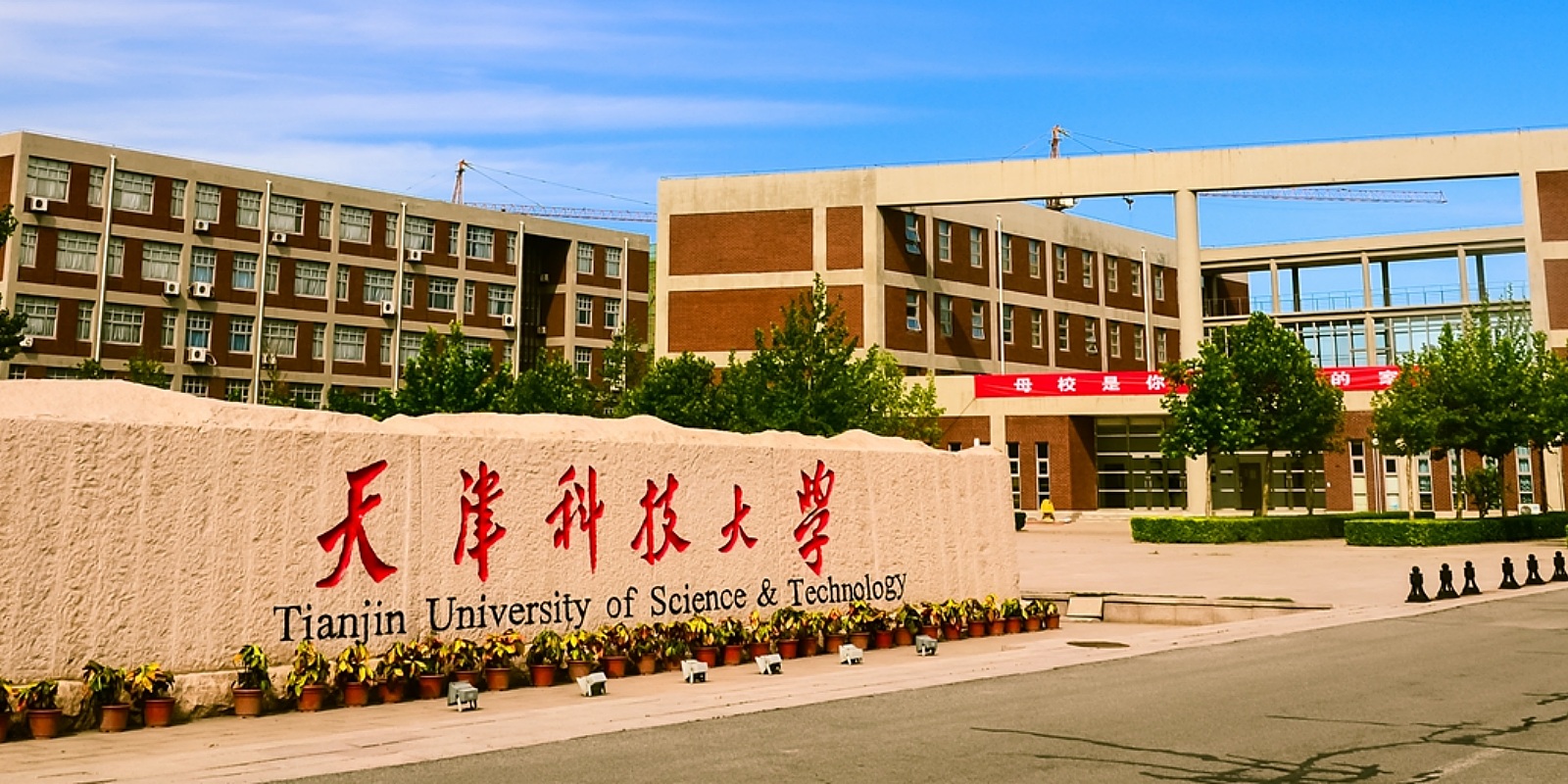
Chinese higher education once had a school its industry nicknamed the salt academy of China, a salt-specialist college that trained the people who ran the country’s salt works. That school is long gone, absorbed into what is now Tianjin University of Science and Technology, but the industrial DNA it brought, along with papermaking, plastics and fermentation expertise from other light-industry colleges, still shapes the university today.
Founded in 1958 as the Hebei Light Industry College, one of the first four light-industry undergraduate colleges in China, the school answered to the national light industry ministry for decades. It became the Tianjin Light Industry College in 1968 and took its present name in 2002, absorbing a technology and development zone vocational college in 2013. Two campuses, Binhai and Hexi, cover 1.25 million square meters, about 125 hectares, and serve 28,000 students.
Its heritage shows in its strongest subjects. Fermentation engineering is a national key discipline, and light industry technology and food science both rank in Tianjin’s top-tier discipline development plan. Five doctoral programs, from food science to marine science, complete the only bachelor-master-doctoral pipeline in Tianjin’s Binhai district, and six fields, including agricultural science in the global top 1 per mille, rank in the ESI top 1 percent. Its polymer science ranks ninth in the world in the U.S. News subject rankings, with food science 30th.
Research runs on two national key laboratories, one for bio-based fiber materials and one for food nutrition and safety, backed by 53 national and provincial platforms, a university science park and eight national science and technology awards. The university also runs an engineering biology college with a Chinese Academy of Sciences institute and a modern pharmaceutical industry college that was named a national best-practice case.
A faculty of 1,528, including one academician of the Chinese Academy of Engineering, teaches 55 undergraduate programs, 32 of them rated first-class at national or municipal level. Abroad, ties reach 152 universities and research institutions in 44 countries, students from 112 countries have studied here, and a Confucius Institute runs with Assumption University in Thailand, continuing a long tradition of teaching and learning with the region’s neighbors.
The salt academy of 1958 has grown far past its name, but the industry-born pragmatism it inherited still shows: a national key discipline in fermentation, a world-ranked polymer program, and a bachelor-to-doctoral pipeline that is the only complete one in Tianjin’s Binhai district, where the university now sits.
Data Source: TUST Official Website (as of 2026)