Jiangmen is the city the overseas Chinese call home. Millions of Chinese emigrants trace their roots to this corner of Guangdong, and the university the city built in 1985 carries the local name for the five counties of the region, Wuyi. Uniquely among Chinese universities, it made the study of that diaspora an academic discipline: its cross-disciplinary program on overseas-Chinese hometown culture is the country’s only diaspora-studies key discipline.
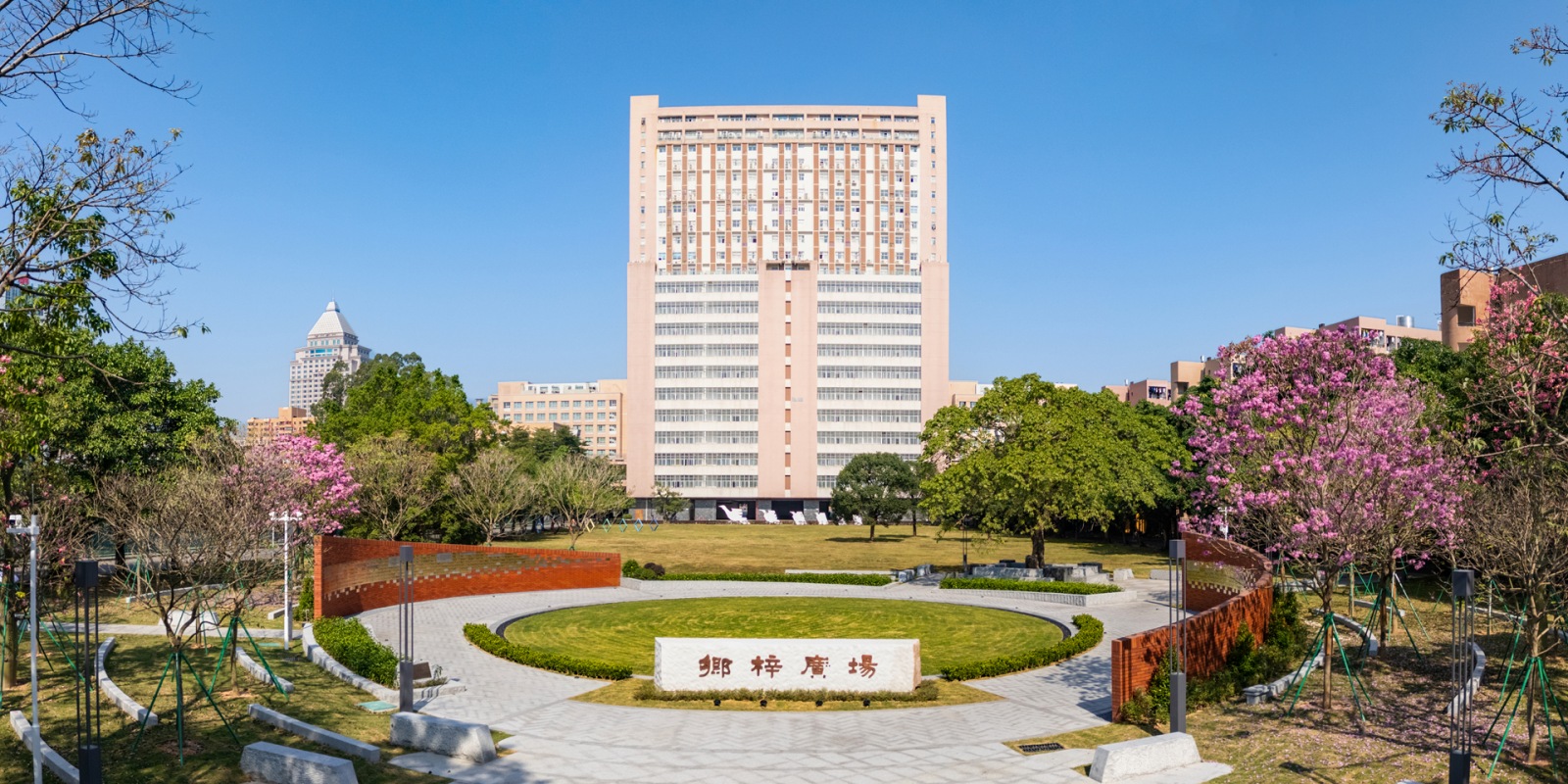
The university was founded by the Guangdong government in 1985, a public institution with an engineering core, and it has kept its links to the diaspora through every stage of growth. Its motto, fond of learning, given to reflection, seeking truth and innovation, frames an applied mission, and its campus of about 660 hectares in central Jiangmen hosts more than 21,000 students, including about 1,400 postgraduates.
Its distinctive strengths are narrow but deep. Rail transit equipment and technology is the only provincial key discipline of its kind in Guangdong, reflecting the rail industry of the region, and it holds the province’s only first-level master’s program in textile science and engineering, serving a local textile economy. Materials science, chemistry and engineering all rank in the ESI global top 1 percent.
The research side has produced surprises for a school of its size. A national center for disaster risk reduction cooperation with Pacific island countries is based here, the university runs institutes for Pacific island studies and for the intangible heritage of the overseas Chinese, and it developed China’s first industrial digital optical chip. Its biomedical large-animal model institute, built for drug research, has attracted national attention.
Diaspora ties shape the international program. The university works with more than 90 institutions in 20-plus countries, hosts students from Hong Kong, Macao, Taiwan and abroad, and co-founded the western-bank science and innovation alliance with the University of Macau and a Hong Kong partner. Its faculty of about 1,200 includes nearly 180 national and provincial talents.
In a city where every family seems to have a relative abroad, the university has turned the hometown itself into a subject of study and a bridge of exchange. The diaspora built Jiangmen, Jiangmen built this university, and the university now teaches the world about the people who went out and the home they never forgot.
Data Source: WYU Official Website (as of 2026)