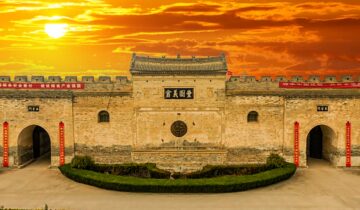
Few awards in Chinese science carry more weight than the special grade of the National Science and Technology Progress Award, the top rung of the country’s main prize system. When that honor went to the research and development of the ultra-deepwater semi-submersible drilling platform HYSY-981, a university most outsiders had never heard of stood among the listed participants: Chongqing University of Science and Technology (CQUST). The school’s founding dates to 1951, when it was created to supply engineers for the country’s petroleum and steel industries, and that industrial DNA still shapes it today.
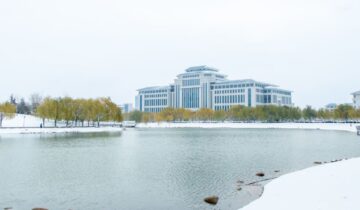
Founded in 1951 in response to the country’s petroleum and steel needs, the university spent decades training engineers for those two industries, added master’s education in 2012, and in 2021 won approval to build doctoral degree programs. It sits in the heart of Western (Chongqing) Science City on a campus of 1.47 million square meters, home to more than 24,500 students, about 2,600 of them postgraduates.
The academic map is built around the same two pillars. Petroleum and gas engineering, metallurgy and advanced materials anchor 17 provincial key disciplines, and four ESI top-1-percent subject areas. Ten undergraduate programs carry national first-class status, among them petroleum engineering, oil and gas storage and transport, metallurgical engineering and welding technology, and 14 programs have passed engineering education accreditation, placing them in the first tier of global engineering education.
Teaching follows the industrial line. The university has won two national teaching achievement awards in the last two rounds, runs two national demonstration centers for experimental teaching and a national virtual simulation center, and holds 11 national first-class courses. Its students collect competition prizes in volume, including a team gold and the sole top honor, the “Zhuoyue Cup”, at the 2024 China Petroleum Engineering Design Competition, and more than 20 national titles and runners-up finishes in college championships across ice hockey, volleyball, tennis and taekwondo.
Research has climbed in step. It has undertaken 180-plus national projects, from major special programs to National Natural Science Foundation grants, and holds 1,700-plus patents. Beyond the HYSY-981 award, its faculty led the development of precision welding technology for aerospace microstructures, a project honored with the first prize of the Chongqing Technology Invention Award, and the university has collected over 140 provincial and ministerial research awards in five years, with its lead-project count ranking among the top universities in Chongqing.
The industrial ties run deep. CQUST has signed research and education agreements with upwards of 500 companies, from the national oil giants CNPC, Sinopec and CNOOC to Baowu Steel, Chinalco Southwest Aluminum and Seres, and with some 60 universities at home and abroad, including partners in Britain, Australia, Russia, Italy and Portugal. Created for the country’s oil and steel industries, the school is now woven into them, from drilling rigs in deep water to welding lines in aerospace factories.
Data Source: CQUST Official Website (as of 2026)