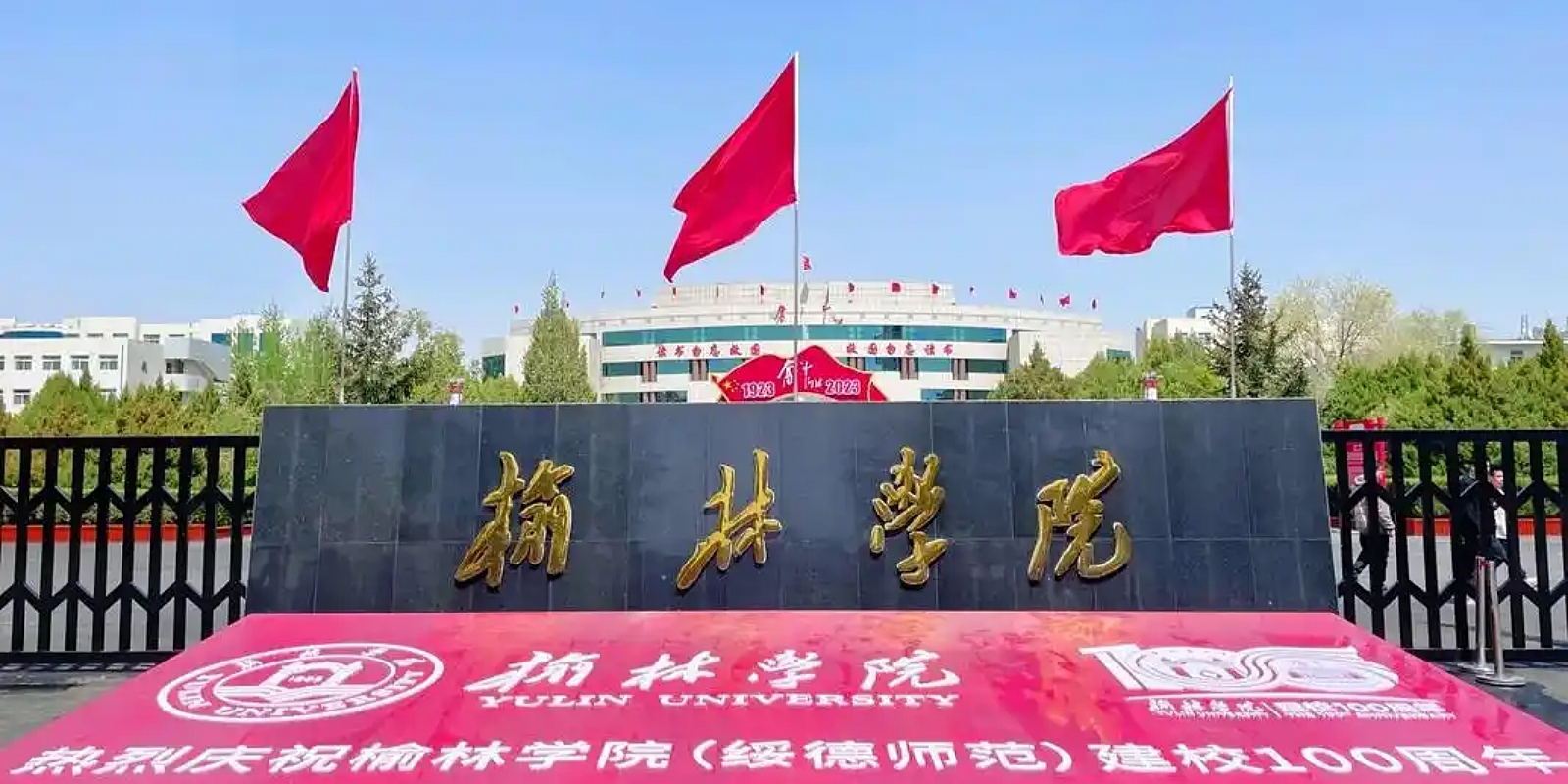
China’s newest university sits in the north of Shaanxi, and its oldest roots reach back a century. Yulin University was renamed from Yulin College in February 2026, but the school traces its lineage to the Suide Normal School, founded in 1923 as one of Shaanxi’s first modern teacher-training schools. In between came a hundred years of war, rebuilding and reinvention, ending with a new name and a new mission in the heart of China’s energy country.
The Suide school trained teachers for the revolutionary base areas of northwest China, and that legacy of public service still marks the university, which moved to Yulin city as a junior college and was approved as an undergraduate institution named Yulin College in 2003. In 2018 it gained master’s degree rights, and in February 2026 the Ministry of Education approved the change of name to Yulin University.
The university now operates three campuses, in Yuyang, Suide and a new science and innovation district, with 16 schools and 47 undergraduate programs. Two first-level and 13 professional master’s programs cover 23 fields, and about 14,350 full-time students include over 1,000 postgraduates.
Its identity is tied to the land it serves. Yulin sits above some of China’s largest coal, oil and natural gas deposits, and the university has built its programs around that economy, from energy and chemical engineering to dryland agriculture. It is a national pilot for transforming universities toward applied training, holds 31 provincial research platforms and 15 provincial innovation teams, and runs a university science park recognized by the province, with seven science-and-technology courtyards supported by the education ministry and agricultural authorities.
The faculty of about 1,200 includes over 570 with senior titles and more than 400 with doctorates, alongside an academician workstation with six recruited members of the Chinese academies. The university’s research has produced a provincial concept verification center for clean coal use, and in a provincial index of scientific competitiveness among newly established applied universities it ranks first in Shaanxi.
Beyond the classroom, the school has sent over 110,000 graduates into the region, including one academician of the Chinese Academy of Engineering. Its partnerships reach more than 20 foreign universities, with a cooperative undergraduate program with a Russian university, and it receives support from leading universities including Beijing Normal University, Tianjin University and Xi’an Jiaotong University.
A school that began as a teacher-training academy in 1923 and took the name of university in 2026 now stands at the center of one of China’s great energy basins, still doing what it has always done: training the people the region needs.
Data Source: YLU Official Website (as of 2026)