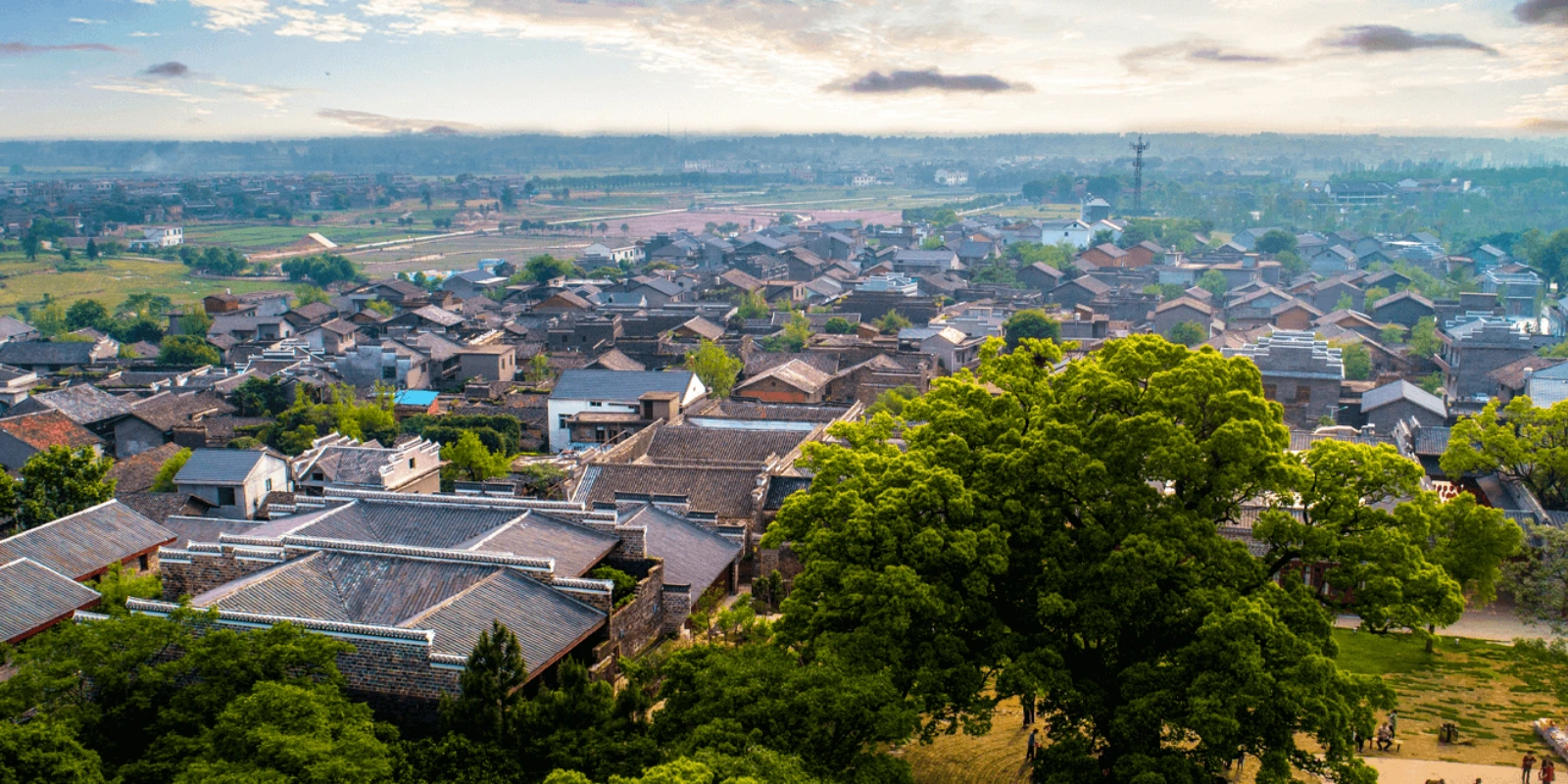
Nestled in northwestern Jiangxi Province under Nanchang City’s administration, Anyi County covers 660 square kilometers with a population of 307,000 as of March 2025. Established as Long’an County in 622 AD during the Tang dynasty, Anyi was later reestablished under its current name in 1518 during the Ming dynasty and is recognized as a “Millennium Ancient County” by the United Nations Group of Experts on Geographical Names. The county lies between three national forest parks — Meiling, Sanzhualun, and Shengshuitang — giving it a forest coverage rate of 45.6 percent.
🏭 Featured Industries
- Aluminum Profiles: Anyi’s economy is dominated by aluminum profile manufacturing. The county has grown into one of China’s three largest aluminum profile production bases, with production capacity ranked first in East China and second nationwide. It holds the official designations of “China’s Aluminum Profile Town” and “China’s Door and Window Town.” Construction-grade profiles produced in Anyi are distributed to markets across the country.
- Agriculture: Anyi is a national model county for agricultural mechanization and a national demonstration county for leisure agriculture. In 2024, grain output exceeded 167,500 tonnes. Notable agricultural products include Zhuluo loquats and Shajing ponkan citrus. Anyi grey-feathered chicken holds national agricultural geographical indication protection.
🗺 Tourist Attractions
- Anyi Ancient Village Cluster: A 4A-level national tourist attraction in Shibi Town, consisting of three ancient villages — Jingtai, Luotian, and Shuinan — connected by footpaths. The site preserves over 120 Ming and Qing dynasty buildings, including ancestral halls, ancient theaters, memorial archways, and residential courtyards built by merchant families. It is recognized as a Chinese Historical and Cultural Village.
- Shengshuitang National Forest Park: Covers about 4,060 hectares with forest coverage above 96 percent. Features a mountain-top temple and a natural pond with four-legged red-bellied fish known as “dragon fish.” It also holds plaques bearing inscriptions by Empress Dowager Cixi and Emperor Guangxu.
- Wenfeng Pagoda: A seven-story hexagonal brick pagoda built in 1629 on the northern bank of the Liao River, standing 23 meters tall. A historic landmark where local scholars once gathered to compose poetry and observe festivals, it remains one of Anyi’s most recognizable symbols.
🎭 Culture
- Gan Merchant Heritage: Anyi is a well-preserved center of the Gan merchant tradition, a historical merchant network from Jiangxi that operated across China during the Ming and Qing dynasties. The ancient village cluster was built by these merchant families, and their distinctive architectural style is still visible in the ancestral halls, memorial archways, and stone-paved streets.
- Intangible Cultural Heritage: Anyi has several provincial-level heritage items. Anyi plaque calligraphy carving uses a unique hook-shaped knife technique originating from the Ming dynasty. Anyi pastry mold carving also dates to the Ming dynasty and was once used for imperial pastries. Huangzhou Zongshan rice noodle making has been practiced since the Song dynasty, and Jingtai ancient stage construction preserves Qing-dynasty theater building methods.
🚗 Getting There
- Air: Nanchang Changbei International Airport is about 30 minutes by car from the county seat.
- Road: Anyi is connected to the greater Nanchang area via the Changtong Expressway and National Highway 105. A second ring expressway currently under construction will further integrate the county into the regional network.
- Rail: Nanchang West Railway Station, a major high-speed rail hub, is about 30 minutes away.
🍜 Local Cuisine
- Huangzhou Zongshan Rice Noodles: Handmade rice noodles made from local rice and underground spring water, with a production history dating back to the Song dynasty. The noodles are white, smooth, and absorb broth well.
- Steamed Anyi Grey-Feathered Chicken: A local chicken breed with grey feathers, grey beak, and grey feet, recognized as a national agricultural geographical indication product. The meat is tender, juicy, and typically steamed or stewed to preserve its natural flavor.
- Stir-Fried Liao River Fish: Freshwater fish from the Liao River, simply prepared with soy sauce and chili.