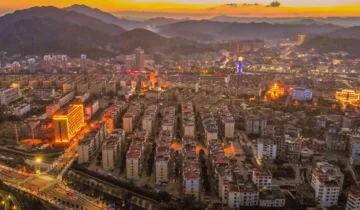
Quannan County, Jiangxi Province

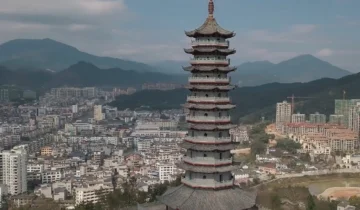
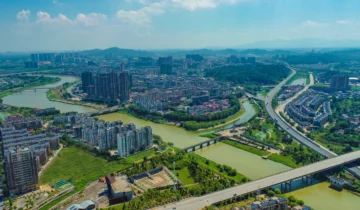
Sixty percent of Quannan’s border touches Guangdong. From the county seat, a high-speed train reaches the Greater Bay Area in under an hour. Mountains cover most of its 1,534 square kilometers, and 83 percent of the land is forest. This is the southern tip of Jiangxi — a county created in 1903, late by Chinese standards, carved from the southern edge of Ganzhou as a frontier administrative outpost. Its original name was Qiannan, “south of Qianzhou,” the ancient name for…
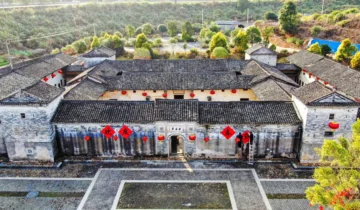
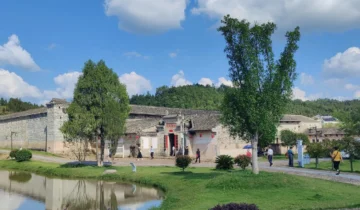
Dingnan County, Jiangxi Province

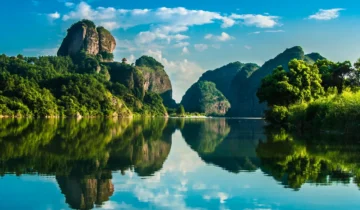
A county with two professional soccer clubs. A “Gate of Jiangxi” where the province meets Guangdong. A mountain watershed whose streams flow into Hong Kong’s drinking water. And the hometown of Lai Buyi, the Song dynasty feng shui master whose geomantic principles still influence architecture across East Asia. Dingnan is a small county with an outsized story. Its name means “settling the south” — established in 1569 during the Ming dynasty at the strategic choke point where Jiangxi narrows toward…

Anyuan County, Jiangxi Province

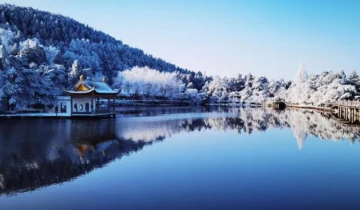
Deep in the mountains of southern Jiangxi, a river begins its journey. Emerging from the 333-square-kilometer Sanbai Mountain forest — where 98 percent of the ground is covered in trees — this stream becomes the Zhenjiang River, then the Dongjiang River, and finally the lifeblood of Hong Kong’s water supply. Every day, millions of Hong Kong residents drink water that originated in Anyuan County. This is Anyuan’s quiet claim to fame: gatekeeper of a watershed that divides China’s two greatest…

Dayu County, Jiangxi Province

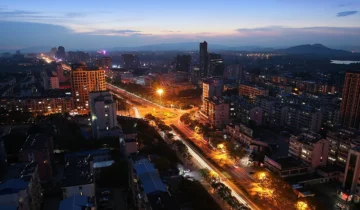
In 1907, a German missionary nameda German missionary picked up a black, heavy rock on West Creek Mountain outside Dayu County. That rock turned out to be tungsten ore — and that discovery launched China’s tungsten industry. Dayu became the “Tungsten Capital of the World,” with 440,000 tons of proven reserves that would fuel wars, build industries, and shape the modern world. But tungsten is only one layer of this extraordinary county in southern Jiangxi. Dayu sits at the foot…

Guixi City, Jiangxi Province

In the hills of eastern Jiangxi, the Xin River winds through a landscape where the founder of Taoism once refined the elixir of immortality. This is Guixi — a name whose characters mean “precious stream,” born from the crystal-clear waters that curl around the old county seat. Established as a county in 765 AD during the Tang dynasty, Guixi was elevated to city status in 1996. Today, spanning 2,493 square kilometers in the heart of the Yangtze Delta, Pearl River…

Lushan City, Jiangxi Province

No mountain in China has been more written about, more painted, or more dreamed of. Over 3,500 poets have climbed its slopes and left 16,000 poems. Li Bai saw a waterfall “falling straight down three thousand feet” and imagined it was the Milky Way descending from heaven. Su Dongpo warned that the true face of the mountain could never be seen from inside it. Tao Yuanming found the inspiration for his utopian “Peach Blossom Spring” in its valleys. This is…

Gongqingcheng City, Jiangxi Province

In 1955, 98 young volunteers from Shanghai stepped off a train in northern Jiangxi with nothing but hoes, tents, and a determination to build something from nothing. They called themselves the “Shanghai Youth Voluntary Reclamation Team.” Forty days later, Hu Yaobang — then the first secretary of the Communist Youth League Central Committee — walked through their makeshift camp and wrote on a piece of paper three words: “Gongqing Commune.” That name, given by one of China’s most beloved leaders,…

Ruichang City, Jiangxi Province

Deep beneath the hills of northern Jiangxi lies the birthplace of China’s bronze civilization — the Tongling ancient copper mine, dating back over 3,000 years to the Shang dynasty. This is not a legend but a fact: the Tongling site in Ruichang is the earliest, best-preserved, and most artifact-rich mining and smelting site ever discovered in China. Today, Ruichang — a name meaning “auspicious prosperity” — has traded bronze for steel, ships, and silicon. With 1,423 square kilometers straddling the…

Pengze County, Jiangxi Province

A thousand years ago, the great poet Tao Yuanming served as magistrate of Pengze County. After just 80 days in office, he resigned rather than bow to a visiting inspector, returning to his farm to write poetry — a story that has embodied the Chinese ideal of integrity and pastoral freedom ever since. But Pengze’s story stretches far deeper. Tang dynasty prime minister Di Renjie once governed here with the philosophy “take the people’s heart as your heart.” And in…

Hukou County, Jiangxi Province

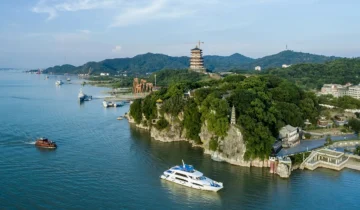
At the mouth of China’s largest freshwater lake, where the waters of Poyang Lake merge into the Yangtze River, a visible line divides the two bodies of water — clear blue on one side, muddy brown on the other. This natural phenomenon, known as “Two Rivers, Two Colors,” has drawn poets and painters for over a millennium, and the best place to witness it is from the ancient Stone Bell Mountain in Hukou County. Established as an administrative division in…

Duchang County, Jiangxi Province

Song dynasty poet Su Dongpo once wrote of this place: “On Poyang Lake stands Duchang County, ten thousand homes lit by lantern towers. The water separates the southern hills, and no one crosses — the east wind has long blown the green peach blossoms away.” That poem, penned over 900 years ago, still captures the essence of Duchang — a county that occupies one-third of Poyang Lake’s entire surface, with 21 of its 24 townships hugging the shoreline along 185…

De’an County, Jiangxi Province

In the summer of 1938, a Chinese army surrounded and routed the Japanese 106th Division at a small county in northern Jiangxi — one of only a handful of times in the entire war that a Japanese division suffered near-complete destruction. That county was De’an, and the battle was called Wanjialing Victory. But De’an’s story runs far deeper than this single battle. It was here, in the ancient kingdom of Fuchian, that Yu the Great once passed during his flood-control…

Yongxiu County, Jiangxi Province

Stand on the shore of Poyang Lake at Wucheng Town and you will see where China’s largest freshwater lake meets the Gan and Xiu Rivers, where migratory birds blanket the wetlands by the tens of thousands, and where a sunken Han-dynasty county — Haihun — lies beneath the reeds. This is Yongxiu County, founded in 201 BC as Haihun County under Emperor Gaozu of Han, and renamed in 1914 with characters that mean “forever nourished by the Xiu River.” Today…

Xiushui County, Jiangxi Province

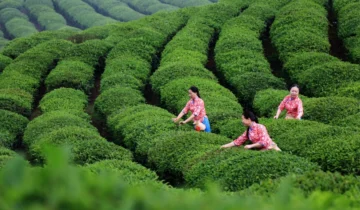
If you trace the Xiushui River upstream through the mountains of northwestern Jiangxi, past the tea terraces and tungsten mines, you will eventually arrive at a county that is neither a city nor a town but a world unto itself. Xiushui County sprawls across 4,502 square kilometers — the largest county in Jiangxi by land area — tucked into the fold where Hubei, Hunan, and Jiangxi meet. It has a registered population of 870,000 across 19 towns and 17 townships,…

Wuning County, Jiangxi Province

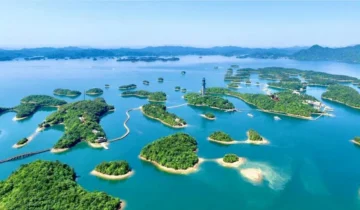
Above the surface of Lushan West Sea, islands scatter like jade across 300 square kilometers of crystal water. Beneath them lies what was once a county founded in 199 AD, when the Eastern Han emperor established a seat of power called “Wuning” — meaning “Martial Pacification” — on the western frontier of what is now Jiangxi Province. Eighteen centuries later, Wuning County covers 3,507 square kilometers in northwestern Jiangxi under Jiujiang City, making it the fourth-largest county in the province…

Close