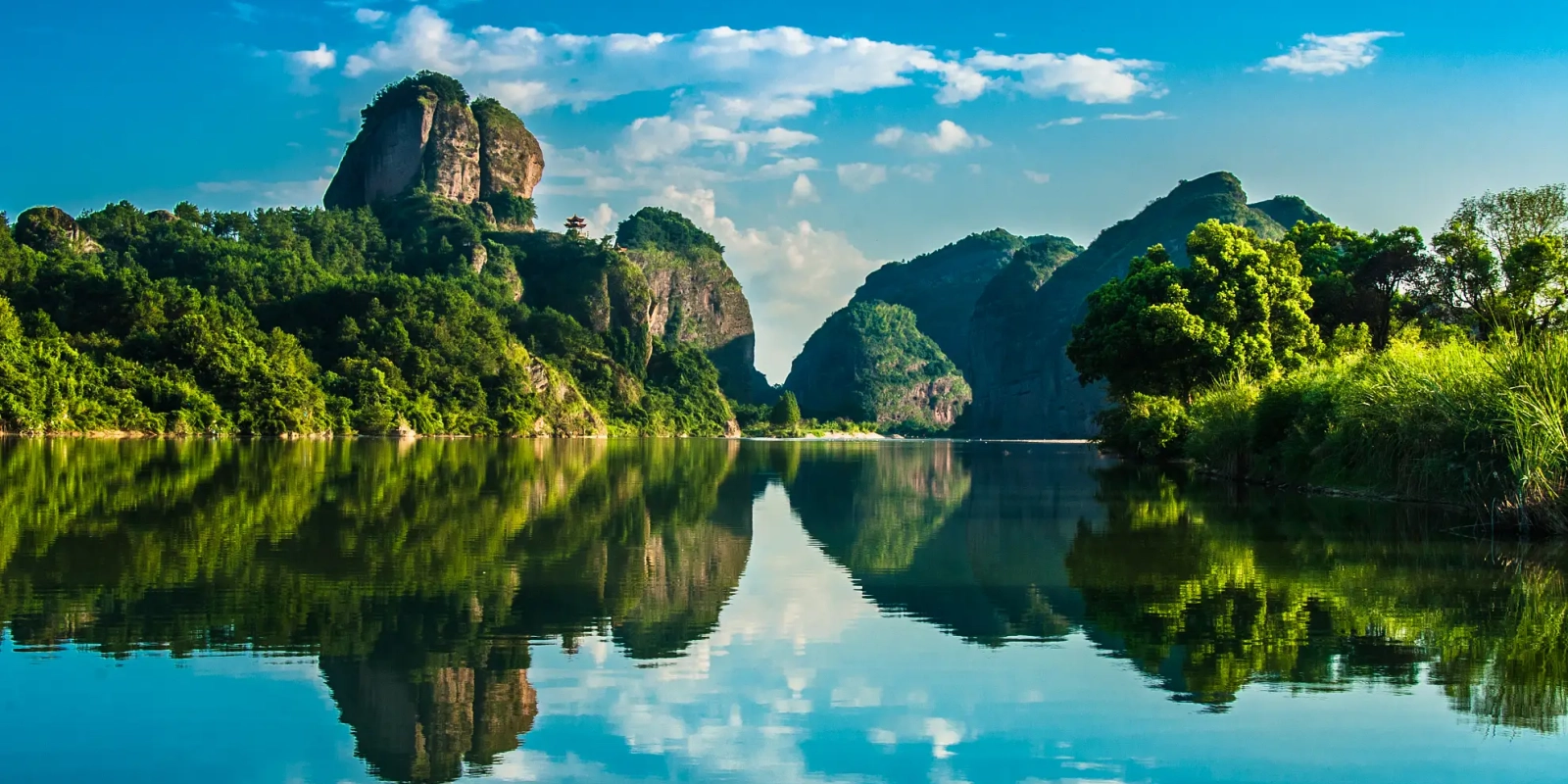
In the hills of eastern Jiangxi, the Xin River winds through a landscape where the founder of Taoism once refined the elixir of immortality. This is Guixi — a name whose characters mean “precious stream,” born from the crystal-clear waters that curl around the old county seat. Established as a county in 765 AD during the Tang dynasty, Guixi was elevated to city status in 1996. Today, spanning 2,493 square kilometers in the heart of the Yangtze Delta, Pearl River Delta, and Min River economic zones, this city of 640,000 under Yingtan City is best known for two things: the sacred peaks of Longhu Mountain, where Zhang Daoling founded Taoism 1,900 years ago, and Jiangxi Copper, China’s largest copper producer, whose smelters have made Guixi a national economic powerhouse.
💡 Featured Industries
- Copper Smelting and Processing: Guixi is home to Jiangxi Copper Corporation (Jiangxi Youse), China’s largest copper producer and a Fortune Global 500 company. The city’s copper complex includes smelting, refining, and downstream processing facilities that produce millions of tons of refined copper annually. The “Colorful Jiangxi Copper” industrial landscape is one of Guixi’s defining sights, with state-of-the-art smelting technology powering the national copper supply chain.
- Non-Ferrous Metals and Chemicals: Beyond copper, Guixi has developed a comprehensive industrial ecosystem in non-ferrous metals processing, specialty chemicals, and related manufacturing. The city’s industrial parks host enterprises producing zinc, lead, precious metals recovery, and industrial chemicals that support the broader metallurgical industry.
- Photovoltaic and Renewable Energy: Guixi has been selected as a national pilot county for rooftop distributed photovoltaic development. The city’s abundant sunshine and industrial rooftops support a growing solar energy sector, aligned with China’s dual-carbon goals.
- Specialty Agriculture and Forestry: With 213,000 hectares of forestry land and 21,000 hectares of bamboo forest (containing 43.78 million bamboo poles), Guixi produces timber, bamboo products, and specialty crops including high-quality chestnuts and local fruits. The Xin River valley’s fertile soils support productive agriculture.
- Tourism Economy: Guixi was listed among China’s top 100 counties for tourism comprehensive strength in 2021. Longhu Mountain attracts millions of domestic and international visitors annually, supporting a thriving service sector of hotels, restaurants, travel agencies, and cultural performance venues.
🗺 Tourist Attractions
- Longhu Mountain (Dragon and Tiger Mountain): One of China’s most sacred Taoist mountains, Longhu Mountain is where Zhang Daoling (Zhang Daoling), the first Celestial Master (Tianshi), founded the Way of the Celestial Masters (Tianshi Dao) in the Eastern Han dynasty (142 AD). The mountain features breathtaking Danxia (red sandstone) landforms — dramatic red cliffs, forested peaks, and clear streams. A bamboo raft ride along the Luxi River through the Danxia canyon is the signature experience.
- Celestial Master’s Mansion (Tianshi Fu): The hereditary residence of the Zhang family — the Celestial Masters who led Taoism for over 1,800 years across 65 generations. This sprawling complex of palaces, halls, and gardens is the spiritual heart of Taoism, where successive Celestial Masters performed rituals, studied scriptures, and received pilgrims. It is the most important Taoist site in China.
- Great Upper Palace (Shangqing Gong): A grand Taoist temple complex at the foot of Longhu Mountain, built during the Song dynasty and expanded over centuries. The palace was one of the most important Taoist ritual centers in imperial China and has been beautifully restored.
- Xianshui Rock and Hanging Coffins: The cliffs of Longhu Mountain contain mysterious hanging coffins — ancient burial chambers carved into the sheer rock faces, dating back over 2,000 years. These Guixi-style cliff burials are a unique archaeological feature of the region.
- Colorful Jiangxi Copper Industrial Park: A unique industrial tourism destination where visitors can tour the massive copper smelting and processing facilities of Jiangxi Copper. The night view of the illuminated industrial complex — with smokestacks, refineries, and conveyor belts glowing against the dark sky — has become an unexpected visual landmark.
🎭 Culture
- Taoist Heritage of Longhu Mountain: Guixi is the birthplace of organized Taoism. In 142 AD, Zhang Daoling received a revelation on Longhu Mountain and established the Way of the Celestial Masters — the first organized Taoist movement. The Zhang family maintained the Celestial Master lineage here for 65 generations, making this the Vatican of Taoism. Taoist music, rituals, and festivals are deeply woven into local life.
- Traditional Woodblock Printing: Guixi has a historic tradition of woodblock printing and bookmaking. During the Ming and Qing dynasties, local workshops produced finely printed books and religious texts that were distributed across China. The craft survives today in specialty artisan studios.
- Bamboo Craft and Weaving: With over 21,000 hectares of bamboo forests, Guixi has a rich tradition of bamboo craftsmanship. Local artisans produce baskets, screens, furniture, and decorative items using techniques refined over centuries. The annual bamboo harvest season is marked by community festivals.
- Xin River Fishing Culture: The Xin River has sustained fishing communities for generations. Traditional fishing methods — including cormorant fishing, net casting, and nighttime lamp fishing — continue along certain stretches of the river, though on a smaller scale than in the past.
- Regional Festivals: Guixi celebrates distinctive local festivals including the Longhu Mountain Taoist Cultural Festival, which draws pilgrims and tourists from across China and the world. The autumn Chestnut Harvest Festival celebrates the region’s famous local chestnuts with food, music, and traditional performances.
🚗 Getting There
- Rail: Guixi is a major railway junction on the Shanghai-Kunming Railway (Hukun Line) and the Anhui-Jiangxi Railway (Anjing Line). The Guixi North Station serves high-speed trains on the Shanghai-Kunming High-Speed Railway, providing fast connections to Nanchang (about 1 hour), Shanghai (about 3 hours), and the national high-speed network.
- Road: The Shanghai-Kunming Expressway (G60) and the Jinan-Guangzhou Expressway (G35) pass through Guixi, along with National Highways 206 and 320. The city is well-connected to Yingtan (20 km), Nanchang (about 100 km), and the broader regional highway network.
- Air: The nearest major airport is Nanchang Changbei International Airport, approximately 2 hours by road. Yingtan’s regional airport provides additional options for domestic travelers.
- Water: The Xin River flows through Guixi, providing inland water transport capacity. The river connects to Poyang Lake and the Yangtze River system, supporting bulk cargo transport for the city’s industrial sectors.
🍜 Local Cuisine
- Guixi Dengxin Gao (Lamplight Cake): The city’s most famous specialty — a delicate rice cake so thin and translucent that a lamp flame can be seen through it. Made from high-quality glutinous rice ground to a fine flour, mixed with sugar, and steamed in thin layers, the cake has a soft, chewy texture and mild sweetness. It is a registered local specialty with a history of over 200 years.
- Longhu Mountain Taoist Vegetarian Cuisine: A unique culinary tradition developed by Taoist monks over centuries. The vegetarian dishes use mountain ingredients — tofu, bamboo shoots, wild mushrooms, and seasonal vegetables — prepared with sophisticated techniques that mimic the appearance and texture of meat dishes while remaining entirely plant-based.
- Nacai (Pressed Pickled Vegetables): A Guixi specialty made by pickling and pressing a mixture of local vegetables — including mustard greens, radish, and bamboo shoots — with salt, chili, and spices. The resulting condiment has a complex, tangy flavor and is used as a side dish or cooking ingredient.
- Guixi Chestnut Dishes: The region’s high-quality chestnuts are used in both savory and sweet preparations: chestnut chicken stew, candied chestnuts, chestnut-stuffed glutinous rice balls, and chestnut cake. The autumn chestnut harvest is eagerly anticipated by locals.
- Xin River Fish Hotpot: Fresh fish from the Xin River cooked in a bubbling clay pot with pickled vegetables, tofu, ginger, and chili. The slow simmering process extracts maximum flavor from the fish bones, creating a rich, warming broth.