If you trace the Xiushui River upstream through the mountains of northwestern Jiangxi, past the tea terraces and tungsten mines, you will eventually arrive at a county that is neither a city nor a town but a world unto itself. Xiushui County sprawls across 4,502 square kilometers — the largest county in Jiangxi by land area — tucked into the fold where Hubei, Hunan, and Jiangxi meet. It has a registered population of 870,000 across 19 towns and 17 townships, making it also the most populous county in Jiujiang City. The county is a tapestry of extremes: red soil from revolution, green mountains from nature, and gray tungsten ore from the earth below. Known locally as “eight parts mountain, half water, one part farmland,” Xiushui is defined by the Mufu Mountains to the north and the Jiuling Mountains to the south, with the Xiushui River carving through its center toward Poyang Lake.
🏭 Featured Industries
- Tungsten Mining: Xiushui holds one of China’s most significant tungsten reserves, with total deposits of approximately 244,000 tons spread across the towns of Gangkou, Bujia, Huanggang, and Huang’ao. The Xianglushan deposit is the richest in grade and largest in volume, making Xiushui a national heavyweight in tungsten production.
- Quartz and Stone Coal: Quartz resources in Xiushui total proven recoverable reserves of 2 million tons, with an estimated 30 million tons in potential. Stone coal is Xiushui’s dominant non-metallic mineral, with proven reserves of 4.77 billion tons distributed widely across the county, containing trace amounts of vanadium, uranium, chromium, and aluminum.
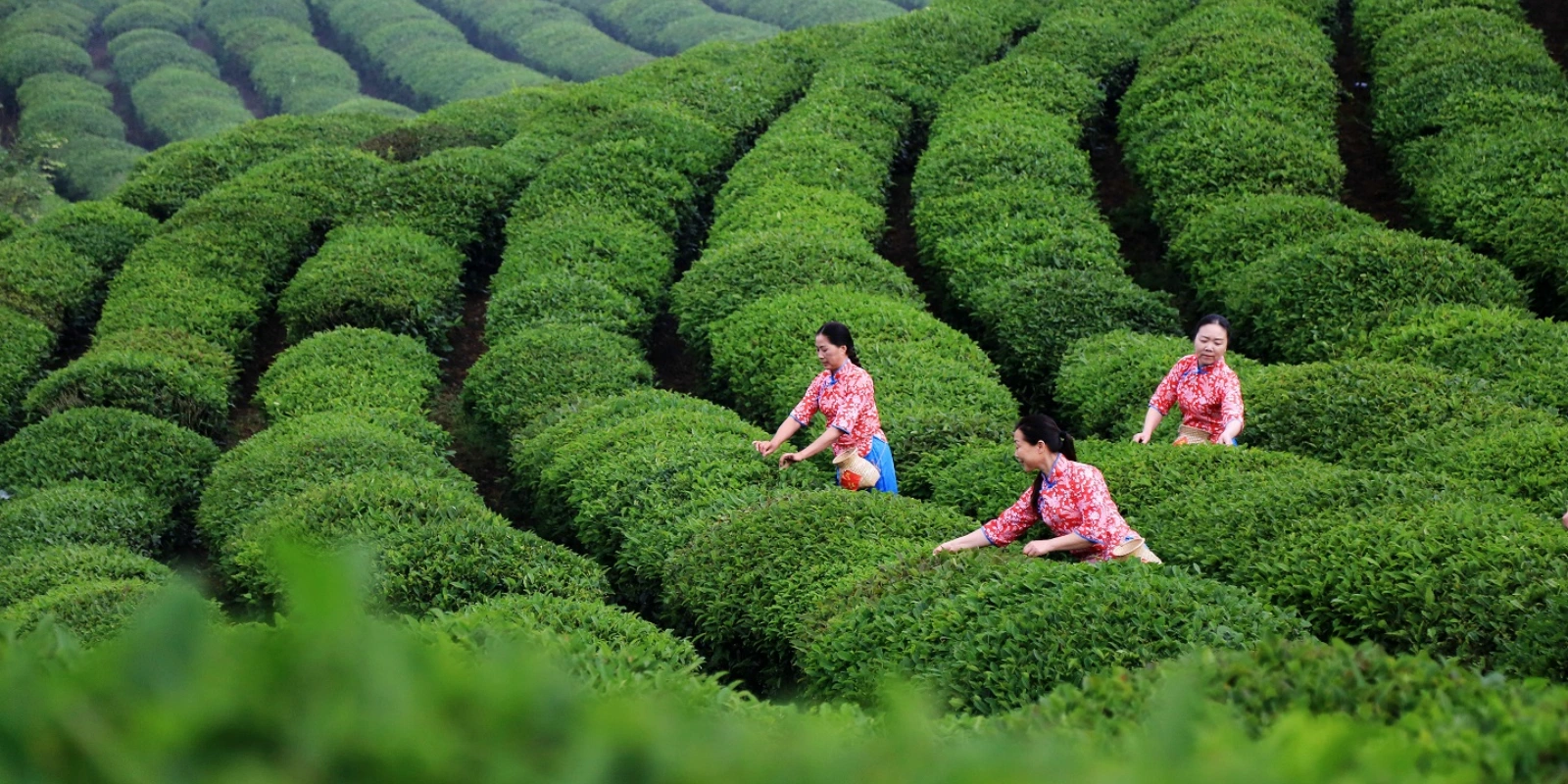
- Tea Industry: Xiushui is the birthplace of Ninghong Tea (Ningzhou Black Tea), one of China’s most historically celebrated teas. Ninghong tea production techniques are recognized as a national intangible cultural heritage, and the county is home to a thriving tea economy built on its rich tea-growing tradition in the mountainous townships.
- Traditional Chinese Medicine: Xiushui is known as Jiangxi’s “natural pharmacy,” with 313 identified medicinal herb species. The combined wild and cultivated stock of medicinal herbs is estimated at approximately 5,000 tons, including notable quantities of atractylodes, scrophularia, rehmannia, pinellia, plantago, platycodon, polygonum multiflorum, and pulsatilla.
🗺️ Tourist Attractions
- Shuangjing Village — Huang Tingjian’s Hometown: A National 4A Tourist Attraction and the birthplace of Huang Tingjian, one of the “Four Great Masters of Song Calligraphy.” The village along the Xiushui River features preserved Song-dynasty architecture, Huang’s calligraphy carvings, and a family temple that stands as a monument to his literary legacy.
- Donghu Village Scenic Area: A 4A-rated scenic area known for its dramatic cliffs, crystal streams, and lush forests. The area offers rock climbing, rappelling, and scenic boat tours through gorges where water reflects the surrounding mountains.
- Xiangu Mountain Tourist Resort: A modern tourism complex blending mountain scenery with resort facilities, marketed as the city’s “living room” for leisure and entertainment.
- Nanya-Majiazhou Scenic Area: A 4A Tourist Attraction combining the Nanya cliffside and Majiazhou island, offering views of the Xiushui River and hiking trails along the historic cliffs where Huang Tingjian once inscribed poetry.
- Hot Spring Town: A developed hot spring resort area popular for wellness tourism, particularly during the cooler months.
🎭 Culture
- Ninghe Opera: A national intangible cultural heritage, this traditional opera form originated in Xiushui and is characterized by its bold northern Jiangxi melodies. With a history spanning over a thousand years, it is one of the oldest surviving local opera traditions in Jiangxi.
- Quanfeng Lantern Festival: Another national intangible cultural heritage from Xiushui, this lantern festival features intricate handcrafted lanterns, folk dances, and processions that have been celebrated for generations in Quanfeng Town.
- Xiushui Shaozi Dumplings: A local culinary tradition of making steamed rice dumplings filled with meat and vegetables, a signature dish made for festivals and family gatherings across the county.
- Autumn Harvest Uprising Legacy: Xiushui holds a pivotal place in modern Chinese history as the place where the first military flag of the Workers’ and Peasants’ Revolutionary Army was designed, made, and raised in 1927, marking the beginning of the Autumn Harvest Uprising.
- The Eight Sages of Xiushui: The county has produced a remarkable roster of historical figures: Huang Tingjian (Song-dynasty calligrapher and poet, founder of the Jiangxi School of Poetry), Yu Jie (Southern Song general), Zhang Jian (Southern Song chancellor), Xu Xi (Northern Song official), Zha Fuxi (20th-century guqin master), and Chen Yinke (renowned 20th-century historian from the Yining Chen family). Chen Yinke’s grandfather Chen Baozhen and father Chen Sanli were also towering figures in late Qing and modern Chinese history.
🚗 Getting There
- Road: Xiushui is located at the intersection of Hubei, Hunan, and Jiangxi provinces, approximately 200 kilometers from Nanchang and 150 kilometers from both Wuhan and Changsha. National highways and provincial roads connect the county seat to neighboring cities. The Daguang Expressway (G45) provides high-speed access through the region.
- Rail: There is no railway station within Xiushui County. The nearest major railway stations are in Jiujiang (approximately 2 hours by road) and Nanchang (approximately 2.5 hours by road).
- Air: The nearest airports are Nanchang Changbei International Airport and Changsha Huanghua International Airport, both within a 2 to 3-hour drive.
🍜 Local Cuisine
- Xiushui Steamed Shaozi: A signature local dumpling made from glutinous rice flour, filled with minced pork, bamboo shoots, and local seasonings, then steamed to a chewy, translucent finish. It is the county’s most iconic dish, served during festivals and celebrations.
- Xiushui River Fish: Freshwater fish caught from the Xiushui River, traditionally steamed or braised with ginger, scallions, and locally grown chilies, highlighting the clean flavor of mountain water.
- Ninghong Tea: The county’s famous black tea, known historically as Ninghong, was once exported to Europe and Russia. Its smooth, mellow flavor with a hint of sweetness reflects the high-altitude growing conditions of Xiushui’s mountainous tea gardens.
- Bamboo Shoot Dishes: Fresh bamboo shoots harvested from the extensive mountain forests of Xiushui, stir-fried with preserved pork or used in soups, showcasing the county’s deep forest resources.