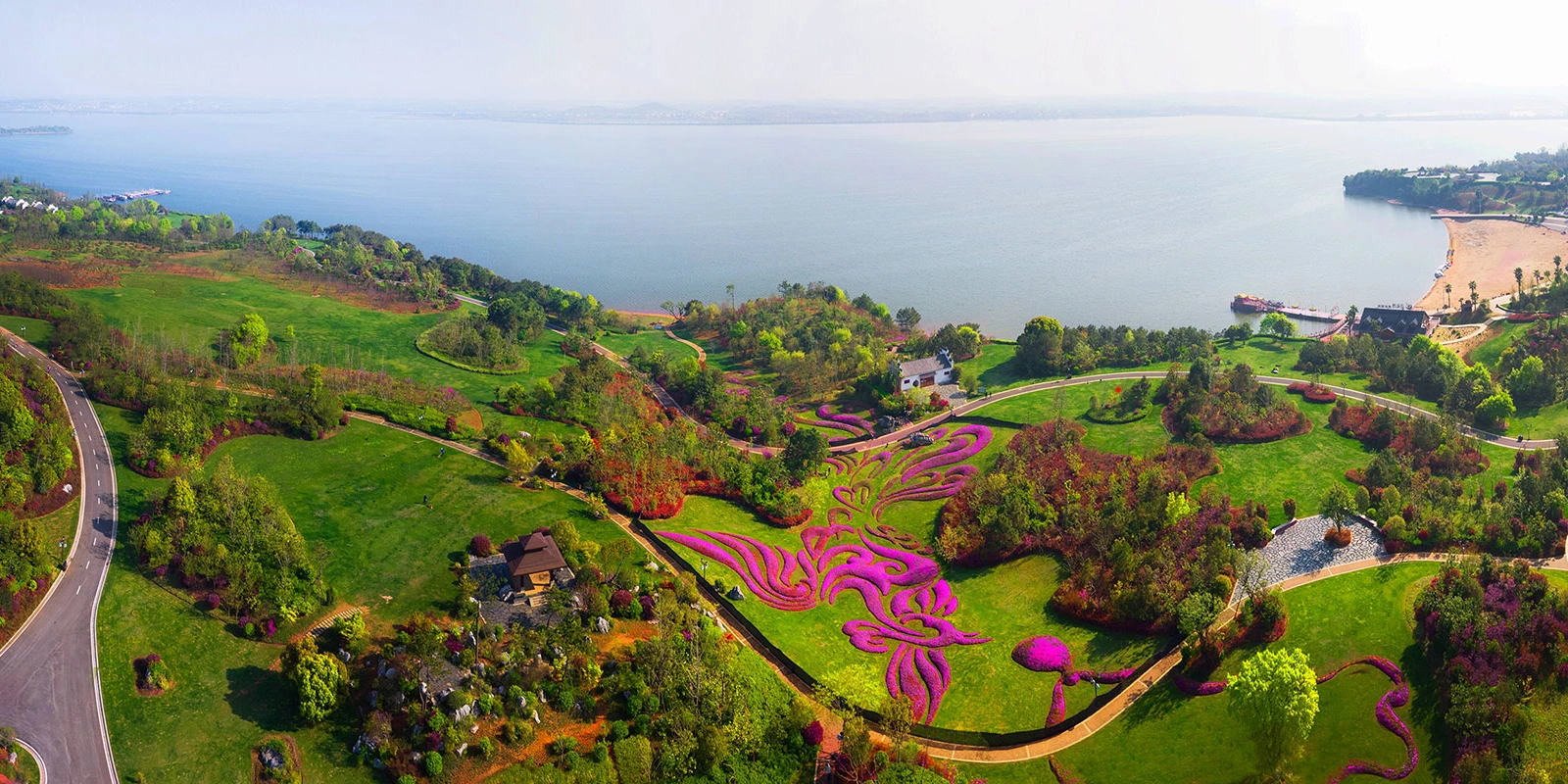
With a history stretching back over 1,700 years, Jinxian County is located in north-central Jiangxi Province under Nanchang City. The county spans 1,971 square kilometers and had 620,200 residents as of March 2025. First established in 280 AD during the Jin dynasty, its name means “advance the worthy” — a reference to a disciple of Confucius who once traveled and taught here. Jinxian is known as the “Hometown of Chinese Brushes” and a “National Digital Rural Pilot County,” and is recognized for its “Seven Golden Flowers” industries.
🔬 Featured Industries
- Medical Devices: Jinxian is one of China’s largest medical device production bases. The county has 86 manufacturing enterprises and over 20,000 salespeople nationwide. Disposable infusion sets account for about 31 percent of China’s market share.
- Culture and Writing Instruments: Jinxian is the largest production base for brushes and pens in China. It supplies about 70 percent of the country’s brushes and 49 percent of metal pens. Over 150 manufacturers and 5,000 sales outlets operate nationwide.
- Fireworks and Pyrotechnics: Lidu Fireworks Group is one of Asia’s largest producers of display shells. It has served major events including the 2008 Beijing Olympics, the 2010 Shanghai World Expo, and the APEC Summit.
- Food Processing: Lidu Winery has a brewing history dating back centuries. A Yuan-dynasty distillery site discovered in 2002 pushed China’s liquor-making history back by 300 years. Lidu liquor is a Jiangxi famous brand.
- Steel Structures: The county has 8 large-scale steel structure manufacturers. Their products have been used in major national projects including the Goldenport Power Plant and the Yichang Yangtze River Railway Bridge.
- Agriculture: Jinxian is a national production base for rice, rapeseed, and soybeans. Rapeseed and black sesame output rank first in Jiangxi Province. Junshan Lake is the largest freshwater lake within any county in China. Its “Junshan Lake Clear Water Hairy Crabs” are a national geographical indication product exported worldwide. Other products include “Xianhu” brand rice and “Jinfeng” tea. Jinxian is a national base for hairy crab export and a major supplier of organic agricultural products.
🗺 Tourist Attractions
- Junshan Lake: The largest freshwater lake within any county in China, covering about 20,000 hectares. Known for high-quality hairy crabs. Features clear water, surrounding hills, and historic sites including ancient bridges and ferries.
- West Lake Lijia: A 600-year-old ancient village between Qinglan Lake and Junshan Lake. Listed as a Traditional Chinese Village in 2016. Features traditional architecture and rural tourism facilities.
- Qinglan Lake Forest Park: A 2000-acre park built to 4A-level standards along the shoreline of Qinglan Lake. Divided into a forest area, Moon Bay beach, and a leisure square.
- Lidu Distillery Ruins: A national key cultural relic protection site. Contains Yuan, Ming, and Qing dynasty remains including 16 Yuan-dynasty fermentation pits, 12 Ming-dynasty pits, and 32 Qing-dynasty pits.
- Dashinao: A lakeside peninsula at the southern end of Junshan Lake. Known for dragon boat racing, temple fairs, and local opera.
🎭 Culture
- Wengang Brush-Making: A provincial-level intangible cultural heritage. The Wengang area has produced brushes for over 1,700 years. Wengang is known as “China’s Brush Capital.”
- Lidu Brewing Techniques: A provincial-level intangible cultural heritage. The Yuan-dynasty distillery site confirmed that China has been producing distilled liquor since at least the Yuan dynasty.
- Ertang Folk Performances: Two provincial-level intangible cultural heritage items. The “Ertang Hired Hand Folk Songs” date back over 2,000 years. The “Ertang Splashing Snake Lantern Dance” originated in the Qing dynasty.
- Meizhuang Flower Stick Dance: A provincial-level intangible cultural heritage folk dance. Performers use bamboo sticks decorated with bells and coins during festivals.
🚗 Getting There
- Rail: Several railway lines intersect in Jinxian: the Shanghai-Kunming Railway, Shanghai-Kunming High-Speed Railway, Beijing-Kowloon Railway, and the Nanchang-Jingdezhen-Huangshan High-Speed Railway. Major stations include Jinxian South Station and Jinxian Station.
- Road: The county is connected by three expressways (Shanghai-Kunming, Fuzhou-Yinchuan, and Dezhou-Nanchang) and two national highways (G316 and G320).
- Air: Nanchang Changbei International Airport is about 60 km away.
🍜 Local Cuisine
- Junshan Lake Hairy Crabs: A national geographical indication product. Known for being large, fatty, and sweet. The crabs have won multiple “King Crab” and “Queen Crab” titles at national competitions.
- Luoxi Big Sesame Dates: A traditional pastry created during the Qing Jiaqing period (1796-1820). Made from glutinous rice, sugar, and sesame. Shaped like dates, with a crispy texture.
- Lidu Wine: A traditional Jiangxi liquor produced using techniques dating back to the Yuan dynasty. The Lidu brand is a Jiangxi famous trademark.