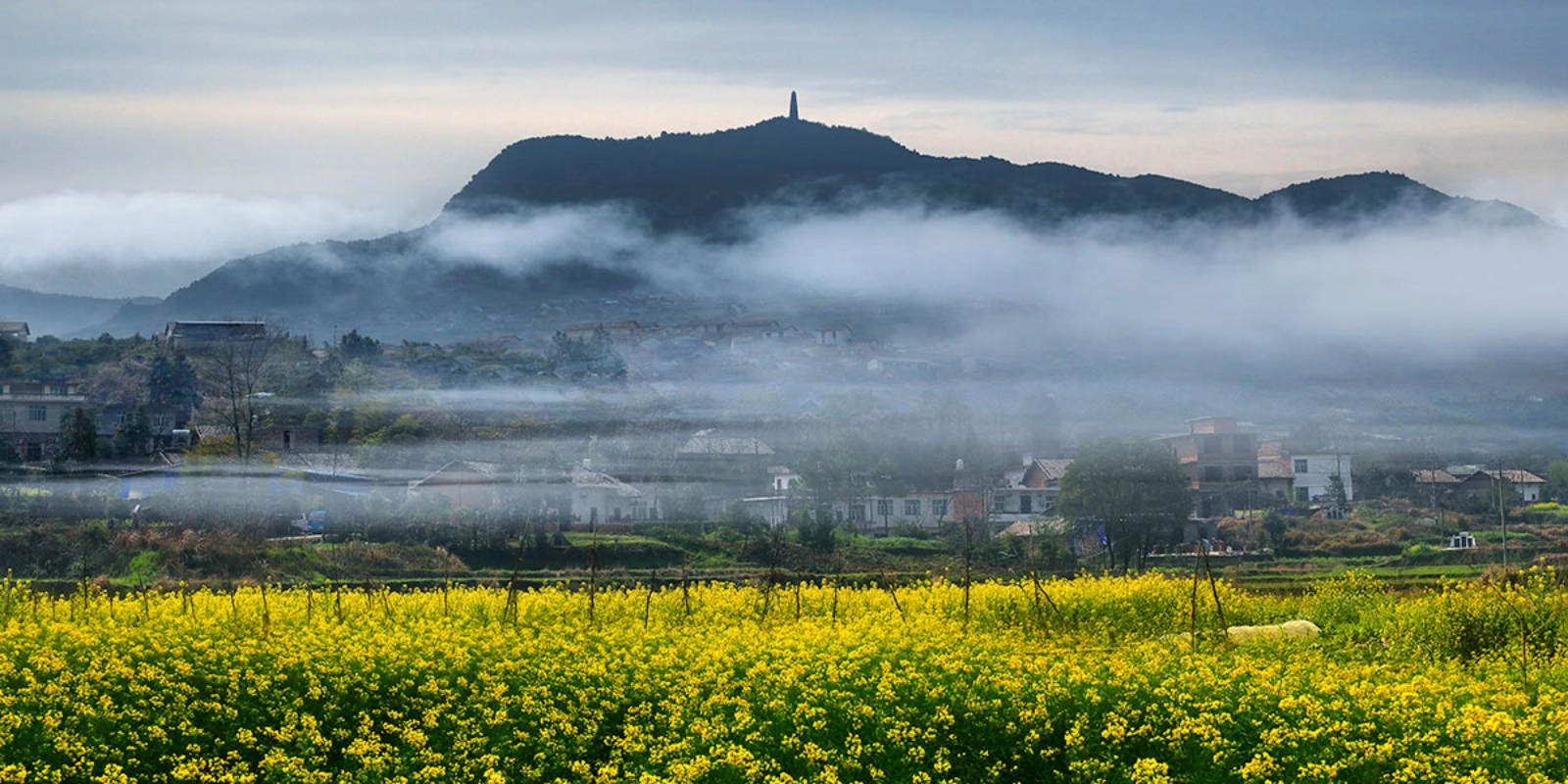
In 645 AD, a Tang dynasty alchemist named Li Tian packed sulfur, charcoal, and saltpeter into a bamboo tube and created the world’s first firecracker. That invention happened in Shangli, and 1,300 years later, the county still bears his mark — its name incorporates the character for “li,” after Li Tian himself. Today, Shangli County sits in western Jiangxi Province under Pingxiang City, covering 702 square kilometers with 6 towns and 4 townships. As of 2025, it had a registered population of 520,887 and achieved a GDP of 21.36 billion yuan, up 5.6 percent year-on-year. Known as “China’s Fireworks and Firecrackers Hometown,” “China’s Nuo Culture Hometown,” and a Jiangxi provincial forest city, Shangli blends a millennium of pyrotechnic heritage with a rapidly diversifying economy.
🔧 Featured Industries
- Fireworks and Firecrackers: Shangli is the recognized birthplace of China’s firecracker industry, with over 1,300 years of history. The traditional Pingxiang fireworks-making technique is listed as a national intangible cultural heritage. The county holds the official title of “China Fireworks and Firecrackers Hometown.” In recent years, the industry has undergone a mechanization revolution — 100 percent of the county’s firecracker producers now use automated assembly and powder-filling machines, achieving full “person-powder separation” and dramatically improving workplace safety. Products reach over 60 countries and regions worldwide.
🗺 Tourist Attractions
- Yangqi Mountain Scenic Area: A national AAAA-level scenic area covering 57.2 square kilometers. It features karst landscapes formed over 180 million years, with four core zones: Yangqi Putong Temple, Nielong Cave, Fenghuang Lake, and Jiulong Cave. It is a designated Jiangxi summer resort destination.
- Yangqi Putong Temple: The birthplace of the Yangqi sect of Chinese Chan Buddhism, a major lineage that spread to Japan during the Southern Song dynasty. Of the 24 Japanese Zen sects formed during the Kamakura period, 20 trace their lineage to the Yangqi sect. The temple preserves Tang dynasty pagodas, steles, and ancient cypress trees.
- Nielong Cave: A massive karst cave system formed 180 million years ago, featuring underground waterfalls, stalactites, and stone pillars. Its Cave Sky Waterfall is listed among eight world-class cave formations in the scenic area.
- Banzhu Mountain: A scenic mountain area offering hiking trails and views of the surrounding landscape.
- Dotian Agricultural Expo Park: A rural tourism destination in Chishan Town, combining agricultural exhibits with leisure facilities.
🎭 Culture
- Firecracker Heritage: Shangli’s firecracker-making dates back to 645 AD. The traditional craft involves 18 steps including paper cutting, tube rolling, powder filling, and string weaving. The Lixian Cultural Park and Dadihong Culture Square in Shangli town commemorate this legacy. Every year on April 18 of the lunar calendar, local residents gather at the You Sheng Temple to honor Li Tian, the firecracker ancestor — a tradition that has continued since 1370.
- Nuo Culture: Shangli is known as “China’s Nuo Culture Hometown.” Nuo, a 3,000-year-old folk tradition of masked dance to drive away evil spirits, is particularly strong here. The county has over 170 surviving Nuo temples, earning the local saying “a general every five li, a Nuo temple every ten li.” The Nuo masks, Nuo dances, and Nuo temples are known as the “three treasures” of Pingxiang Nuo culture. The Dongyuan Xiaojian Nuo Temple and Chishan Shidongkou Nuo Temple are among the best-preserved in the province. Shangli Nuo dance troupes have performed in Beijing, Hong Kong, and Taiwan, where audiences hailed them as a “national treasure.”
- Shadow Puppetry: Shangli shadow puppetry dates back to the Tang dynasty, using leather-cut figures behind a white screen accompanied by local opera singing. It was listed as a provincial intangible cultural heritage in 2013.
- Niudai Tea Lantern: A traditional folk dance combining tea-picking songs with ox-themed lantern performances, originating in the Yuan dynasty and incorporating elements from Hunan Huagu opera. It was listed as a provincial intangible cultural heritage in 2008.
🚗 Getting There
- Road: Shangli is served by the Shanghai-Kunming Expressway, Changsha-Nanchang Expressway, and National Highway 319. The county seat is about 10 kilometers from Pingxiang city center, 100 kilometers from Changsha, and 240 kilometers from Nanchang.
- Rail: The Changsha-Nanchang-Hangzhou High-Speed Railway passes through the area. Rail service is accessible via Pingxiang North Station and Pingxiang Station.
- Air: Changsha Huanghua International Airport is approximately 100 kilometers away, while Nanchang Changbei International Airport is about 240 kilometers away.
🍜 Local Cuisine
- Changping Dried Noodles: A handmade dried noodle specialty from Changping Town. The noodles are thin, smooth, and sun-dried, often given as local gifts.
- Shangli Spicy Tofu: Firm tofu marinated in chili oil and spices, with a chewy texture and strong regional flavor reflecting Shangli’s proximity to Hunan cuisine.
- Steamed Dishes with Chili: Located near the Hunan border, Shangli’s cuisine blends Jiangxi and Hunan flavors, with steamed meat dishes seasoned with local chilies being a household staple.