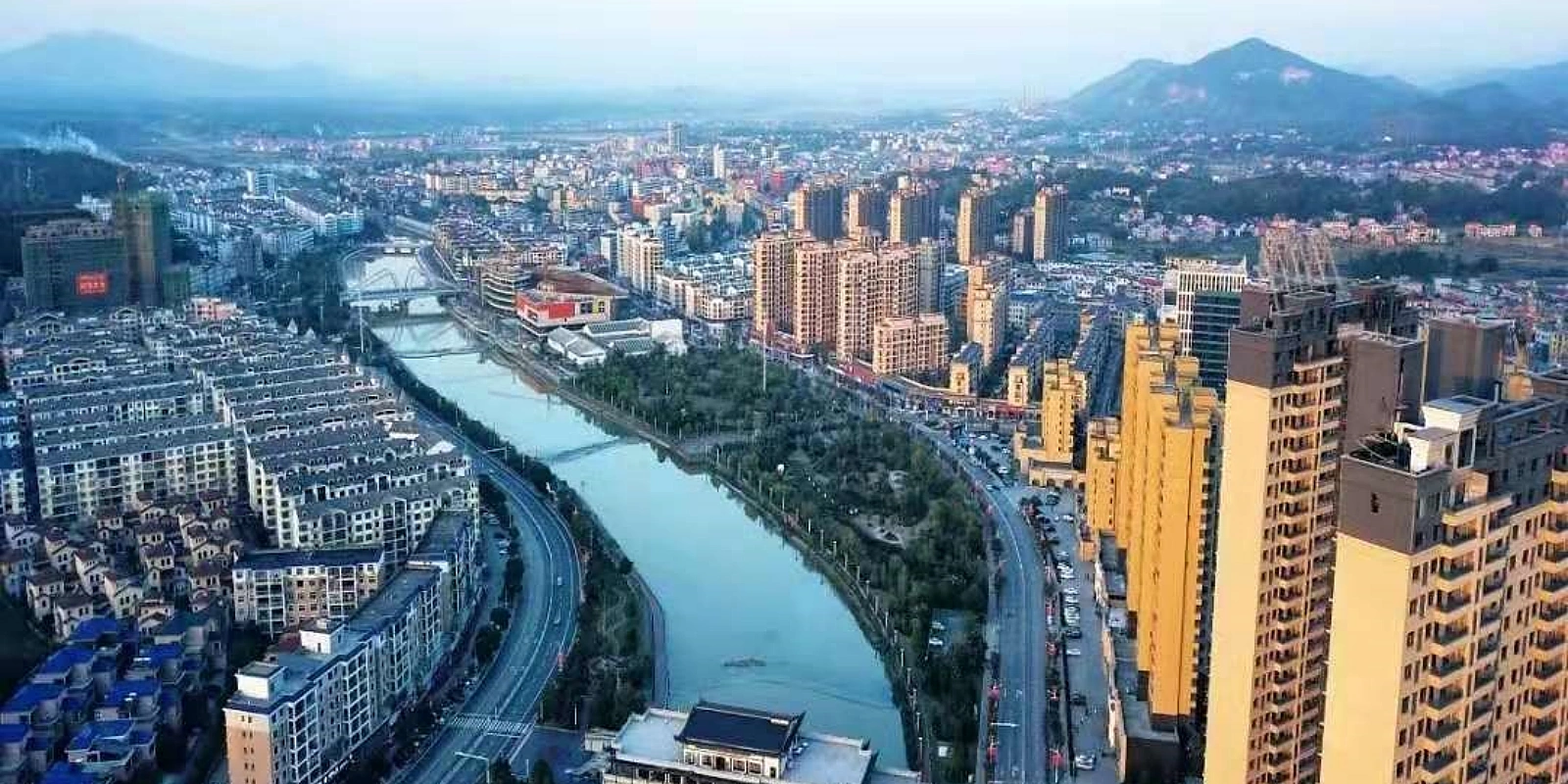
In 267 AD, when Eastern Wu carved a new county out of western Yichun and placed its government seat at a settlement called Lucun, that county was Pingxiang and that seat was Luxi. For 353 years spanning eight dynasties, Luxi served as Pingxiang’s political and economic heart — a fact that still echoes today in the name of the old town: Gucheng, or “Ancient City.” Modern Luxi County, established in 1997 when the district was upgraded to a county, covers 960 square kilometers of western Jiangxi under Pingxiang City. With a registered population of 300,000 across 5 towns and 4 townships, Luxi has earned a string of national honors: Sixth National Civilized City, National Health County, and a title that defines its industrial identity — China’s Insulator Capital.
🏭 Featured Industries
- Electrical Insulators: Luxi is China’s largest production base for electrical insulators, commanding three-quarters of the domestic market for medium- and low-voltage line insulators. The county is officially designated a “China Electric Insulator City” and a National Electric Insulator Industry Well-Known Brand Demonstration Zone. Ten central SOE projects and eight listed company projects operate in the county, a concentration of central state-owned investment known locally as the “Luxi Phenomenon.”
- New Materials and New Energy: Luxi broke its centibillion-yuan project barrier with the 10.8-billion-yuan Zhongcai Lithium Membrane investment. The county is building two hundred-billion-yuan industrial clusters — one in electrical ceramics and advanced ceramics, the other in new materials and new energy — alongside growing electronics information and food processing sectors, forming a “2+1+1” industrial system.
- Selenium-Rich Agriculture: Luxi is known as the “Granary of Western Jiangxi.” It has 15 agricultural industrialization enterprises at the provincial level or above (including 1 national-level), extensive national green food raw material bases with 23 green-certified products and 8 organic products, and 6 Ganpo Authentic certification brands. The county was among the first 30 nationally to be certified for natural selenium-rich land, with 15,364.95 hectares of selenium-enriched soil averaging 0.61 mg/kg — nearly double the national average of 0.33 mg/kg. Ninety-five products including vegetables, fruits, and rice have passed selenium-enriched product certification.
🗺 Tourist Attractions
- Mount Wugong: A National 5A Tourist Attraction and UNESCO Global Geopark straddling Luxi’s border. Its iconic high-altitude meadow above 1,600 meters — over 100,000 hectares in size — is the largest at its latitude in the world. The mountain’s Longshan Village counter-trekking route starts in Luxi County and is considered the “ceiling route” for outdoor enthusiasts in southern China. Luxi was named one of China’s Top 100 Counties for Tourism Development Potential.
- Shankouyan Reservoir: A large-scale water control project and the primary water source for two-thirds of Pingxiang’s urban population. The scenic reservoir area sits amid Luxi’s forested mountains, offering a tranquil escape.
- Yuanhe River Valley: The main waterway crossing Luxi from southeast to northwest, flowing over 110 kilometers through five townships and four towns. The valley offers picturesque farmland and rural landscapes.
- Longshang Terrace Fields: A stunning terraced landscape in southern Luxi, popular with photographers, especially in autumn when the rice turns golden.
🎭 Culture
- Lianxi Academy: One of the earliest academies in Jiangxi Province, founded by the Northern Song philosopher Zhou Dunyi during his tenure as a tax supervisor in Luxi. Zhou Dunyi, a pioneer of Neo-Confucianism, left a lasting intellectual imprint on the county.
- Suo Dragon Dance: A distinctive folk dragon dance tradition unique to Luxi, listed as a provincial intangible cultural heritage. The Gucheng one-horned suolong is particularly renowned for its elaborate performance style.
- Nuo Dance: A masked folk dance from Nankeng Town, Luxi, combining ancient exorcism rituals with theatrical performance. It is listed as a provincial-level intangible cultural heritage item.
- Niudai Tea Lantern: A traditional folk dance from Shangbu Town, blending tea-picking songs with ox-themed performances. Listed as a provincial intangible cultural heritage.
- Farmer Paintings: Luxi is recognized as a “Chinese Farmer Painting Art Township.” The county’s vibrant, rustic paintings depict rural life and agricultural scenes. Paper-cutting is another folk art tradition widely practiced in the area.
- Nianfeng Lion Dance: Another provincial intangible cultural heritage item from Luxi.
🚗 Getting There
- Road: Luxi is served by National Highway 320, the Shanghai-Kunming Expressway (G60), and the Shanghai-Kunming High-Speed Railway, all crossing the county from east to west. The Pingxiang Ring Expressway and the Changsha-Ganzhou High-Speed Railway are under construction. Luxi’s county seat, Luxi Town, is 22 kilometers from Pingxiang city center and 250 kilometers from Nanchang.
- Rail: The Zhejiang-Jiangxi Railway and Shanghai-Kunming High-Speed Railway both pass through Luxi, providing direct connections to major Chinese cities.
- Air: Changsha Huanghua International Airport is 120 kilometers away, Mingyueshan Airport in Yichun is 40 kilometers away, and Nanchang Changbei International Airport is 250 kilometers away.
🍜 Local Cuisine
- Luxi Braised Pork: A slow-cooked pork belly dish seasoned with local soy sauce and spices, known for its tender texture and rich flavor. It is a staple dish for festivals and family gatherings in Luxi.
- Yuanhe River Fish: Freshwater fish from the Yuanhe River, typically steamed or braised with ginger, scallions, and local chilies. The proximity to Hunan cuisine gives Luxi cooking a notably spicy character.
- Se-rich Agricultural Products: Thanks to Luxi’s selenium-enriched soil, local rice, vegetables, and fruits carry distinctive nutritional value. Rice from the county’s selenium-rich farms is particularly prized.
- Mountain Vegetable Stir-fries: Wild bamboo shoots, fern shoots, and other seasonal mountain vegetables gathered from the forested slopes of Mount Wugong, often stir-fried with cured pork.