Stand on the shore of Poyang Lake at Wucheng Town and you will see where China’s largest freshwater lake meets the Gan and Xiu Rivers, where migratory birds blanket the wetlands by the tens of thousands, and where a sunken Han-dynasty county — Haihun — lies beneath the reeds. This is Yongxiu County, founded in 201 BC as Haihun County under Emperor Gaozu of Han, and renamed in 1914 with characters that mean “forever nourished by the Xiu River.” Today Yongxiu covers 1,947 square kilometers in northern Jiangxi under Jiujiang City, with a population of 320,000 across 14 townships, 2 state farms, and 2 enterprise groups. Its terrain is described as “four mountains, three waters, two fields, one road and homestead.” But the numbers that matter most are these: 38 kilometers to Nanchang, 18 kilometers to Changbei International Airport, and one Expressway, two railways, two national highways, and two major rivers all converging on this single county — making Yongxiu arguably the best-connected county in Jiangxi.
🔬 Featured Industries
- Organic Silicon New Materials: Yongxiu is home to Asia’s largest organic silicon monomer production base, anchored by Jiangxi Bluestar Xinghuo Organic Silicon Co. The Yushan Economic Development Zone is a national-level new industrialization demonstration base for organic silicon and one of the second batch of national circular economy pilot units. The county has formed a “3+1″ industrial system of organic silicon new materials, high-end equipment manufacturing, new electronics, and incubator economy.
- High-End Equipment and New Energy: Centered around CRRC’s new energy logistics vehicle manufacturing and smart rail train projects, the county is rapidly scaling its new energy vehicle industry. Beijing OriginWater Technology leads the development of Jiangxi’s first environmental protection industrial park within Yongxiu.
- Modern Agriculture: Yongxiu is a national commodity grain base, national quality cotton base, national key fishery county, and a national “three highs” agriculture demonstration county. It is also among Jiangxi’s top ten fruit-producing counties and top ten vegetable-producing counties. The county has arable land of arable land and water surfaces, plus another 1 hectares of mountain and grassland.
- Vanadium and Mineral Resources: Over 20 types of minerals have been identified in Yongxiu, including antimony, copper, and vanadium, with vanadium metal reserves exceeding 2,400 tons.
🗺 Tourist Attractions
- Yunjushan (Cloud Dwelling Mountain): A renowned Buddhist mountain covering 216.5 square kilometers with a peak elevation of 969.7 meters. Known for its mist-shrouded scenery and cool summer climate, with temperatures averaging just 26°C at the summit even in high summer.
- Zhenru Temple: One of the world’s largest and most orthodox Chan Buddhist centers, with over 1,200 years of history. Three former presidents of the Buddhist Association of China — Xuyun, Yicheng, and Chuanyin — as well as lay leader Zhao Puchu served as its abbots.
- Poyang Lake Migratory Bird Reserve: The western shore of Poyang Lake within Yongxiu is one of the world’s most important wintering grounds for migratory birds, earning the county the nickname “Kingdom of Migratory Birds.” Wucheng Town on the lake’s edge is a premier birdwatching destination.
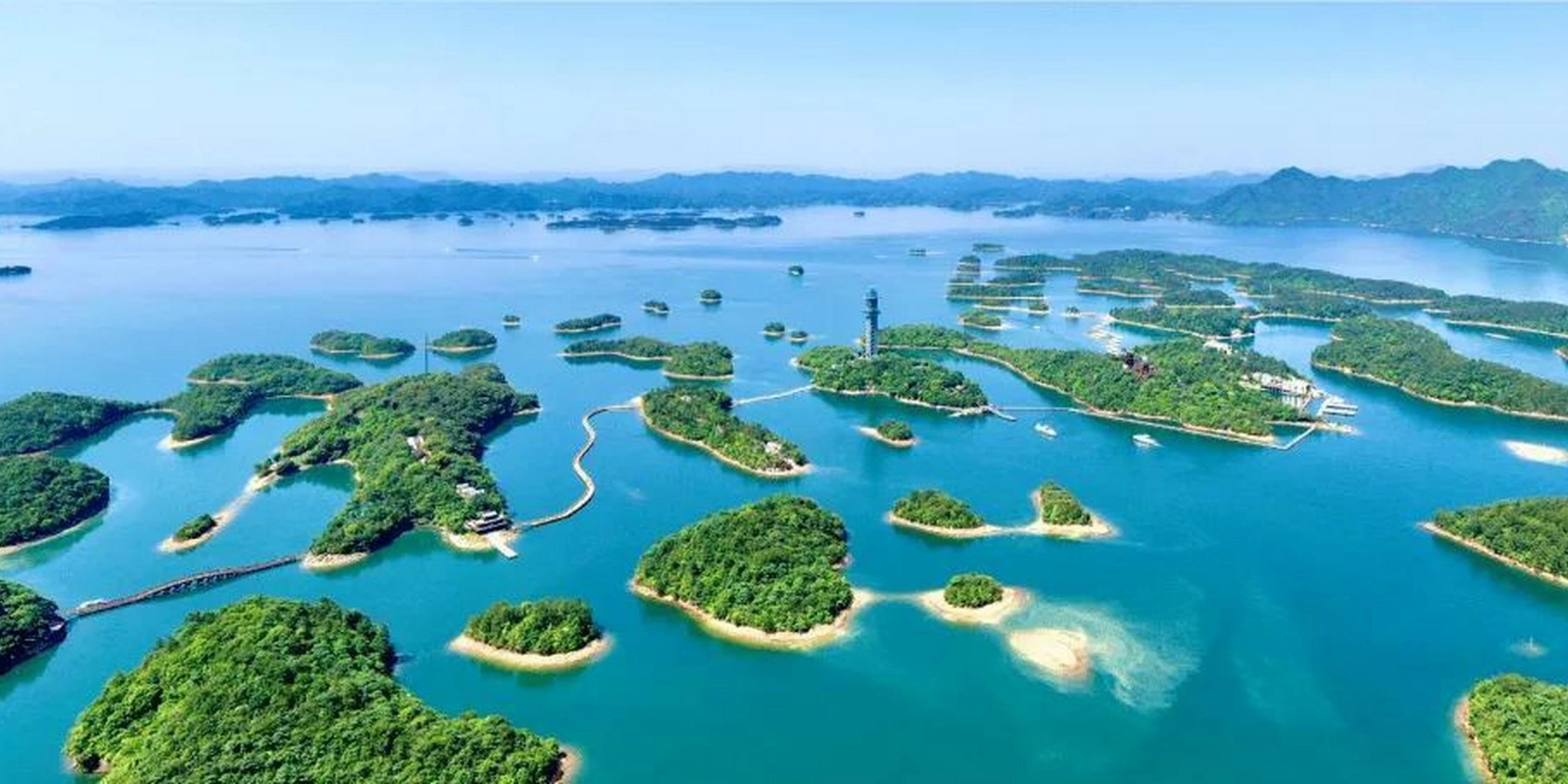
- Zhelin Lake (Lushan West Sea): A vast reservoir lake with 1,667 islands, 308 square kilometers of crystal-clear water rated Class I water quality, and home to freshwater jellyfish. The lake is often called Jiangxi’s “Thousand Island Lake.”
- Wucheng Town: One of Jiangxi’s Four Great Ancient Towns, alongside Jingdezhen, Zhangshu, and Hekou. Wucheng is famed for its ancient wharves, the Ji’an Guild Hall, Wanghu Pavilion, and the spectacular “floating highway” during flood season. Wucheng is also closely tied to the legend of the ‘Sunken Haihun County,’ a story of a lost Han-dynasty world.
- Longyuan Gorge: Known as “China’s Jiuzhaigou in the East,” this 3A-rated scenic area features pristine streams, lush forests, and dramatic gorges of karst topography.
- Taohua Creek Drifting: A seasonal white-water rafting experience on the mountain streams of Taohua Peak at the edge of Zhelin Lake.
🎭 Culture
- Jianchang Gongs and Drums: A traditional folk music tradition from Yongxiu’s historic name Jianchang, featuring rhythmic gong and drum ensembles performed during festivals and celebrations.
- Yaya Opera: A unique local opera form preserved in Yongxiu, recognized as a provincial intangible cultural heritage, with distinctive performance styles passed down through generations.
- Wucheng Pai Gong Haizi (Boatmen’s Work Songs): A traditional labor chant from Wucheng’s heyday as a river port, where boatmen coordinated their loading and unloading with rhythmic singing. Listed as a provincial intangible cultural heritage.
- Lei Fada — Master Builder of the Forbidden City: Lei Fada (1619–1692), born in Meitang Town, Yongxiu, was the founding patriarch of the “Lei Family of Yangshi Lei” — seven generations of master architects who designed and built the Forbidden City and many imperial palaces of the Qing dynasty.
- Historical Legacy: Yongxiu’s 2,200-year history includes the ancient Haihun County (201 BC), the Jianchang period (425 AD), and the modern name adopted in 1914. The Yining Chen family, one of modern China’s most distinguished scholarly clans, traces its ancestral roots to Yongxiu.
🚗 Getting There
- Road: Yongxiu is served by the Fuzhou-Yinchuan Expressway (G70) and Yongxiu-Wuning Expressway. The Changjiu Avenue, a free high-standard highway connecting Nanchang and Jiujiang, passes through the county. National Highways 105 and 316 also traverse Yongxiu.
- Rail: The Beijing-Kowloon Railway (Jingjiu) and the Nanchang-Jiujiang Intercity Railway both stop at Yongxiu Railway Station. The county seat is just 40 minutes by car from Nanchang High-Speed Rail Station.
- Air: Yongxiu is uniquely positioned just 18 kilometers from Nanchang Changbei International Airport — the closest county to the airport in the entire province except for the airport’s own district. Jiujiang Airport is also within reach.
- Public Transit: An intercity bus route connects Yongxiu to Nanchang. The Nanchang Metro system has planned an extension to reach Yongxiu’s city center.
🍜 Local Cuisine
- Wucheng Dog Meat: A signature dish of Wucheng Town, slow-cooked with local native dog, pork belly, star anise, ginger, and dried chilies, resulting in a deeply flavorful, aromatic stew prized for its warming properties.
- Jianchang Dongpo Pork: A local adaptation of the classic dish, legend says Su Dongpo taught the recipe to Yongxiu farmers during a visit. Pork belly is tied with straw and braised until tender.
- Zhelin Lake Mandarin Fish: The crystal-clear waters of Zhelin Lake produce exceptional spotted mandarin fish (Siniperca scherzeri), prized for their delicate, sweet flesh. Steamed or braised, it is the county’s most celebrated freshwater catch.
- Zhelin Lake Bayberries: The bayberries grown on the hills around Zhelin Lake are large, deep red, and balanced between sweet and tart, available fresh in early summer and processed into preserves and beverages.
- Yihe River Citrus: The citrus orchards of Yihe Village in Zhelin Town produce over 3,000 tons of tangerines annually, a celebrated local fruit exported across the province.
- Bamboo Tube Stone Frog: A specialty dish featuring local stone frogs (a type of mountain frog) steamed in bamboo tubes with cooking wine, soy sauce, and pepper, highlighting the freshness of Yongxiu’s forest resources.