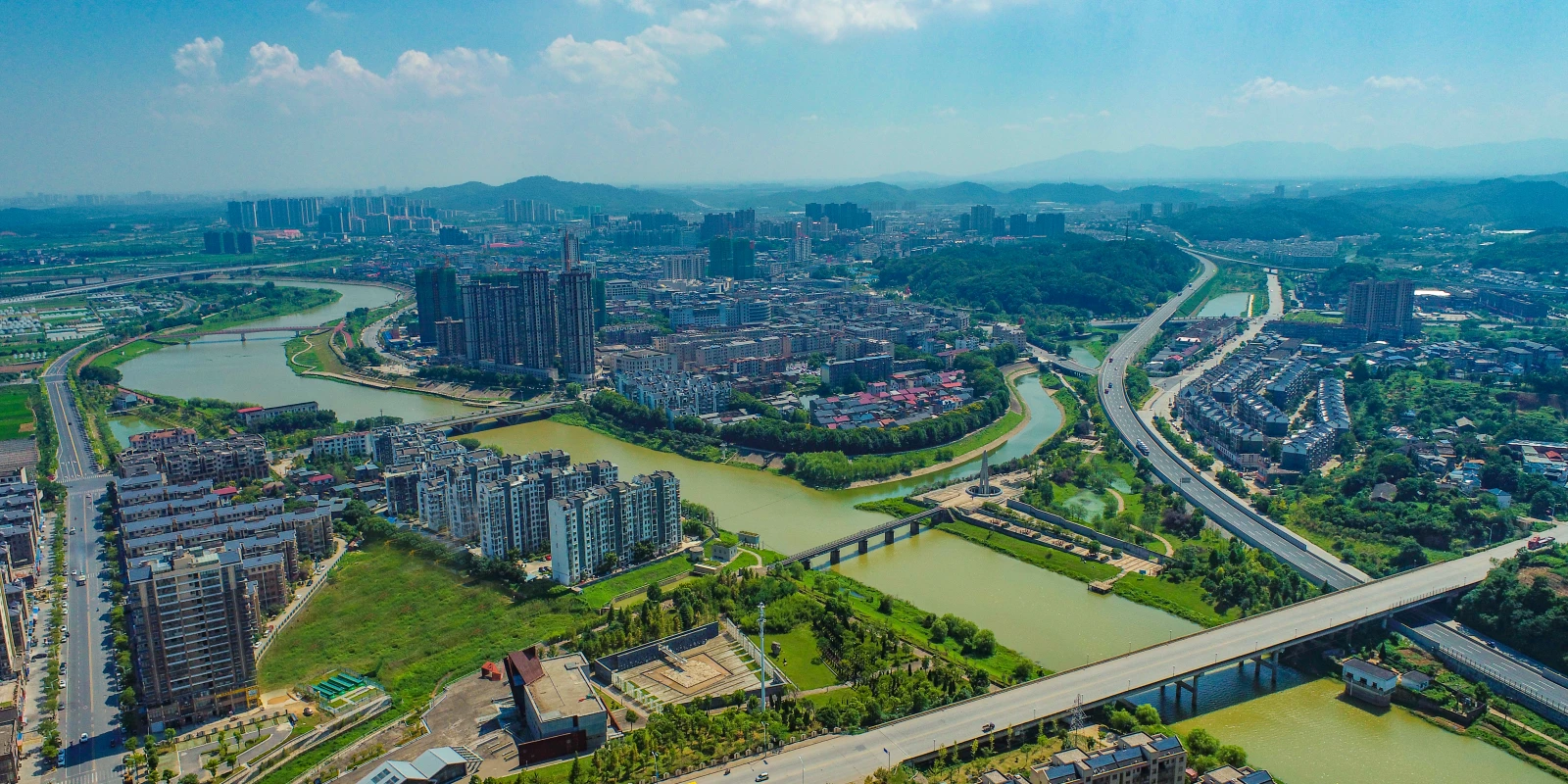
In the summer of 1938, a Chinese army surrounded and routed the Japanese 106th Division at a small county in northern Jiangxi — one of only a handful of times in the entire war that a Japanese division suffered near-complete destruction. That county was De’an, and the battle was called Wanjialing Victory. But De’an’s story runs far deeper than this single battle. It was here, in the ancient kingdom of Fuchian, that Yu the Great once passed during his flood-control journey. It was here that the Dongjia Academy — China’s earliest recorded private academy — opened its doors during the Tang dynasty. And it was here that the Yimen Chen clan, one of the most extraordinary family communes in human history, lived and thrived for 332 years without dividing their property. De’an covers 863 square kilometers in central Jiujiang, with a population of 180,000 across 13 townships. Its name, bestowed by the King of Wu during the Five Dynasties period, means “virtue brings peace.”
🏭 Featured Industries
- Textile and Garment Manufacturing: De’an has built two provincial-level industrial clusters in textile and garment manufacturing. The province’s first textile “industrial brain” was established here, and the Jiangxi Provincial Textile and Garment Industry Research Institute is headquartered in the county. Key enterprises like Baoxin Textile and Yiyang Textile are driving the creation of a full-chain textile ecosystem, from high-performance fibers to smart garment production. The county is building the “De’an Weaving” regional brand and aiming to create a national-level textile cluster.
- Equipment Manufacturing: De’an is home to a provincial-level equipment manufacturing cluster anchored by enterprises like Guoke Yuanda (a national-level “Little Giant” specialist enterprise). The county is developing a Modern Metal Industrial Park and an Intelligent Prefabricated Construction Industrial Park, focusing on high-end metal structural components and smart assembly systems.
- Poultry and Egg Industry: De’an has emerged as one of Jiangxi’s leading poultry counties, with egg-laying chicken stock exceeding 7.5 million birds — first in Jiujiang and second in the entire province. The county has built a complete poultry industry chain covering feed production, breeding, manure treatment, slaughter, and egg deep-processing. A provincial egg trading center is under construction to serve the broader region.
- Mineral Resources: De’an is known as a “small population county, big mineral county,” with over 20 types of mineral deposits identified including tin, lead, zinc, antimony, gold, silver, fluorite, and high-quality chemical-grade limestone. Tin, lead-zinc, antimony, fluorite, and limestone constitute the county’s five major advantageous mineral resources.
- New Materials and Electronics: The county is developing specialty electronic materials through enterprises like Ruizhi Electronics, building a complete supply chain “from one board to one screen” for high-end displays. Green new materials derived from tin, calcium, antimony, and fluorite are also being developed for downstream integrated applications.
🗺 Tourist Attractions
- Wanjialing Victory Memorial Park: A national-level Anti-Japanese War memorial site and 4A-level tourist attraction, spanning both sides of the Boyang River on National Highway 105. The park commemorates the 1938 Battle of Wanjialing, where Chinese forces annihilated the entire Japanese 106th Division — one of three major Chinese victories of the war alongside Pingxingguan and Tai’erzhuang. The park covers 12,400 square meters and serves as anpatriotic education base.
- Yimen Chen Cultural Scenic Area: Located in Cheqiao Town, this scenic area celebrates the Yimen Chen clan — an extraordinary family commune that lived together for 332 years across 15 generations without dividing property, with over 3,700 members eating from a single kitchen. The clan’s “Yimen Chen Family Traditions” are recognized as a national-level intangible cultural heritage and have been featured on the Central Commission for Discipline Inspection’s website as model family ethics.
- Yuan Longping Science Education Base: Located in Hedong Township, 5 kilometers from the county seat, this is the ancestral home of Yuan Longping, the “Father of Hybrid Rice.” The 400-acre base integrates science education, cultural tourism, and celebrity heritage, featuring exhibition halls, a super rice demonstration base, and educational facilities.
- Yifeng Mountain Park: Built on Yifeng Mountain, one of De’an’s historic “Eight Scenic Spots”, this park includes the De’an Painting and Calligraphy Academy and offers panoramic views of the county. The Eight Scenic Spots, first recorded during imperial times, also include Putang Luoyan, Jinhe Liuxiang, and Diaotai Yuchang.
- Shimen Village: A rural tourism destination in Zouqiao Township, 35 kilometers from the county seat. With forest coverage exceeding 80%, the village sits at the foot of Lushan Mountain and the shore of Poyang Lake, offering lotus pond scenery, fresh mountain air, and authentic immigration culture.
🎭 Culture
- Yimen Chen Family Culture: The “Yimen Chen” clan represents one of the most remarkable family communes in world history — 15 generations, 332 years, over 3,700 members living together with shared property, a single kitchen, and a code of conduct based on loyalty, filial piety, and hard work. The clan’s family tradition has been designated a national-level intangible cultural heritage and promoted nationwide as a model of traditional Chinese family ethics.
- Dongjia Academy: China’s earliest recorded private academy, established during the Tang dynasty in De’an. It represents the county’s millennia-long tradition of valuing education and scholarship, and produced generations of scholars and officials.
- Folk Arts: De’an preserves a rich tradition of folk performing arts including Xihe String Music, Nuo songs and dances, dragon-lantern performances, tea-picking opera, and folk mountain songs. The county’s historic “Eight Scenic Spots” each have their own accompanying poetic legends, which have been listed as Jiujiang municipal intangible cultural heritage.
- Cultural Luminaries: De’an is the ancestral home of Yuan Longping (Father of Hybrid Rice), the birthplace of Xiong Shili (modern Chinese philosophy giant), the ancestral home of film director Ang Lee (Taiwan), and the hometown of supermodel Lv Yan.
- Revolutionary Heritage: De’an is a Class I old revolutionary base area with a rich Communist Party history — it was among the first counties in northern Jiangxi to establish a Party branch, among the first to establish a county-level Soviet government, and the site of an early Workers’ and Peasants’ Red Army guerrilla force in the region. The Tieshan Uprising (1927) was one of the earliest armed peasant uprisings in northern Jiangxi.
🚗 Getting There
- Road: De’an is served by the Fuzhou-Yinchuan Expressway (G70), National Highways 105 and 316. The De’an-Baisha Highway, Linquan-Baisha Highway, and Wanjialing Tourist Highway connect all townships. The county is about 1 hour from both Nanchang and Jiujiang city centers.
- Rail: The Beijing-Kowloon Railway and Nanchang-Jiujiang Intercity Railway both pass through De’an and stop at De’an Railway Station. The county is well-connected to the national high-speed rail network.
- Air: Nanchang Changbei International Airport is 65 kilometers away (about 40 minutes by car via G70). Jiujiang Lushan Airport is just 25 kilometers away.
- Port: Jiujiang Port on the Yangtze River is 48 kilometers away, providing water freight access to the entire Yangtze River system.
🍜 Local Cuisine
- Luobo Pancake: A traditional De’an street snack made from shredded white radish mixed with rice flour and seasonings, pan-fried until golden and crispy on the outside while remaining soft inside. It is a beloved breakfast item across the county.
- Aizi Pressed Salted Duck: A specialty pressed duck from the Aizi area, salt-cured and pressed flat before air-drying. The resulting meat is firm, intensely flavored, and can be steamed or stir-fried. It is a favored gift item among locals.
- Sweet Glutinous Rice Balls: Small glutinous rice balls served in a lightly sweetened broth, sometimes with osmanthus flowers or goji berries. A traditional dessert especially popular during festivals and family gatherings.
- Aimin Peanuts: Peanuts grown in the Aimin Township area, known for their particularly rich flavor and crunchy texture. They are typically dry-roasted and served as a snack with tea.
- Yimen Chen Wine: A traditional rice wine produced by the Yimen Chen community, carrying centuries of family brewing heritage. The wine is known for its smooth, mellow character and is often served during ceremonial occasions.
- Tangshan Chili Sauce: A handmade chili sauce from Tangshan, made from locally grown chili peppers. It is prized for its bold, aromatic heat and used as a condiment for noodles, rice, and stir-fries.