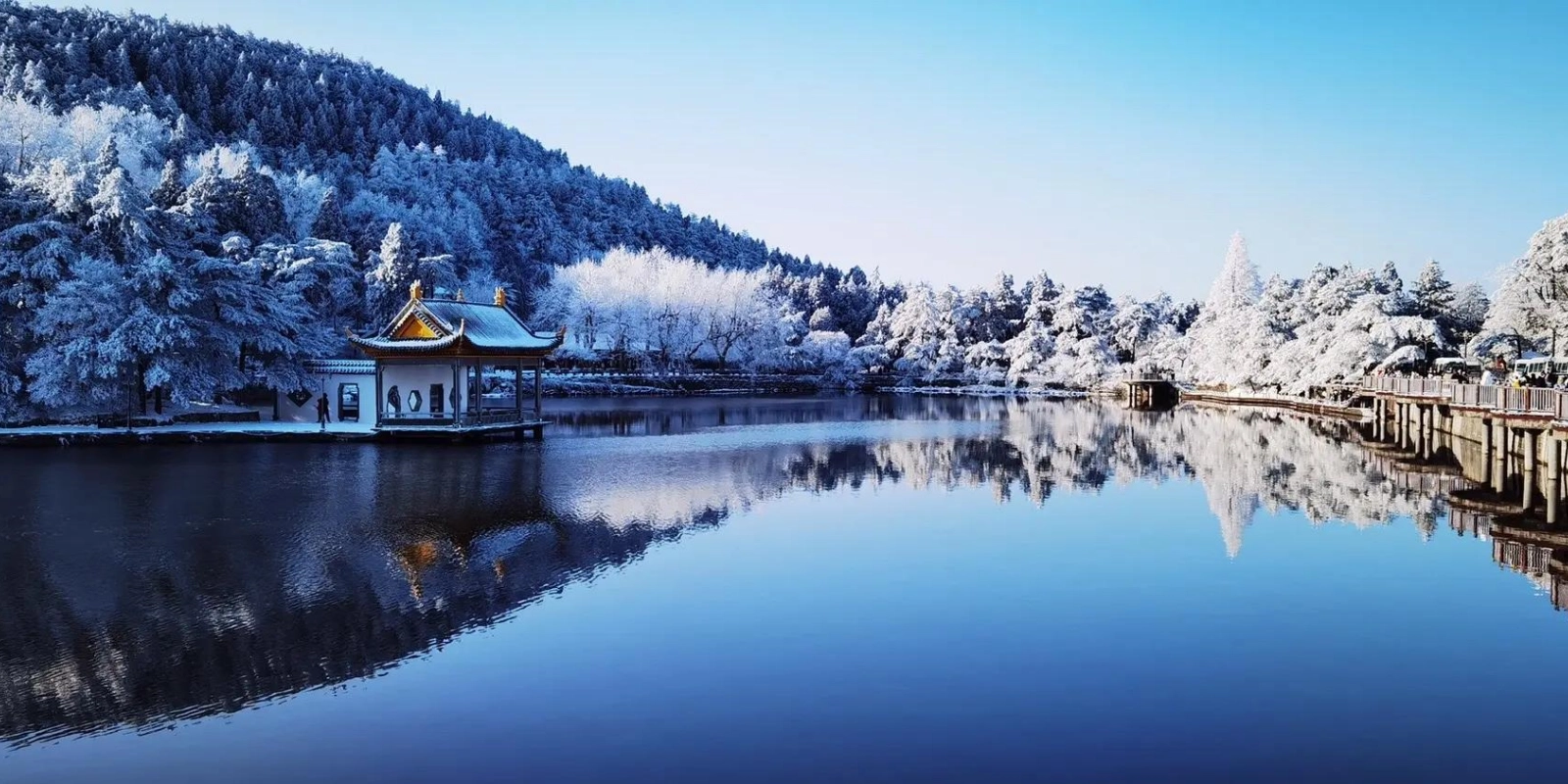
No mountain in China has been more written about, more painted, or more dreamed of. Over 3,500 poets have climbed its slopes and left 16,000 poems. Li Bai saw a waterfall “falling straight down three thousand feet” and imagined it was the Milky Way descending from heaven. Su Dongpo warned that the true face of the mountain could never be seen from inside it. Tao Yuanming found the inspiration for his utopian “Peach Blossom Spring” in its valleys. This is Lushan — a UNESCO World Cultural Heritage site and World Geopark, a mountain so revered it has shaped Chinese literature, art, and philosophy for over two millennia. In 2016, the former Xingzi County was dissolved, and Lushan City was born — a county-level city under Jiujiang spanning 765 square kilometers with a population of 280,000 across 10 townships. Today, Lushan is not just China’s most celebrated mountain but also a living city where 20 million tourists arrive each year to walk among 600 historic villas, soak in 70-degree radon hot springs, and experience 90.7% forest cover at the legendary Guling summer resort.
💡 Featured Industries
- Tourism Economy: Lushan is one of China’s most visited destinations. In 2025, the city received 21.87 million tourists and generated 18.75 billion yuan in tourism revenue — a 25.9% annual increase. Core scenic area ticket sales reached 2.88 million, up 30.15%. The city has been recognized as a “Cultural Tourism Strong County” of Jiangxi and a national High-Quality Outdoor Sports Destination.
- Down Jacket and Garment Manufacturing: Lushan has completed a major industrial upgrade by consolidating its previously scattered down jacket and garment processing enterprises into dedicated industrial parks. The city now hosts 7 large-scale down garment companies and has established industry standards, achieving a historic breakthrough in this traditional sector.
- Hot Spring and Health Tourism: Lushan’s radon-rich hot springs maintain a constant temperature of 68-72°C and contain over 30 minerals and trace elements beneficial to human health. The springs are recorded in the traditional Chinese medical classic “Compendium of Materia Medica” and rank among the world’s three most famous hot springs alongside Huaqing Pool in Shaanxi and the Pyrenees Springs in Spain.
- Mineral and Stone Processing: The city has abundant non-metallic mineral resources including granite (1.5 billion cubic meters), bluestone (over 100 million cubic meters), and molding sand (280 million cubic meters). Lushan’s bluestone inkstone manufacturing — the “Gold Star Song Inkstone” awarded by Emperor Huizong of Song — is a nationally recognized intangible cultural heritage.
- Sports and Event Industry: Lushan has built a thriving event economy hosting the Lushan International Love Film Week, the Lushan Half Marathon, the Poyang Lake International Cycling Race, the “Three Mountains and Five Sacred Peaks” cross-country race, and the National Go Team Tournament. These events have significantly elevated the city’s profile and attracted visitors year-round.
🗺 Tourist Attractions
- Lushan Mountain Scenic Area: A UNESCO World Cultural Heritage site (1996) and World Geopark (2004) featuring 474 scenic spots across 171 named peaks. Key landmarks include Guling (the mountaintop town known as the “Summer Capital” for its cool climate), the Five Old Men Peak, Han Yang Peak (1,474 m — the highest), and the dramatic Sandiequan (Three-Step Waterfall) plunging down 155 meters in three tiers.
- Xiufeng Waterfall and Bailudong Academy: Xiufeng is where Li Bai wrote his immortal “Waterfall of Incense Burner Peak” — “flying straight down three thousand feet.” Nearby, the White Deer Cave Academy, founded by Neo-Confucian master Zhu Xi, was one of China’s four great academies and a center of Confucian learning for centuries.
- Donglin Temple: Founded in 386 AD by the eminent monk Huiyuan, this is the birthplace of Pure Land Buddhism, one of the most widely practiced schools of Buddhism in East Asia. The temple complex features ancient architecture, a 48-meter-high Amitabha Buddha statue, and serene forest surroundings.
- Lushan Hot Springs: Natural radon-rich hot springs at 68-72°C, classified among the world’s three most famous springs. Numerous resort hotels and bathhouses offer spring bathing experiences with mountain views, health treatments, and leisure facilities.
- Lushan UNESCO Global Geopark: The mountain’s geological features include Quaternary glacial remnants, fault-block mountain structures, and unique karst formations. The geopark system includes multiple geo-trails, exhibition halls, and educational programs about Lushan’s 2-billion-year geological history.
🎭 Culture
- Lushan’s Poetic Legacy: No mountain in China has inspired more poetry. Tao Yuanming (365-427 AD) founded China’s pastoral poetry tradition here. Li Bai visited five times and wrote over 20 poems about Lushan. Su Dongpo’s “Written on the Wall of West Forest Temple” — “From the side, a range; from the end, a peak” — is among the most famous Chinese poems ever written. Zhou Dunyi’s “On the Love of the Lotus” was also composed here. Over 1,300 cliff-side inscriptions survive on the mountain’s rocks.
- Religious Convergence of Five Faiths: Lushan is one of very few places in the world where Buddhism, Taoism, Catholicism, Christianity, and Islam have coexisted for centuries. The mountain hosts Donglin Temple (Buddhist), Jianji Guan (Taoist), and historic churches built by Western missionaries — a unique interfaith landscape.
- Summer Capital Villas: Over 600 villas in 20 different national architectural styles dot Lushan’s slopes, built by Western missionaries, diplomats, and Chinese elite during the late Qing and Republican eras. Guling town became the “Summer Capital” of the Republic of China, where Chiang Kai-shek, Mao Zedong, Zhou Enlai, and other historical figures spent summers and held important meetings.
- Gold Star Song Inkstone: A national-level intangible cultural heritage, these inkstones are hand-carved from Lushan’s unique bluestone. Emperor Huizong of the Song dynasty personally named them “Gold Star Song Inkstones” for their beauty and quality. The craft requires exceptional skill and has been passed down for over 900 years.
- Lushan International Love Film Week: An annual film festival held in Guling town, celebrating romance films against the mountain’s spectacular backdrop. The event attracts filmmakers, actors, and cinema lovers from across China and has become one of Lushan’s signature cultural brand events.
🚗 Getting There
- Road: Lushan is served by the Circular Lushan Highway connecting to the Nanchang-Jiujiang Expressway, National Highway 105, and the Jiujiang Ring Expressway and Duchang-Jiujiang Expressway. The city is 30 minutes from Jiujiang city center and 1 hour from Nanchang Changbei International Airport.
- Mountain Access: Two main mountain roads — the South Gate Road and North Gate Road — connect the base to Guling town at the summit. An extensive network of ring roads, branch roads, and hiking trails provides access to all major scenic spots.
- Water: Lushan sits on the shores of Poyang Lake with 118 kilometers of lake shoreline. The Gan, Fu, Rao, Xin, and Xiu rivers converge in the city’s southeastern waters, providing water transport connections to the Yangtze River via Hukou and Poyang Lake.
- Air: The nearest major airport is Nanchang Changbei International Airport, approximately 1 hour by road. Jiujiang Lushan Airport is also within convenient driving distance.
🍜 Local Cuisine
- Lushan Stone Ear: A rare black fungus that grows on Lushan’s unique rock formations, prized for its delicate texture and purported health benefits. Often served in soup or stir-fried with eggs, it is considered the mountain’s most iconic ingredient.
- Lushan Cloud-Mist Tea: Grown in the misty high elevations of Lushan, this famous green tea has a distinctive fresh, slightly sweet flavor. The tea bushes thrive in the cool, foggy mountain climate, producing tender leaves with a delicate aroma. It is one of China’s most renowned high-mountain teas.
- Guling Stone Chicken: Despite its name, this dish features rock frogs (a type of large frog endemic to mountain streams) rather than chicken. The frog meat is tender and mild, typically stir-fried with green peppers, ginger, and garlic in a light sauce.
- Lushan Three Treasures Hotpot: A local specialty stew combining stone ear fungus, bamboo shoots, and mountain tofu in a clear broth. The dish showcases the pure flavors of Lushan’s forest and mountain ingredients.
- Poyang Lake Fish Head Soup: Large freshwater fish heads from Poyang Lake, slow-simmered with ginger, scallions, and Lushan spring water until the broth turns milky white. The soup is celebrated for its rich, velvety texture and deep lake flavor.