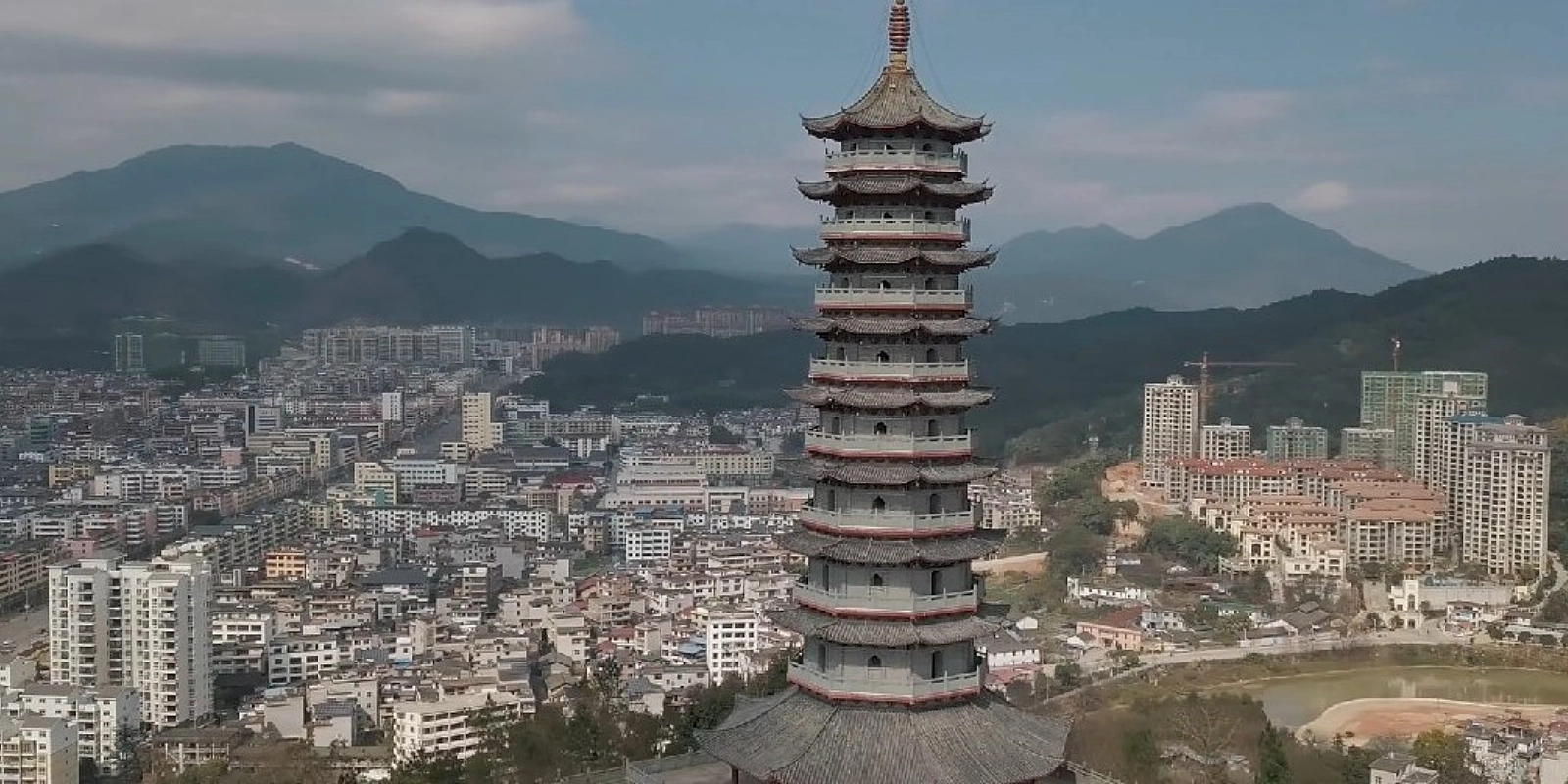
In 1907, a German missionary nameda German missionary picked up a black, heavy rock on West Creek Mountain outside Dayu County. That rock turned out to be tungsten ore — and that discovery launched China’s tungsten industry. Dayu became the “Tungsten Capital of the World,” with 440,000 tons of proven reserves that would fuel wars, build industries, and shape the modern world. But tungsten is only one layer of this extraordinary county in southern Jiangxi. Dayu sits at the foot of the Dayu Ridge — the first of the Five Ridges that separate central China from the Lingnan region — and its mountain pass, Plum Pass (Meiguan), was the core land route of the ancient Maritime Silk Road. This 1,368-square-kilometer county of 310,000 people, administered by Ganzhou City, is where Neo-Confucianism was born in the 11th century, where Tang Xianzu found the inspiration for his masterpiece “The Peony Pavilion,” and where Marshal Chen Yi wrote his immortal revolutionary poems.
💡 Featured Industries
- Tungsten Mining and Processing: Dayu is the birthplace of China’s tungsten industry (1907) and the “World Tungsten Capital.” With cumulative proven reserves of 440,000 tons, the county hosts 26 Class A mines and a complete tungsten industrial chain — from mining to ammonium paratungstate (19,000-ton annual capacity), tungsten powder and tungsten carbide (14,000 tons), cemented carbide (2,920 tons), and cemented carbide drill tools (30 million units). The provincial-level tungsten and non-ferrous metals deep-processing base, with 80+ enterprises, is Jiangxi’s only such designated industrial cluster.
- Non-Ferrous Metals and Alloys: Beyond tungsten, Dayu has developed a comprehensive non-ferrous metals sector including lithium battery materials, precision machinery, and heat exchanger manufacturing. The county’s industrial parks host projects producing precision air conditioning units, lithium battery materials, and specialty metal components serving both domestic and export markets.
- Tourism and Cultural Economy: Dayu received 8.48 million tourists in 2021, generating 6.837 billion yuan in revenue. The county has been recognized as “China’s Most Beautiful Ecotourism County,” “China’s Most Beautiful Rural Tourism Destination,” and a national forest tourism demonstration county. Major tourism investments include the Meiling Memorial Museum, Peony Pavilion Cultural Park, and the Southern Jiangxi Revolutionary Base Area Memorial.
- Green Agriculture and Specialty Products: Dayu’s mountainous terrain and clean water produce high-quality agricultural goods including selenium-rich rice, high-mountain tea, and specialty fruits. The county is a National Agricultural Product Quality Safety Demonstration County and promotes organic and green-certified farming.
- Mining Legacy and Industrial Tourism: Dayu’s century-old tungsten mining history has created a unique industrial heritage landscape. The Xihua Mountain Mine area, historic mining tunnels, and mineral processing facilities offer a distinctive industrial tourism experience, documenting the evolution of China’s mining industry from manual labor to modern automation.
🗺 Tourist Attractions
- Yashan Scenic Area (Mount Ya): A national 4A-level scenic area and the crown jewel of Dayu’s tourism. Yashan is an ecological resort featuring spectacular peaks, cascading waterfalls, bamboo groves, and ancient tea terraces. The mountain offers hiking trails, a cliff-side glass walkway, a Taoist cultural center (Daoyuan Academy), and boutique tea farm stays. It is known as the “back garden of the Greater Bay Area” for its popularity with Guangdong and Hong Kong visitors.
- Meiguan Ancient Trail (Plum Pass): One of China’s most historically significant mountain passes, Meiguan was the primary land route connecting central China with the Lingnan region for over 2,000 years. Zhang Jiuling, the Tang dynasty prime minister, widened the trail into a major post road in 716 AD, and it became the core land corridor of the ancient Maritime Silk Road. The trail is lined with ancient plum trees — when they bloom in winter, the mountain is covered in white blossoms, inspiring Dayu’s title “Plum Blossom Poetry Kingdom.”
- Peony Pavilion Cultural Park: A cultural park dedicated to Tang Xianzu’s masterpiece “The Peony Pavilion” (Mudan Ting), one of China’s four great classical dramas. Tang Xianzu based the play on a local folk tale from Dayu, and the park features traditional Jiangxi gardens, performance venues, and exhibition halls interpreting the play’s enduring love story.
- Meiling Memorial Museum (Three Chapters of Meiling): A museum commemorating the Southern Jiangxi Three-Year Guerrilla War (1934-1937), when Communist forces led by Chen Yi and Xiang Ying fought a desperate rearguard action after the main Red Army departed on the Long March. The museum is named after Chen Yi’s famous poem “Three Chapters of Meiling” (Meiling Sanzhang), written during this period and considered a masterpiece of revolutionary literature.
- Sanjiangkou Primitive Forest: A pristine secondary forest area where three rivers converge, featuring ancient trees, clear streams, and untouched ecosystems. The area offers hiking, bird watching, and the experience of a preserved subtropical broadleaf forest ecosystem.
🎭 Culture
- Birthplace of Neo-Confucianism (Lixue): Dayu is where Neo-Confucianism was conceived. In 1045 AD, Zhou Dunyi served as a military official in Dayu (then Nan’an Prefecture) and began developing his synthesis of Confucian ethics, Buddhist metaphysics, and Taoist cosmology. He taught Cheng Hao and Cheng Yi — the brothers who would become the founders of the Cheng-Zhu school of Neo-Confucianism — from the Nan’an Prefecture School. Zhou Dunyi’s works “Tai Chi Diagram Explanation” and “On the Love of the Lotus” were written in this period. Emperor Lizong of Song later personally inscribed “Daoyuan Academy” (Source of the Way) to honor Zhou’s achievement.
- Wang Yangming’s Final Days: The great Ming dynasty philosopher Wang Yangming (Wang Shouren) spent his final years in Dayu. After suppressing rebellions in southern Jiangxi, Wang fell ill and died at Qinglongpu in Dayu in 1529. Dayu thus became the place where the “Three Establishments” (standards of virtue, achievement, and scholarship) of Wang Yangming’s life were completed — a site of pilgrimage for scholars of the School of Mind (Xinxue).
- The Peony Pavilion and Tang Xianzu: The Ming dynasty playwright Tang Xianzu (1550-1616) visited Dayu and was inspired by a local folk love story to write “The Peony Pavilion” — a 55-act romantic drama that remains one of the most performed works in Chinese opera. The play’s themes of love beyond death have resonated across East Asian literature for over 400 years.
- Plum Blossom Poetry Tradition: Over 1,000 poems about plum blossoms have been written at Meiguan by literary giants including Song Zhiwen, Han Yu, Kou Zhun, Wang Anshi, Su Shi, Su Zhe, Huang Tingjian, Wen Tianxiang, and Qi Jiguang. This gives Dayu the title “Plum Blossom Poetry Kingdom” and reflects a millennium-long tradition of plum blossom appreciation and poetic composition at this historic pass.
- Revolutionary Legacy: Dayu was a core area of the Southern Jiangxi Soviet and the main battlefield of the Three-Year Guerrilla War. Chen Yi’s “Three Chapters of Meiling” and “Songs of the Southern Jiangxi Guerilla” are considered classics of Chinese revolutionary literature. The “Dayu Reorganization” of 1927, where Zhu De and Chen Yi reorganized the remnants of the Nanchang Uprising, is a celebrated event in Chinese military history alongside the “Shangbao Training” and “Tianxin Army Rectification.”
🚗 Getting There
- Road: Dayu is served by the G45 Daqing-Guangzhou Expressway (Daguang Gaosu) and National Highway 323, providing direct connections to Ganzhou (about 1 hour), Nanchang, and the Greater Bay Area cities of Guangdong. The county is Jiangxi’s “southwestern gateway,” located at the junction of Jiangxi, Guangdong, and Hunan provinces.
- Rail: The Beijing-Kowloon Railway (Jingjiu Xian) passes through Dayu, with regular passenger services connecting to Ganzhou, Nanchang, Beijing, and Shenzhen. The county is also on the planned high-speed rail corridor linking Ganzhou with the Pearl River Delta.
- Air: The nearest major airport is Ganzhou Huangjin Airport, approximately 1.5 hours by road. Shaoguan Airport in northern Guangdong provides an alternative for visitors from the south.
- Historic Route: The Meiguan Ancient Trail — once the primary land passage between central China and the south — is now a preserved hiking route and heritage site, offering a unique way to experience how travelers crossed this mountain pass for millennia.
🍜 Local Cuisine
- Xibao Eight Treasure Rice (Xibao Bafan): A traditional Dayu specialty — glutinous rice steamed with eight treasure ingredients including red dates, lotus seeds, dried longan, candied fruits, and bean paste, then served in a whole lotus leaf. The dish is aromatic, sweet, and symbolic of completeness and good fortune, traditionally prepared for festivals and banquets.
- Dayu Steamed Pork with Rice Flour (Fenzheng Rou): Pork belly sliced thin, marinated with soy sauce and spices, coated in rice flour, and slow-steamed until tender. The dish is rich, savory, and a staple of local home cooking, often served with steamed buns or rice.
- Mountain Vegetable Stir-Fry: Wild mountain greens foraged from Dayu’s forested hills — including bamboo shoots, fern buds, and daylily buds — stir-fried with local cured pork and garlic. The flavors reflect the bounty of the Wuling mountain range.
- Meiguan Plum Preserves: Plums harvested from the ancient plum trees along Meiguan, preserved with sugar and local honey. These sweet-tart preserves are a traditional local product with a history spanning centuries, referencing Dayu’s identity as the “Plum Blossom Poetry Kingdom.”
- Dayu Bamboo Shoot Soup: Fresh bamboo shoots harvested from the county’s extensive bamboo forests, slow-simmered with pork ribs and local ham in a clear broth. The soup is prized for its delicate, earthy flavor and is a seasonal delicacy in spring.