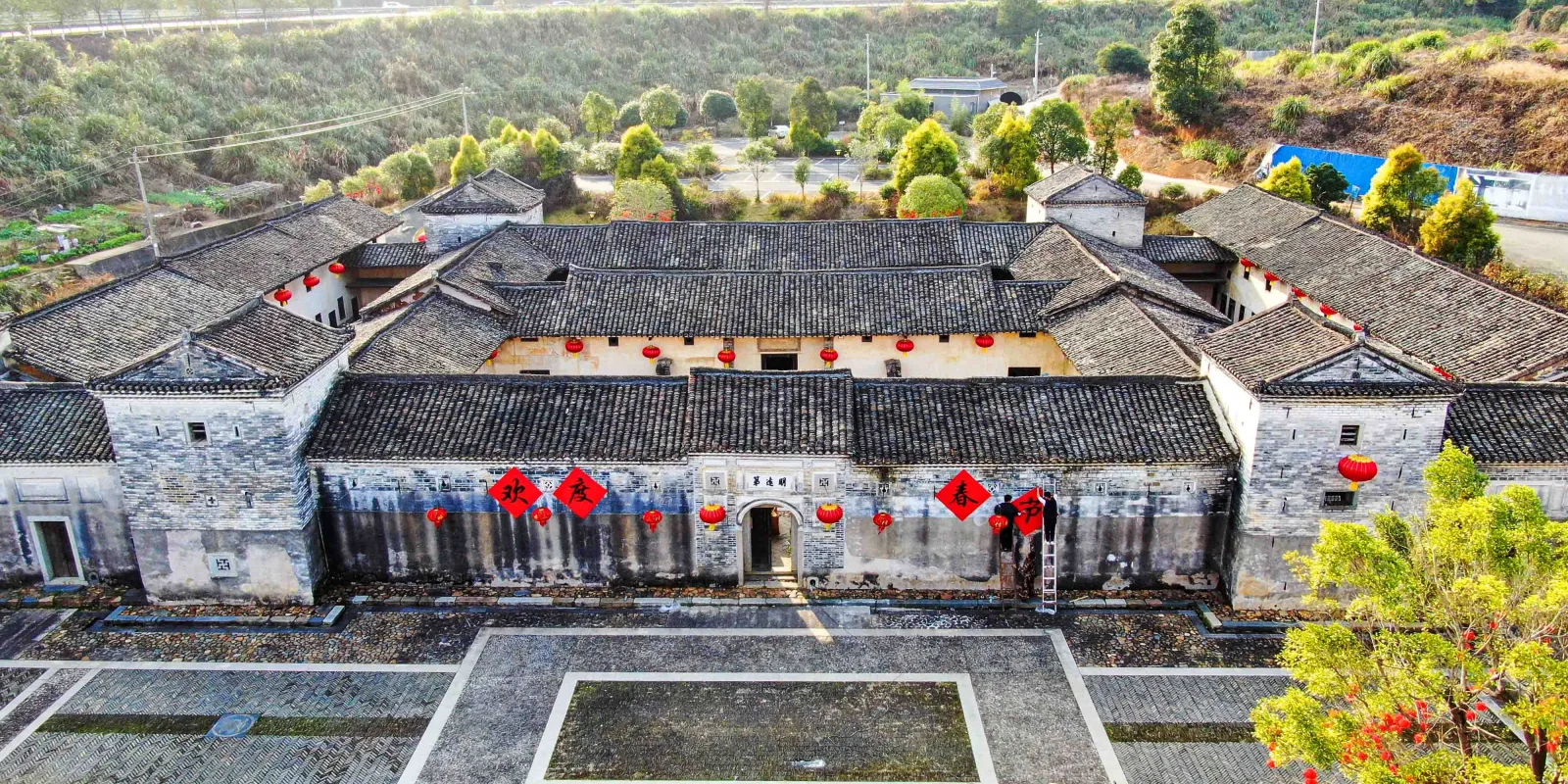
A county with two professional soccer clubs. A “Gate of Jiangxi” where the province meets Guangdong. A mountain watershed whose streams flow into Hong Kong’s drinking water. And the hometown of Lai Buyi, the Song dynasty feng shui master whose geomantic principles still influence architecture across East Asia. Dingnan is a small county with an outsized story. Its name means “settling the south” — established in 1569 during the Ming dynasty at the strategic choke point where Jiangxi narrows toward Guangdong. Today, spanning 1,321 square kilometers under Ganzhou City with a population of 220,000 across 7 towns, Dingnan has transformed from a remote border garrison into one of Jiangxi’s most dynamic small counties. In early 2025, its GDP grew 7.4 percent — first among all counties in Ganzhou.
💡 Featured Industries
- Rare Earth and Tungsten Materials: Dingnan is one of China’s first 11 nationally designated rare earth mining planning zones and a major non-ferrous metals base. The county hosts a complete industrial chain from rare earth mining and separation to permanent magnet materials production. Its rare earth permanent magnet materials and application industrial base has been recognized at the provincial level, with enterprises like Dayou New Materials and Qifei New Materials driving innovation in high-performance magnetic materials and tungsten alloys.
- Electronics and Information Technology: As the designated priority industry, electronics and IT manufacturing has become Dingnan’s fastest-growing sector. The county has attracted investment in semiconductor components, precision electronic parts, and smart device assembly, supported by a provincial-level rare earth permanent magnet materials industry base and a military-civilian fusion industrial base.
- Port and Logistics Economy: Dingnan is the central node of the Jiangxi-Guangdong logistics corridor, served by the Beijing-Kowloon Railway, Ganzhou-Shenzhen High-Speed Railway, Ganzhou-Yuedong Expressway, and three national highways. The county operates the only rail container terminal in southern Ganzhou (serving six counties), a provincial-level highway port, and the Jiangxi Supply and Marketing Cold Chain Logistics Park. The “Dingnan Port” has been integrated into the provincial rail-sea intermodal “three same” program with international container service.
- Emergency Equipment and Fire Safety: Dingnan is pioneering China’s first county-level national emergency industry demonstration base, hosting China’s first county-level National Fire Equipment Operator Vocational Skills Certification Center. This emerging industry cluster produces fire fighting equipment, emergency response systems, and safety technology products.
- Soccer Industry and Sports Economy: Dingnan is the only county-level city in China with two professional soccer clubs, having hosted the first “World Sports Games” (Shiyizu) season and China’s first night triathlon. The county has built a “Soccer New City” brand with multiple stadiums, training academies, and youth development programs, attracting teams from across the country for training and competition.
🗺 Tourist Attractions
- Hakka Ancient City (Kejia Gucheng): A beautifully restored Hakka walled town featuring traditional architecture, cobblestone streets, ancestral halls, and performance venues showcasing Hakka culture. The “only Hakka ancient city under heaven” offers visitors immersive experiences of Hakka traditions, cuisine, and folk arts.
- Jiuqu Resort (Jiuqu Du’anjia): A scenic resort built along the winding Jiuqu River, offering bamboo raft rides, lakeside pavilions, forest walking trails, and waterfront accommodations. The resort’s name “Nine Bends” refers to the river’s meandering course through the county’s southern hills.
- Taoyuan Lejing (Peach Blossom Paradise): A garden-style scenic area inspired by Tao Yuanming’s “Peach Blossom Spring,” featuring themed gardens, koi ponds, traditional bridges, and pavilions arranged in a landscape that evokes the classical Chinese ideal of pastoral utopia.
- Longgui Lake (Dragon’s Return Lake): A newly developed lakeside scenic area with walking promenades, a massive musical fountain, and evening light shows. The lake has become the centerpiece of Dingnan’s urban green space system and a popular evening destination for locals and visitors alike.
- Dingnan Window (Dingnan zhi Chuang): An urban cultural park showcasing Dingnan’s history and achievements through landscape architecture, featuring a moon-viewing pavilion, cultural corridors, and an artificial lake that has become a symbol of the county’s modernization.
🎭 Culture
- Dingnan Auspicious Lion (Ruishi): A national-level intangible cultural heritage, the Dingnan Ruishi is a distinctive form of lion dance that performed at the 70th National Day celebration in Beijing (2019). The dance combines martial arts, acrobatics, and folk music, with the lion’s movements mimicking both the creature’s power and playful curiosity. It is Dingnan’s most celebrated cultural export.
- Gannan Hakka Clothing: A national-level intangible cultural heritage, the traditional Hakka clothing of southern Jiangxi features distinctive indigo-dyed fabrics, silver ornaments, and practical yet elegant designs adapted to mountain life. The craft of making these garments is preserved by master artisans in Dingnan’s Hakka communities.
- Lai Buyi and Feng Shui Heritage: Dingnan is the hometown of Lai Buyi (also known as Lai Wenjun), the Song dynasty feng shui master whose teachings on geomancy (feng shui) remain influential across East Asia. The Buyi Shrine (Buyi Ci) is a protected cultural site that attracts visitors from Hong Kong, Taiwan, and Southeast Asia who come to pay respects to the master.
- Red Revolutionary Heritage: Dingnan preserves important revolutionary sites including the Central Soviet Area Salt Road (a secret supply route), the Dongjiang Column Headquarters site, and the Liucun Village “Five Martyrs” Monument. These sites document the county’s role in the Communist revolution and the wartime connection between southern Jiangxi and Guangdong’s anti-Japanese forces.
- Grassroots Soccer Culture: Beyond professional clubs, Dingnan has built a comprehensive grassroots soccer ecosystem with youth academies, school programs, and community leagues. The “Xinjiang-Ganzhou Together” soccer program promotes ethnic unity through the sport, while the county’s “Soccer City” branding has made it a national model for sports-driven urban development.
🚗 Getting There
- Rail: The Beijing-Kowloon Railway (Jingjiu Xian) and the Ganzhou-Shenzhen High-Speed Railway both pass through Dingnan, providing fast connections to Ganzhou (about 40 minutes), Shenzhen (about 2 hours), Guangzhou, and the national high-speed network. The county’s rail container terminal serves as the logistics hub for southern Ganzhou.
- Road: The Ganzhou-Yuedong Expressway, Nanjing-Dingnan Expressway (Ningding Gaosu), and three national highways (G238, G535, and G358) converge in Dingnan. The county is 298 km from Guangzhou, 290 km from Shenzhen, and 140 km from Ganzhou Huangjin Airport.
- Air: Ganzhou Huangjin Airport is approximately 1.5 hours by road, offering domestic flights to major Chinese cities including Beijing, Shanghai, Guangzhou, Shenzhen, and Chengdu.
- Port: Dingnan’s rail container terminal provides sea-rail intermodal service with direct container shipping connections to major ports including Shenzhen and Xiamen, making it a key logistics node for trade between inland Jiangxi and the global market.
🍜 Local Cuisine
- Dingnan Braised Pork Belly (Hongshao Rou): Thick slabs of pork belly slow-braised in soy sauce, rock sugar, and local rice wine until the meat is caramelized, tender, and glistening. The dish is a festival staple and a testament to the Hakka tradition of transforming simple ingredients into extraordinary flavors.
- Hakka Stuffed Tofu: Fresh tofu puffs hollowed and filled with a minced mixture of pork, dried shrimp, mushrooms, and water chestnuts, then simmered in a savory broth. The soft tofu and savory filling create a perfect textural and flavor contrast.
- Mountain Bamboo Shoot and Cured Pork Hotpot: Fresh bamboo shoots foraged from Dingnan’s 83 percent forest cover, combined with locally cured pork belly in a bubbling clay pot. The smoky, salty pork and tender, earthy bamboo shoots are a classic Ganzhou mountain combination.
- Dingnan Rice Wine: A traditional sweet rice wine (tianjiu) made from glutinous rice and local spring water, fermented in earthenware jars. The wine has a mellow sweetness and is traditionally served warm during festivals and family gatherings.
- Wild Vegetable Stir-Fry: Seasonal wild greens gathered from the mountains — including bracken fern tips, daylily buds, and wild mushrooms — quickly stir-fried with garlic and the local cured pork lard. The dish captures the essence of Dingnan’s pristine forest ecosystem.