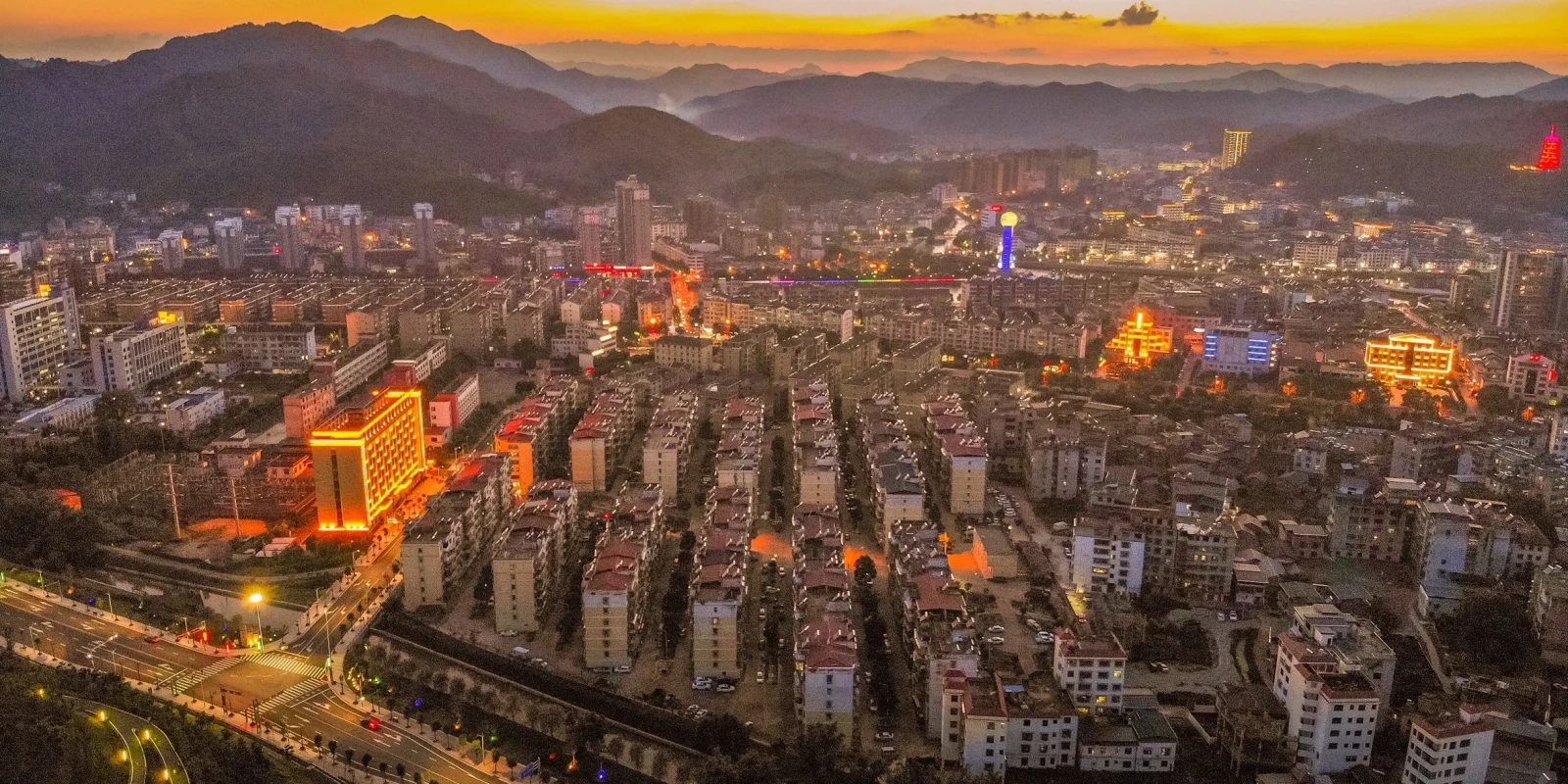
Sixty percent of Quannan’s border touches Guangdong. From the county seat, a high-speed train reaches the Greater Bay Area in under an hour. Mountains cover most of its 1,534 square kilometers, and 83 percent of the land is forest. This is the southern tip of Jiangxi — a county created in 1903, late by Chinese standards, carved from the southern edge of Ganzhou as a frontier administrative outpost. Its original name was Qiannan, “south of Qianzhou,” the ancient name for Ganzhou. Today, with 210,000 people across 9 townships, Quannan has become a manufacturing hub where two “100-billion-level” industrial clusters are taking shape, an organic vegetable basket for Hong Kong and Guangdong, and a corner of China where over 80-year-olds make up a larger share of the population than in Bama, Guangxi — China’s most famous longevity region.
💡 Featured Industries
- Electronics and Information Technology: Quannan has assembled over 80 electronics enterprises with 60 percent industrialconcentration, creating a dynamic ecosystem of component manufacturing, assembly, and technology services. The county’sLongmen New Industrial Zone, covering 330 hectares with 800,000 square meters of standard factory space, allows enterprises to “move in with their luggage” — fully serviced facilities ready for immediate production.
- New Materials and Rare Earth: Quannan holds top-three Ganzhou reserves in fluorite, rare earth, and wolframite (black tungsten). The county has attracted headliner enterprises including Ganfeng Lithium (China’s largest lithium producer), Guo Wei Zirconium-Hafnium, Shenghe New Materials, and Northern Rare Earth (Fangtu). These investments are building the foundation for two “100-billion-yuan” industrial clusters in new energy materials andspecialty metals processing.
- High-Altitude Vegetable and Agricultural Exports: Quannan’s mountain farms produce high-quality vegetables that are direct-sold to Guangdong and Hong Kong supermarkets. The county is the only Jiangxi county with a national-level high-altitude vegetable standardization demonstration zone. Live pigs are exported to Hong Kong year-round, and the county holds provincial certification for organic and green agricultural products.
- Fluorite and Mineral Processing: With fluorite reserves ranking in Ganzhou’s top three, Quannan has developed a significant fluorite mining and deep-processing industry. The mineral is used in steelmaking, aluminum production, and the manufacture of fluorine chemicals, serving both domestic and export markets.
- Ecological Forestry and Camellia Oil: With 196,000 hectares of forestry land (83 percent forest coverage), Quannan produces timber, bamboo products, and high-quality camellia seed oil (tea oil). The county’s three state-owned forestry enterprises manage sustainable harvesting while maintaining the forest ecosystem that qualifies Quannan as a “China Natural Oxygen Bar.”
🗺 Tourist Attractions
- Mount Tianlong (Heavenly Dragon Mountain) Resort: A national 4A-level scenic area and the county’s premier tourist destination. Mount Tianlong features dramatic granite peaks, a giant seated Buddha statue carved into the cliff face, a mountain-top tea house, and a glass-bottomed suspension bridge offering panoramic views of the surrounding forest. The mountain is associated with local legends of dragons and celestial beings.
- Yaxi Ancient Village and Weilong Enclosures (Tulou): A beautifully preserved Hakka ancient village featuring two distinctive types of fortified earth buildings — a square earth enclosure (tuwei) and a stone enclosure (shiwei). This exceptional example of Hakka defensive architecture has been included in the UNESCO World Heritage tentative list. The village also preserves traditional Hakka rural life, stone-paved alleys, and ancestral halls.
- Yao Ethnic Village: One of only two Yao ethnic administrative villages in all of Jiangxi province. This mountain hamlet preserves the distinctive culture, dress, music, and traditions of the Yao people, including the “Flower Stick Dance” (Huagun Wu), a provincial-level intangible cultural heritage. Visitors can experience Yao hospitality, cuisine, and handicrafts.
- Ruohu Park (If Lake Park): A large urban park in the Taojiang New District featuring an artificial lake with walking and cycling paths, landscaped gardens, children’s play areas, and evening fountain shows. The park has become a central gathering space and symbol of Quannan’s modern urban development.
- Meizishan Park (Plum Mountain Park): A hillside park in the city center with plum trees, walking trails, and viewing platforms overlooking the Taojiang River and the county skyline. The park is a popular spot for morning exercise and weekend family outings.
🎭 Culture
- Gannan Hakka Lei Cha (Pounded Tea): A national-level intangible cultural heritage, Lei Cha is a traditional Hakka beverage made by pounding tea leaves, ginger, garlic, peanuts, sesame, and other ingredients in a mortar until they form a paste, then mixing with hot water. This nutritious, energizing drink is central to Hakka hospitality and daily life in Quannan, served to guests as a gesture of welcome.
- Yao Ethnic Heritage: Quannan’s long-established Yao community preserves centuries-old traditions including distinctive silver ornaments, indigo-dyed clothing, folk songs, and the Yao Flower Stick Dance — a dynamic performance combining martial arts and dance, recognized as a provincial intangible cultural heritage. The Yao New Year festival is celebrated with particular vibrancy in the mountain village.
- Weilong Enclosure Culture: Quannan’s fortified Hakka villages represent a unique architectural tradition developed for communal defense during times of clan warfare and banditry. The Yaxi enclosures — both earth and stone variants — demonstrate the evolution of this defensive architecture style and the communal living patterns of Hakka society.
- Longevity Culture: Quannan’s exceptionally high proportion of residents aged 80 and above — exceeding even Bama County in Guangxi, China’s most famous longevity county — has given rise to a local culture of healthy aging. The county’s clean air, mineral-rich water, and plant-based diet are credited for this phenomenon, and “longevity tourism” has become a growing niche.
- Taojiang River Dragon Boat Tradition: The Taojiang River, the mother river of Quannan, has a long tradition of dragon boat racing during the Dragon Boat Festival. Local teams from each township compete in elaborately decorated boats, accompanied by drumming andfirecracker celebrations that draw crowds from across the county.
🚗 Getting There
- Rail: The Ganzhou-Shenzhen High-Speed Railway passes through Quannan, providing one-hour access to the Greater Bay Area (Shenzhen, Guangzhou). Regular rail service on the Beijing-Kowloon line is accessible at nearby stations.
- Road: The Daqing-Guangzhou Expressway (Daguang Gaosu, G45) runs through Quannan, connecting north to Ganzhou (about 1.5 hours) and south to Guangzhou (about 2.5 hours). National and provincial roads link the county to neighboring counties and Guangdong border towns.
- Air: Ganzhou Huangjin Airport is approximately 2 hours by road. For travelers from the south, Guangzhou Baiyun International Airport and Shenzhen Bao’an International Airport are accessible within 3-4 hours via expressway.
- Local Transport: Quannan’s mountainous terrain is served by an expanding network of rural roads connecting all 9 townships and 86 administrative villages. Tourism shuttle services operate to Mount Tianlong and Yaxi Ancient Village during peak seasons.
🍜 Local Cuisine
- Hakka Pounded Tea (Lei Cha) Meal: Beyond the beverage itself, Lei Cha is often served as a complete meal with rice, stir-fried vegetables, tofu, peanuts, and pickled radish mixed into the tea broth. This nutritious, satisfying dish is the ultimate expression of Quannan’s Hakka food culture.
- Quannan Purple Sweet Potato: A local specialty — purple-fleshed sweet potatoes grown in Quannan’s mountain soil, known for their deep color, creamy texture, and sweet flavor. They are steamed, roasted, or processed into dried snacks, noodles, and dessert soups.
- Mountain Stir-Fried Game Hen: Free-range chickens raised on the mountain slopes, stir-fried with ginger, garlic, dried chili, and rice wine until the skin crisps and the meat becomes aromatic. The distinctive flavor comes from the birds’ natural diet of insects, wild greens, and mountain grains.
- Hakka Stuffed Bitter Melon (Ku Gua Niang): Bitter melon cut into thick rings, hollowed, stuffed with a minced pork and shrimp filling, then braised in a savory sauce. The bitter-savory contrast is a hallmark of Hakka cuisine — an acquired taste that locals treasure.
- Camellia Oil Vegetable Platter: Seasonal mountain vegetables — bamboo shoots, fern buds, wild mushrooms — blanched and dressed with cold-pressed camellia seed oil and a touch of salt. The pure, nutty flavor of the tea oil elevates simple vegetables into a delicacy unique to the region.