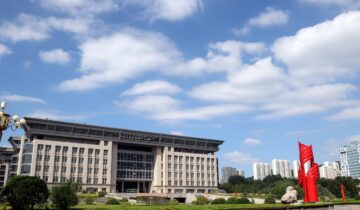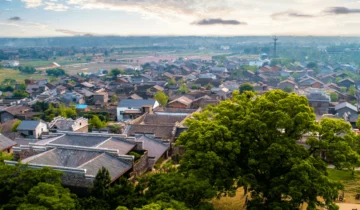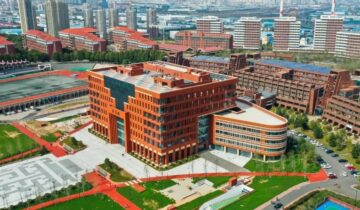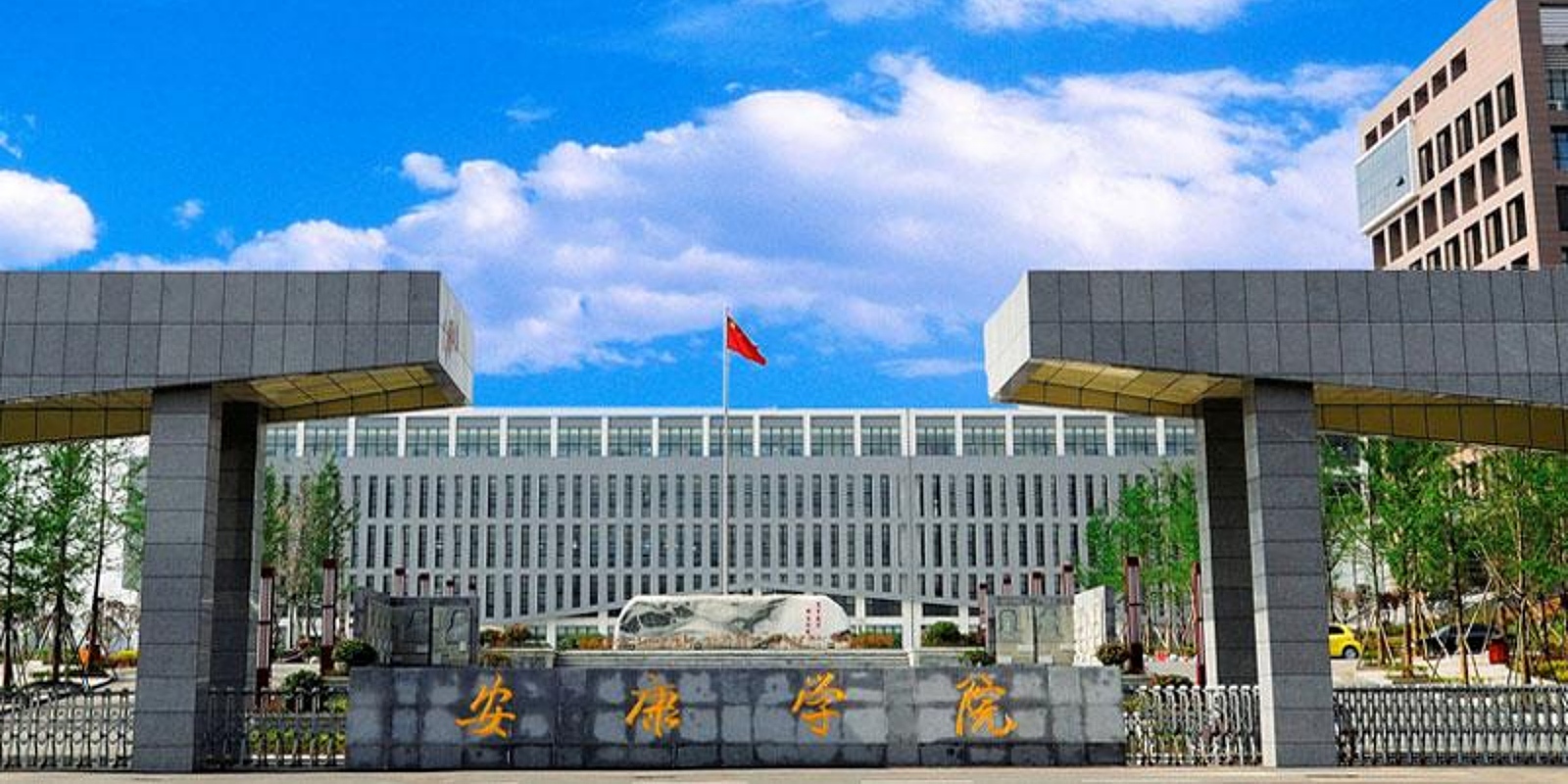
The only public undergraduate university in Ankang sits between the Qinling and Bashan mountains on the banks of the Han River, a school whose history includes a shutdown in 1963 and a rebirth in 1978. It was founded in 1958 as Ankang University, suspended during a period of economic austerity, and brought back to life as a branch of Shaanxi Normal University. In 1984 it became an independent teachers college, in 2004 absorbed the Ankang Education Institute and the Ankang Agricultural School, and in 2006 was approved as an undergraduate university.
About 13,500 undergraduates study across its Jiangnan and Jiangbei campuses, which cover about 815 mu, roughly 54 hectares, in 12 schools offering 39 undergraduate programs across ten discipline categories.
Four research directions define the school: modern agriculture for the Qinba mountain region, teacher education for mountain schools, conservation of Qinba resources, and the folk culture of southern Shaanxi. Two national and nine provincial first-class programs anchor the curriculum, and the university runs 23 provincial research platforms, including key laboratories for silkworm breeding and tea science, a research institute for selenium-rich circular agriculture, and a center for the study of southern Shaanxi rural culture.
The faculty of about 900 includes over 230 with senior titles and 220 with doctorates, and the university has produced 90,000 graduates since its founding. In 2024 it was approved as a master’s degree-granting institution, and it operates one of China’s largest wild silkworm germplasm collections, along with three new crop varieties developed jointly with research partners.
Students have won 291 national and 632 provincial awards in competitions over the past three years, and the university’s innovation park has been recognized as a national maker space. Its service mission reaches directly into the region: 26 patented technologies have been transferred to local enterprises, and dozens of research reports have been adopted by city and provincial governments.
Internationally, the school has ties with over 30 universities in a dozen countries, including joint training programs with partners in the United States, Britain, Japan, South Korea and Central Asia. More than 300 students and teachers have gone abroad through government and exchange channels, and over 100 international students have studied in Ankang, some moving on to master’s degrees at major Chinese universities.
When the school reopened in 1978 it had one purpose: to educate the mountain region. Four decades later it is the academic center of its city, training teachers, engineers and agricultural scientists, and its four research streams, mountain agriculture, rural schooling, Qinba conservation and folk culture, are the same subjects it has served since 1958, only now with master’s degrees to show for them.
Data Source: AKU Official Website (as of 2026)