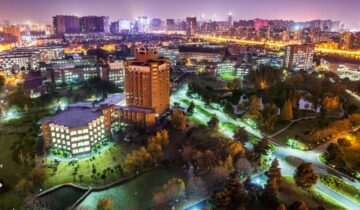
University of Science and Technology of China: The Academy’s Experiment in Concentrated Brilliance

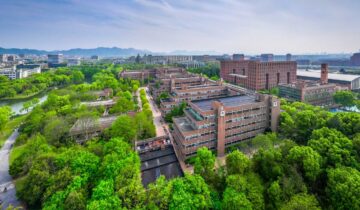
The Chinese Academy of Sciences runs laboratories all over China, but only one university. That university, the University of Science and Technology of China (USTC), was created in 1958 with a single mission: to train an elite corps for the “two bombs, one satellite” program — China’s race to develop nuclear weapons, missiles, and a satellite. Sixty-six years later, USTC has the highest concentration of high-level talent of any Chinese university: 846 national-level experts out of 3,375 faculty, a ratio…
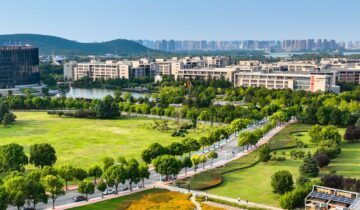
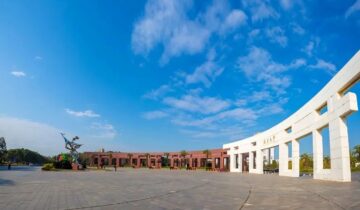
China University of Mining and Technology: The Epic Journey of a University That Crossed China

Few universities on earth can match this itinerary: founded in Jiaozuo, moved to Tianjin, relocated to Beijing, exiled to a Sichuan mountain town, then settled in Xuzhou. Along the way, the school changed its name twelve times, survived two wars, a Cultural Revolution relocation, and the dismantling of the entire ministry that oversaw it. This is not the biography of a refugee — it is the story of China University of Mining and Technology, an institution that turned a century…

Nanchang University: Breaking Light, Decoding Food

In 2016, Jiang Fengyi stood on a stage in Beijing to accept the National Technology Invention Award First Prize for his team’s work on silicon-substrate gallium nitride blue LEDs. It was a rare honor — fewer than a handful of such top-tier awards are granted each year. But the more remarkable part of the story is where the work happened: not at a national research institute in Beijing or Shanghai, but at Nanchang University, the sole Double First-Class institution in…

Fuzhou University: The Chemical Climb of China’s Photocatalysis Leader

Walk onto Fuzhou University’s Qishan campus and you notice something unusual for a 66-year-old institution: the research centers look like they belong to a university twice its age. One building houses the State Key Laboratory of Photocatalysis, another contains the National Engineering Research Center for Environmental Photocatalysis. The labs hum with work on light-driven chemical reactions that spill into applications from air purifiers to military-grade decontamination. This is not the Fuzhou University of 1958. This is what happens when a…

Hohai University: The Institution Behind China’s Major Rivers

When floodwaters surged across the Yangtze River basin in 1954, a small college in Nanjing dispatched engineers and hydrologists to survey dikes, calculate discharge rates, and draft the flood-control plans that would later become the blueprint for the river’s modern defense system. That institution, now known as Hohai University, has spent 111 years doing exactly what it did that summer: putting water under management. From the Yellow River’s notorious silt-clogged channel to the South-North Water Transfer Project and the Three…

Jiangnan University: From a Single Department to Global Food Science Leader

In 1958, a remarkable event in Chinese higher education unfolded: the entire Food Engineering Department of the Nanjing Institute of Technology packed up its laboratories, its faculty, and its equipment, and moved 160 kilometers east to the city of Wuxi. An entire academic department relocated to a different city to become the nucleus of a new university. That institution, now known as Jiangnan University, has since grown into the undisputed global leader in food science, with its Food Science and…

Nanjing Agricultural University: The Exiled Fortress That Feeds a Nation

Ask any Chinese agricultural expert to name the country’s strongest university for crop science, and one name comes up most often: Nanjing Agricultural University. In China’s national discipline evaluation system, NJAU earned four A-plus rankings — Crop Science, Agricultural Resources and Environment, Plant Protection, and Agricultural and Forestry Economics and Management — more than any other agricultural university in the country. Three additional programs received A rankings, giving NJAU a concentration of top-tier disciplines that no peer institution can match.…

Zhejiang University: Fragmented and Reunited, Still Among the Best

In 1998, four universities in Hangzhou signed a merger document and became one institution again. The four were Zhejiang University, Hangzhou University, Zhejiang Agricultural University, and Zhejiang Medical University. They had all been part of the same university once, before the nationwide reorganization of 1952 sliced the old National Zhejiang University into single-discipline pieces. It took 46 years to put Humpty Dumpty back together. Today, the remerged Zhejiang University (ZJU) is widely ranked among China’s top three universities, alongside Tsinghua…

Nanjing Normal University: The Teacher-Maker on China’s Most Beautiful Campus

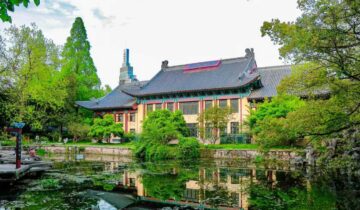
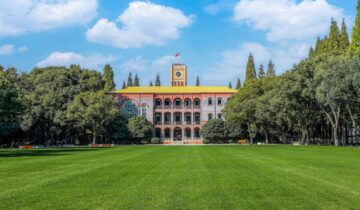
The Suiyuan campus of Nanjing Normal University, with its red-brick Chinese-Western fusion buildings and sprawling lawns, has been called the most beautiful university campus in China. Originally built in the 1920s for Ginling Women’s College — the first women’s college in China to grant bachelor’s degrees — the grounds were designed by American architect Henry Murphy in a graceful hybrid of traditional Chinese palace architecture and Western collegiate planning. But NJNU is far more than a pretty postcard. It is…

China Pharmaceutical University: The Pharmacy Fortress Dominating Global Rankings

In 1936, when the Republic of China was preparing for war and the nation’s pharmaceutical industry barely existed, the government in Nanjing founded the National Pharmaceutical School — the first higher education institution for pharmacy ever created by the Chinese state. Its mission was simple: supply a country with almost no domestic drug industry its own corps of pharmacologists, chemists, and pharmacists. Nearly a century later, that school has become China Pharmaceutical University (CPU), and it does not just lead…

Soochow University: A Missionary School’s Century of Excellence

In 1900, when the Qing dynasty was in its death throes and the Boxer Rebellion was shaking northern China, a group of American Methodist missionaries opened a small university in Suzhou called Soochow University. It was the first modern university in Jiangsu Province — older than Nanjing University, older than Southeast University, older than Fudan or Shanghai Jiaotong. And from the very beginning, it was different. Soochow taught law in English, sent its graduates to study in American and European…

Nanjing University: The C9 Giant That Rose From the Ashes

In 1952, when China’s nationwide higher education reorganization divided National Central University into pieces, Nanjing University surrendered its engineering college to what would become Southeast University, its agricultural college to what is now Northwest A&F University, its medical college to separate institutions in Shanghai and elsewhere, and several other faculties. What remained — the liberal arts and sciences core — was still enough to keep Nanjing University among the best in the country. It was a testament to just how…

Southeast University: The Sipailou Legacy That Built Modern China

Southeast University and Nanjing University share a birth certificate. Both were founded in 1902 as the Sanjiang Normal School in Nanjing, and for the first fifty years of their existence they were the same institution — first as National Southeast University, then as National Central University, the top-ranked university in Asia. In 1952, when the nationwide reorganization broke Central University apart, the engineering college stayed in the original building at Sipailou, keeping the laboratories, the workshops, and the address. That…

Nanjing University of Aeronautics and Astronautics: Where China’s First Drone Took Flight

The first drone China ever built was made of wood. It had no autopilot, no GPS, and no ground control station — just a radio receiver and the ingenuity of faculty and students who had never seen a real drone before. When it lifted off the ground in 1958 near Nanjing, it became China’s first unmanned aerial vehicle, and it marked the beginning of a trajectory that would lead its creators to become one of the world’s leading centers of…

Nanjing University of Science and Technology: China’s Ordnance Powerhouse

Hidden in a hillside on the campus of Nanjing University of Science and Technology is a museum with more than 6,000 pieces of ordnance. Tanks, artillery pieces, missile launchers, and small arms from every era of modern Chinese military history sit in neat rows, some still bearing the scars of battle. It is one of the largest collections of its kind in the world, and it belongs to the university. NJUST is the only university in China with its own…

Close