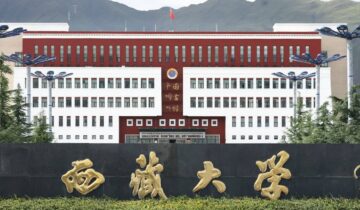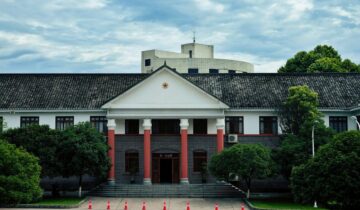
Sichuan Agricultural University: The Mountain Trek That Built a World-Class Powerhouse

The agricultural college of Sichuan University packed up and moved 150 kilometers west to Ya’an in 1956. The reason was the national readjustment of higher education, but the effect was the creation of an independent agricultural powerhouse that, seven decades later, would hold 2 ESI global top 1 per mille disciplines, 11 ESI top 1 percent fields, and a veterinary science program ranked 15th in the world. Sichuan Agricultural University, or Sicau, began as a provincial agricultural school in 1906…
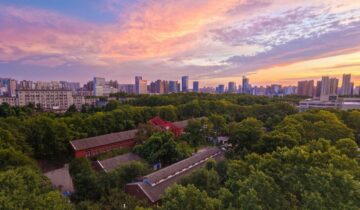
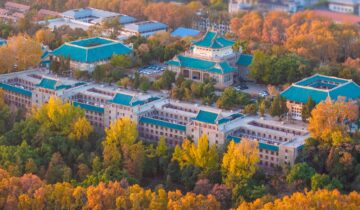
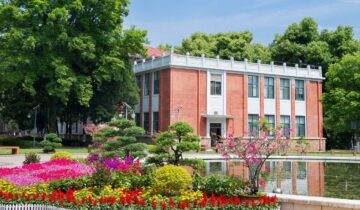
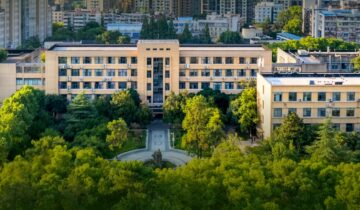
Huazhong University of Science and Technology: The Forest Campus That Merged to Lead

On May 26, 2000, three Wuhan institutions — an engineering school, a medical university, and an urban construction institute — merged to form what is now Huazhong University of Science and Technology. Twenty-five years later, HUST is widely regarded as the most successful university merger in modern Chinese history. Its 7,000-mu campus, 72 percent of which is tree cover, is known as the Forest University. Its faculty includes 20 academicians. It operates four of the largest national research facilities in…

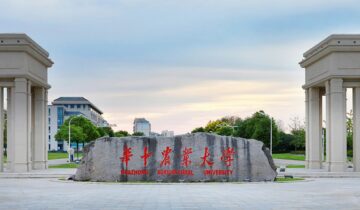
Wuhan University: Ziqiang, Three Mergers, and the Most Beautiful Campus

The campus alone would be enough. Perched on Luojia Mountain with East Lake at its feet, Wuhan University occupies what many call the most beautiful campus in China — 26 of its early buildings are listed as National Protected Cultural Heritage sites. But a university that has produced 700,000 graduates, more than 100 of whom became academicians of the Chinese Academy of Sciences or Engineering, cannot be reduced to its scenery. Founded in 1893 by the reformer Zhang Zhidong as…

Tibet University: At the Roof of the World, Science That Matters

The year was 1951. As the People’s Liberation Army entered Tibet, it needed interpreters. The Tibetan language cadre training class it set up in Lhasa that year was not intended to become a university. But that class, held in makeshift quarters at 3,650 meters above sea level, is the seed of what is now Tibet University — the only Double First-Class institution on the Tibetan Plateau and the first comprehensive university ever built on the roof of the world. Seventy-five…

Central China Normal University: Three Roots, One Mission, a Teaching Legacy

Every teacher in central China was trained somewhere. Chances are high that somewhere was Central China Normal University (CCNU). With 60,000 alumni across 120 years and a 49,500-strong current enrollment spread across 31 schools at the foot of Guizi Mountain in Wuhan, CCNU is the largest teacher-making cradle in the most populous region of the country. But the university’s DNA is not purely Chinese: its three founding roots are a missionary college, a private Chinese university, and a Communist Party…

Huazhong Agricultural University: From Zhang Zhidong’s Plow to Global Science

Zhang Zhidong, the late-Qing reformer who built China’s first modern steel mill and its first cotton mill, also founded a farm school. In 1898, the same year the Hundred Days’ Reform was crushed in Beijing, the Hubei Agricultural School opened its doors in Wuchang, planting the seed of what would become Huazhong Agricultural University (HZAU). One hundred and twenty-eight years later, HZAU has grown into a 33,000-student research powerhouse with 15 ESI global top 1 percent disciplines, 7 academicians on…

Wuhan University of Technology: The Three-Industry Engine Powering China

A single university that supplies China’s building materials, transportation, and automotive industries with more graduates than any other institution in the country would already be remarkable. Wuhan University of Technology (WHUT) does all three at once. Born in 1898 as the Hubei Craft School during the dying years of the Qing Dynasty, it has grown into a 127-year-old, 61,000-student machine that occupies three campuses in the industrial heart of Wuhan and has produced 700,000 alumni, many of whom run the…

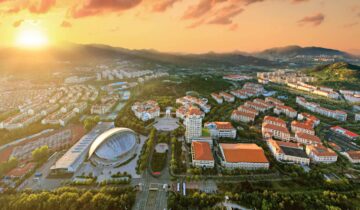
Ocean University of China: The Blue Institution With Its Own Research Fleet

It began as a private university in 1924 in the German-built port city of Qingdao, founded by a group of Chinese intellectuals who saw the sea as a classroom. A century later, the Ocean University of China (OUC) owns one of the largest civilian research vessel fleets in Asia, operates a state key laboratory for physical oceanography, and is the only comprehensive ocean-focused university in China’s Double First-Class system. Its name has changed six times — from Private Qingdao University…

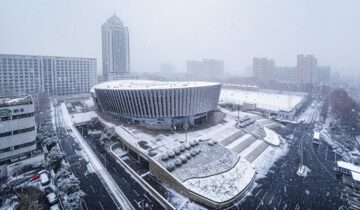
Shandong University: A Century of Service, a Province-Wide Reach

When Shandong Imperial College opened in 1901, the Qing Dynasty still had ten years left and the Boxer Rebellion had just ended. It was one of the first modern institutions of higher learning in Chinese history, established in Jinan as a response to the collapse of the old examination system. One hundred and twenty-three years later, Shandong University (SDU) spans three cities — Jinan, Weihai, and Qingdao — enrolls more than 70,000 students and operates 11 national-level key laboratories. Its…

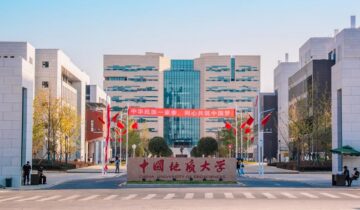
China University of Geosciences (Wuhan): The Earth Science Giant That Crossed a Thousand Kilometers

The geology departments of four of China’s most prestigious universities — Peking, Tsinghua, Tianjin, and Tangshan Railway Institute — were pulled out in 1952 to create something entirely new: the Beijing College of Geology, a single institution dedicated entirely to the earth beneath China’s feet. Seventy-three years later, China University of Geosciences (Wuhan) sits on the bank of East Lake in Wuhan, a former Beijing school that literally moved 1,000 kilometers south during the Cultural Revolution. Today it hosts 33,000…

Zhengzhou University: The Three-Way Merger Behind China’s Largest Alumni Army

A province of 100 million people needs a university that matches its scale. In 2000, three separate institutions — the first comprehensive university established from scratch by the newly founded People’s Republic of China, a Ministry of Chemical Industry engineering school, and a medical college with roots stretching back to 1928 — were fused into one mega-university in Zhengzhou, the capital of Henan Province. Twenty-six years and 2 million graduates later, Zhengzhou University (ZZU) is the largest university in China…

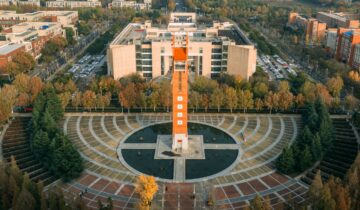
China University of Petroleum (East China): Born for Energy Security, Rebuilding for the Energy Transition

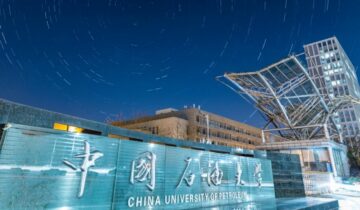
Most Chinese universities were founded by the state or a province. China University of Petroleum (East China) was founded by an industry. When the country needed oil engineers faster than Beijing could produce them in 1953, the government reached into Tsinghua University, drew its founding faculty and students from what had been Tsinghua’s petroleum engineering program, and built a brand-new school from scratch — combining faculty from Peking University, Tianjin University, and Dalian Institute of Technology into what became the…

Anhui University: From Mao’s Signature to a Quantum Refrigerator

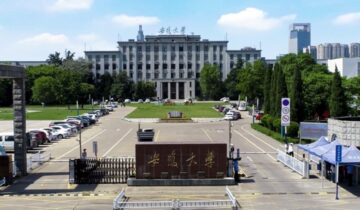
Not every university in China can claim that Mao Zedong wrote its name. Anhui University (AHU) can. On September 16, 1958, Chairman Mao personally inscribed the university’s name in his own calligraphy — a wordmark that remains its official identity to this day, making AHU one of a handful of Chinese universities with a founding signature from the country’s paramount leader. But what makes AHU remarkable today is not just the Mao connection. It is the dizzying breadth of its…

Xiamen University: A Tycoon’s Dream, Four Campuses in Two Countries

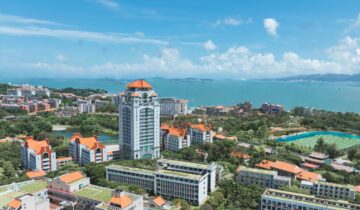
On a rocky coastline overlooking the Taiwan Strait, between green hills and blue sea, stands a university that was built by a single man’s fortune. The man was Tan Kah Kee, a Singapore-based rubber and shipping magnate, and his creation — Xiamen University (XMU) — was the first institution of higher learning in modern Chinese history to be founded entirely by an overseas Chinese. Tan’s instruction was simple: make it world-class. A century later, XMU enrolls 48,000 students across four…

Hefei University of Technology: The Industrial Engine Behind 1 in 1,000 Industry Leaders

Deng Xiaoping wrote its name in his own calligraphy, but by then the institution was already 34 years old. Hefei University of Technology (HFUT) was born in 1945, when World War II had just ended and China needed engineers more than anything else. The school’s founding charter called its mission “industrial patriotism,” and 80 years — and 300,000 graduates — later, HFUT estimates that at least one in every 1,000 of its alumni has become a national industry leader. Founded…

Close