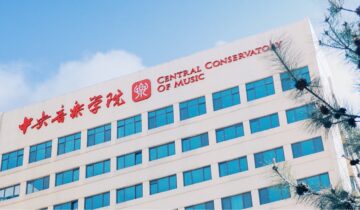
Central Conservatory of Music: Training China’s Classical Music Elite

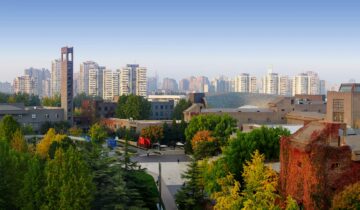
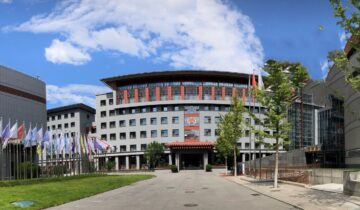
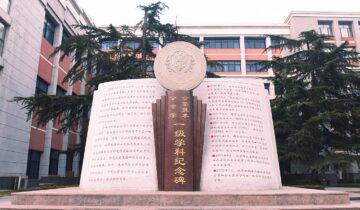
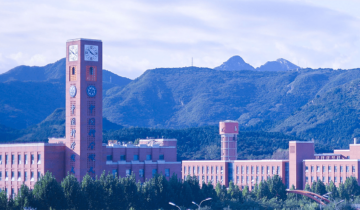
In the late summer of 1950, the Ministry of Culture assembled musicians from across the country into a new institution on Beijing’s West City Baita Temple Street. The Central Conservatory of Music (CCOM) absorbed talent from the National Conservatory of Music, the North China University Fine Arts Department’s music section, the Northeast Lu Xun Arts Academy music troupe, the Beijing Arts Academy music department, and the Shanghai (Hong Kong) Chinese Music Academy. None of these forebears had the resources to…
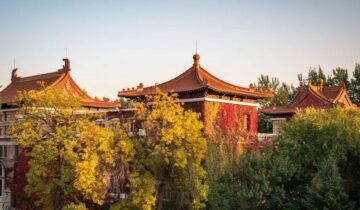
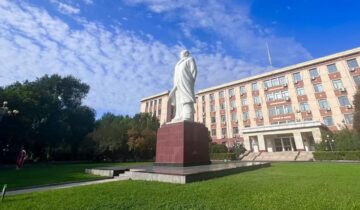
China University of Mining and Technology-Beijing: More Than a Century of Mining Innovation from a Henan Rail Town

In 1909, on a dusty rail town in Henan Province called Jiaozuo, a classroom opened that would eventually reshape the world’s understanding of coal. Jiaozuo School of Railroad and Mines, the direct ancestor of today’s China University of Mining and Technology-Beijing, was born at a time when China’s industrial revolution had barely begun. More than a century later, CUMTB has grown into a Double First-Class national key university under the Ministry of Education, with 13 schools, two campuses in Beijing’s…

China University of Geosciences-Beijing: Building China’s Geoscience Foundation

Seventy-three years ago, the geology departments of Peking University, Tsinghua University, and Tianjin University were pulled from their parent institutions and reassembled into something entirely new: Beijing Institute of Geology. The year was 1952, and the merger created what would become China’s preeminent geoscience university. Today, China University of Geosciences-Beijing (CUGB) operates 17 colleges, 56 undergraduate programs, and serves nearly 20,000 students — 9,400 undergraduates, 7,100 master’s students, 3,000 doctoral candidates, and 260 international students. A national key university since…

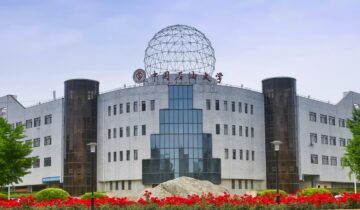
China University of Petroleum-Beijing: The 1953 Petroleum School Fueling China’s Energy Strategy

When the People’s Republic was four years old and desperately searching for domestic energy to power its industrialization, the government turned to its best engineering minds and created Beijing Petroleum Institute in 1953. Drawing faculty from Tsinghua University’s chemical engineering and petroleum engineering departments, supplemented by professors from Tianjin University and Peking University, the new institution was China’s first dedicated petroleum university. Today, China University of Petroleum-Beijing (CUP) operates across two campuses — the main campus on 700 mu in…

Central Academy of Drama: The Hutong Campus Training China’s Stage and Screen

On April 2, 1950, Mao Zedong took a brush and wrote the name of China’s newest institution in his own calligraphy. The Central Academy of Drama (CAD), New China’s first higher education institution dedicated to dramatic arts, was born that day in Beijing’s Dongcheng District. Its roots run deeper: the 1938 Lu Xun Academy of Fine Arts in Yan’an, where artists trained to serve China’s cultural revolution, forms the academy’s ancestral foundation. Today CAD operates two campuses — the historic…

Shanghai Ocean University: The Transformation of a 1912 Fisheries School

In 1912, the industrialist Zhang Jian and the educator Huang Yanpei opened Jiangsu Provincial Fisheries School on the Wusong waterfront in Shanghai, planting a seed that would grow into a premier institution dedicated to fisheries science. Its founding principle — “where the fishing grounds extend, so does maritime sovereignty” — linked national sovereignty directly to marine knowledge, a vision that proved prescient as China became the world’s largest aquaculture producer. Renamed Shanghai Ocean University (SHOU) in 2008, it is now…

Tianjin University of Traditional Chinese Medicine: The Standard-Bearer of Evidence-Based TCM

The year 1958 witnessed the founding of one of China’s earliest TCM universities in Tianjin. Tianjin University of Traditional Chinese Medicine (TUTCM) started as Tianjin College of Traditional Chinese Medicine. In 2017 it entered the Double First-Class university sequence, and in 2020 it became a jointly-built institution under the Tianjin Municipal Government, the Ministry of Education, and the National Administration of Traditional Chinese Medicine. The only university approved by the former State Education Commission as a dedicated international TCM education…

Central Academy of Fine Arts: The 1918 School Defining Chinese Art

As Cai Yuanpei believed, art could reshape a nation’s spirit. In 1918, China’s most influential educator of the early 20th century championed the establishment of the National Beijing School of Fine Arts — the country’s first national institution dedicated to fine arts education. By 1950, that school had merged with the Beiping Art College and the art department of North China University (itself born from the 1938 Lu Xun Academy of Fine Arts in Yan’an) to form the Central Academy…

China Conservatory of Music: Where Chinese Music Finds Its Voice

The year 1964 saw the opening of a national conservatory in Beijing with a mission no other music school could claim: to preserve, research, and perform traditional Chinese music at the highest level. That institution, the China Conservatory of Music (CCOM), operates under the guiding principle of “Carry Forward Chinese Classical Learning, Promote Chinese Charm, Cultivate Chinese Instruments, and Strengthen Chinese Music” — a mission that sets it apart from every other music school in China. Headquartered in Beijing’s Chaoyang…

People’s Public Security University of China: The Only Double First-Class Police Academy in China

People’s Public Security University of China traces its founding to 1948, when the Central Committee of the Communist Party of China established the North China Security Cadre Training Program in Xibaipo. What began as a wartime necessity became, over the following decades, the only institution under the Ministry of Public Security authorized to offer doctoral education in public security disciplines. Today PPSUC is a Double First-Class university, the largest and most comprehensive police higher education institution in China, operating two…

University of Chinese Academy of Sciences: The 114-Institute University Powering China’s Science

In 1950, with the People’s Republic barely a year old, the Chinese Academy of Sciences began recruiting research interns — a small, elite cohort that would grow into something unprecedented in Chinese higher education. By 1978, as the first class of graduate students returned to their studies after the Cultural Revolution, what was then the Graduate School of the University of Science and Technology of China began evolving through multiple name changes until 2012, when it became the University of…

China Foreign Affairs University: The Cradle of China’s Diplomats

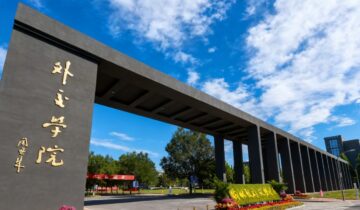
Premier Zhou Enlai personally set the date: September 10, 1955. On that day, China Foreign Affairs University opened its doors to train a generation of diplomats for a country that had just begun to find its place on the world stage. Located in Beijing’s Xicheng District, CFAU is the only university in China directly under the Ministry of Foreign Affairs, a unique affiliation that shaped its curriculum, its faculty, and its identity. In nearly seven decades of operation, the university…

Capital Normal University: Shaping Beijing’s Classrooms Since 1905

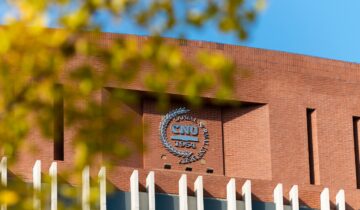
When Beijing needed teachers in 1954, it created an institution dedicated to producing them — Capital Normal University, a school whose roots extend further back to the Tongzhou Normal School established in 1905. Over the past seven decades, CNU has grown from a local teacher-training college into a comprehensive university with a Mathematics Double First-Class designation, 8 ESI global top-1 percent disciplines, 64 provincial-level research platforms, and a reputation as one of Beijing’s most important sources of primary and secondary…

Peking Union Medical College: Where China’s Modern Medicine Began

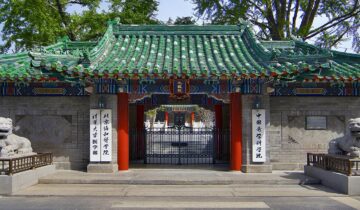
In 1917, Peking Union Medical College was founded in Beijing with a vision that would reshape healthcare across China. From its inception, PUMC introduced China’s first eight-year medical education program, higher nursing education, standardized residency training, and modern public health education — establishing the foundation on which China’s entire modern medical system would be built. Today, PUMC operates under a unique dual structure as both Peking Union Medical College and the Chinese Academy of Medical Sciences, a merger that took…

ShanghaiTech University: Small But Elite

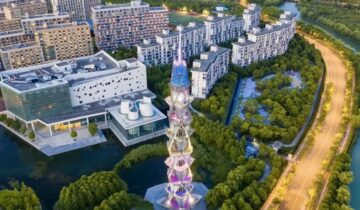
ShanghaiTech University was born from a strategic conversation in 2003 between the Shanghai Municipal Government and the Chinese Academy of Sciences. Their vision: a small, elite research university embedded in what would become Zhangjiang Science City, Shanghai’s answer to Silicon Valley. Approved by the Ministry of Education in 2013, ShanghaiTech opened its 900-mu campus in the Pudong New Area and has since grown into a Double First-Class university known for its ultralow student-to-faculty ratio, its national key laboratories, and a…

Close