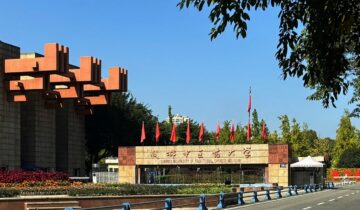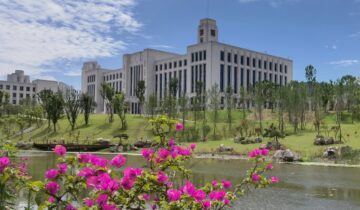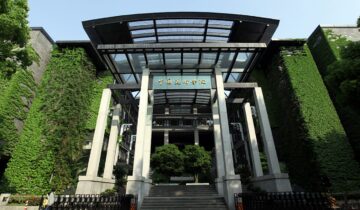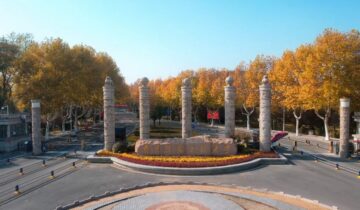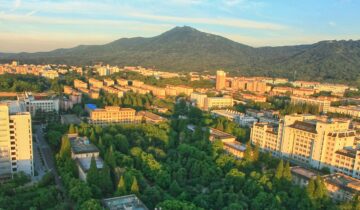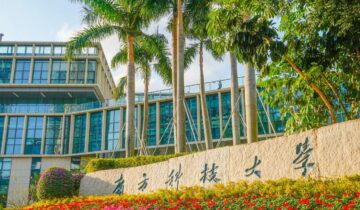
Southern University of Science and Technology: Shenzhen’s University Experiment

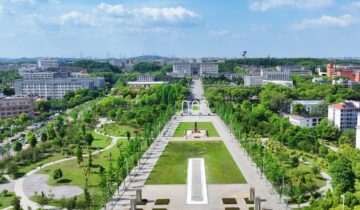
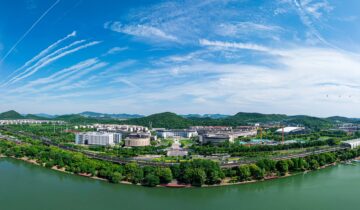
Founded in 2011 and approved by the Ministry of Education in 2013, Southern University of Science and Technology is China’s youngest Double First-Class university — achieving the designation in just 11 years. Located in the Nanshan District of Shenzhen, SUSTech was created as a bold experiment in higher education reform, adopting a governance model inspired by the world’s top research universities. Today its 198-hectare campus — nine hills ringed by a winding river — hosts approximately 1,300 faculty members, 55…
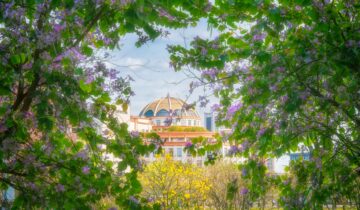
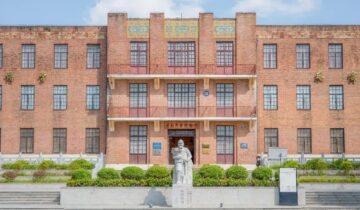
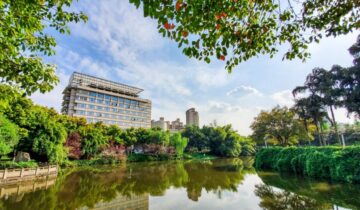
Guangzhou Medical University: Redefining Respiratory Medicine Through the Zhong Nanshan Legacy

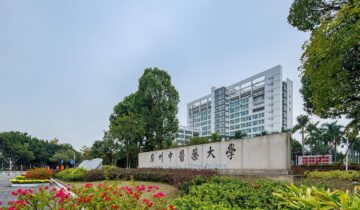
A new medical college opened its doors in Guangzhou in 1958, at a time when southern China’s healthcare system was desperately short of trained physicians. Today, Guangzhou Medical University has grown into a Double First-Class university and a Guangdong High-Level University, known worldwide for its National Key Laboratory of Respiratory Disease and the research of Zhong Nanshan, the pulmonologist who led China’s response to SARS and COVID-19. GZHMU operates 24 schools and 15 affiliated hospitals, making it one of the…

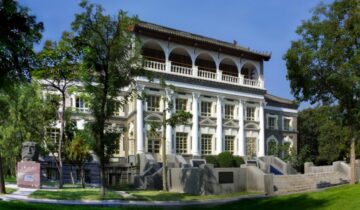
South China Agricultural University: Pig Breeding, Pesticides, and Latin America

In 1909, a small agricultural experiment station opened outside Guangzhou with a training school attached — a modest beginning for what would become South China Agricultural University. That experiment station, the Guangdong Agricultural Experiment Station and its affiliated agricultural training school, laid the groundwork for an institution that now holds three globally top-10 ranked subjects and 14 ESI top-1 percent disciplines. From its original role in training farmers to improve crop yields, SCAU has grown into a Double First-Class university…

Xiangtan University: Born of a Chairman’s Hand, Driven by Pure Mathematics

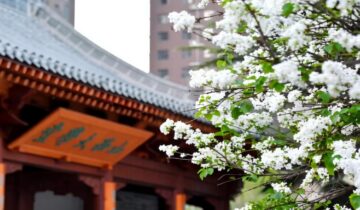
Mao Zedong personally founded Xiangtan University in 1958, writing its name in his own calligraphy and urging its leaders to “make Xiangtan University excellent.” Located in the chairman’s hometown of Xiangtan, Hunan Province, the university was rebuilt in 1974 with approval from Deng Xiaoping and Li Xiannian, and by 1978 it had been designated one of only 16 comprehensive national key universities in the country. Today, Xiangtan University is a Double First-Class institution co-built by the Hunan Provincial Government and…

Nanjing Medical University: Physician-Scientists, a Medical School’s Legacy

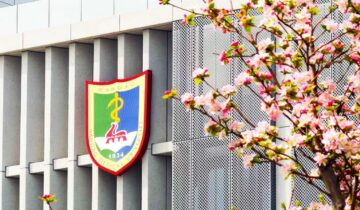
The Jiangsu Provincial School of Medical Administration opened in Zhenjiang in 1934 to train the doctors and public health officials a modernizing China desperately needed. During the war with Japan, it relocated inland, was renamed the National Jiangsu Medical College, and continued training physicians through years of upheaval. In 1957 the school moved to Nanjing, becoming Nanjing Medical College, and in 1993 it was renamed Nanjing Medical University. Today NJMU is a Double First-Class university co-built by the Ministry of…

Shanxi University: China’s Third University, Built on Philosophy and Physics

Imperial China created three national universities in 1902: one in the capital, one in the commercial hub of Tianjin, and one in the ancient stronghold of Taiyuan. That third institution, Shanxi University — originally named Shanxi University Hall at its founding — is today a Double First-Class university co-built by the Ministry of Education and the Shanxi Provincial Government. Its four campuses — Wucheng, Dongshan, Dadongguan, and a new campus in Datong — span approximately 3,500 mu in and around…

Guangzhou University of Chinese Medicine: Malaria-Fighting TCM

In 1924, a group of Cantonese physicians founded the Guangdong School of Chinese Medicine to preserve and modernize traditional medicine under the Republic of China. That school, after evolving through several name changes, became Guangzhou University of Chinese Medicine — one of the first four TCM universities established under the People’s Republic in 1956 and today a Double First-Class university co-built by the Ministry of Education, the Guangdong Provincial Government, and the National Administration of Traditional Chinese Medicine. GZUCM operates…

Chengdu University of Traditional Chinese Medicine: Seventy Years of Firsts in Chinese Medicine Education

In 1956, the newly established People’s Republic identified a critical gap in its healthcare education: there was no formal system for teaching traditional Chinese medicine at the university level. That year, four TCM higher education institutions were created, and among them was Chengdu University of Traditional Chinese Medicine. CDUTCM pioneered TCM education from the start — it produced China’s first bachelor’s and master’s graduates in Chinese medicine and Chinese materia medica, and over the decades has developed three national key…

Chengdu University of Technology: Sichuan’s Geoscience Guardian

Chengdu University of Technology began in 1956 as the Chengdu Institute of Geology, one of China’s earliest higher education institutions dedicated to the geosciences. Nearly seven decades later, it has evolved into a comprehensive university rooted in the earth sciences but reaching across engineering, materials, nuclear technology, management, and the humanities. CDUT is a Double First-Class university co-built by the Ministry of Education, the Sichuan Provincial Government, and the Ministry of Natural Resources, and its main 3,400-mu campus in Chengdu’s…

Southwest Petroleum University: Where the Classroom Meets the Oil Field

In 1958, China launched a new institution to train the engineers its growing oil industry urgently needed. That institution — then the Sichuan Petroleum Institute — grew into Southwest Petroleum University, a Double First-Class university co-built by the Ministry of Education, the Sichuan Provincial Government, and the three state-owned energy giants: PetroChina, Sinopec, and CNOOC. The university operates across two campuses — the main campus in Xindu District, Chengdu, and the Nanchong campus in the oil-producing region of northeastern Sichuan…

Henan University: The Bridge Between Imperial and Modern China

The ground beneath Henan University’s oldest campus once held the imperial examination hall where the final civil service exams in Chinese history were administered in 1903 and 1904. Eight years later, a new institution rose on that same site — not to select scholar-officials for an empire, but to prepare students for study abroad in Europe and America. Henan University began its life as the bridge between China’s feudal past and its modern future. Founded in 1912 as the Henan…

China Academy of Art: Painting China’s Modern Artistic Identity

In 1928, on a rocky peninsula jutting into Hangzhou’s West Lake, a young painter named Lin Fengmian opened the doors of China’s first comprehensive national art institution. His patron was Cai Yuanpei, the philosopher-educator who believed art could reshape a nation’s spirit, and together they chose Gushan for its deliberate proximity to the landscape that generations of Chinese ink painters had immortalized. The National Academy of Art — later renamed the China Academy of Art — would, over the following…

Nanjing University of Chinese Medicine: Defining TCM for Modern Classrooms

Traditional Chinese medicine had been practiced for millennia before anyone tried to teach it in a classroom. When the decision was made to formalize that education, China had no textbooks, no curriculum, and no trained instructors for the task. It had only a mandate and a single institution — the Jiangsu Provincial Chinese Medicine Training School, founded in 1954, which would grow into Nanjing University of Chinese Medicine. That founding class in 1954 was more than a school opening. It…

Nanjing University of Information Science and Technology: Clouds, Code, and Clinical Medicine

Among the 88 universities China designated as national key institutions in 1978, one was a specialized meteorological institute in Nanjing that had opened its doors only 18 years earlier. That school — the Nanjing Institute of Meteorology, founded in 1960 as the country’s first undergraduate-level meteorological institution — has since transformed into Nanjing University of Information Science and Technology, a Double First-Class comprehensive university with 11 ESI top 1 percent disciplines spanning everything from atmospheric science to clinical medicine. The…

Nanjing Forestry University: Three Forestry Colleges Merged Into One National Champion

In 1952, China’s higher education system underwent a sweeping reorganization. The forestry colleges of Nanjing University and Jinling University merged to form a new institution — one of only three dedicated forestry colleges in the country at the time. A third piece, the forestry department of Central China Agricultural College, joined soon after in 1955. That merger became Nanjing Forestry University, and in the decades since, it has grown into China’s undisputed leader in forestry science, earning A-plus ratings in…

Close