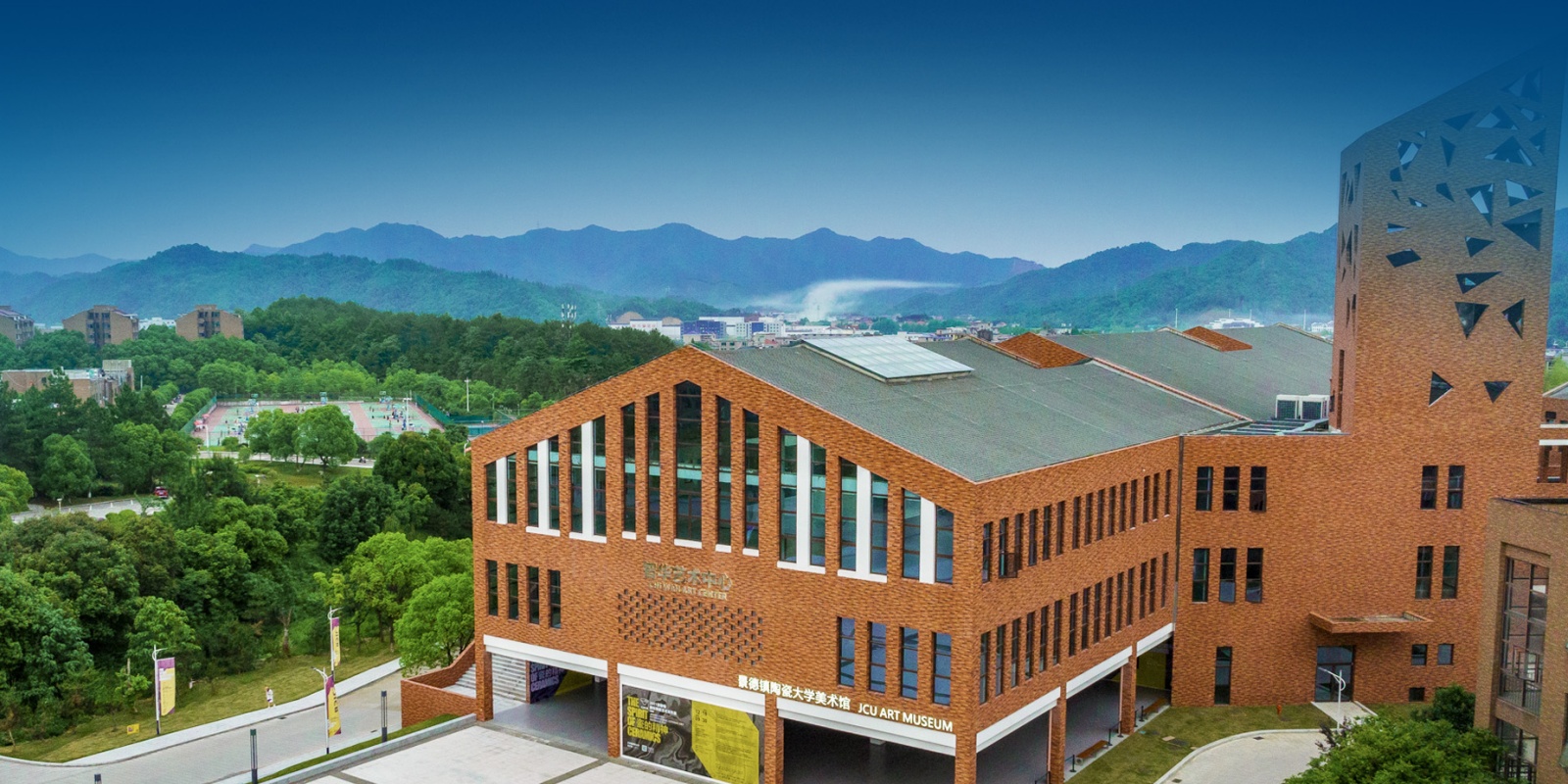
Jingdezhen Ceramic University is the only ceramics university in China, and the porcelain world calls it the ceramic academy of the country: it has trained more than 100,000 graduates who work in every major porcelain-producing region, and its alumni created brands such as Keda and Arrow that now sit on shelves across China. The school sits in Jingdezhen, the city long known as the center of Chinese ceramics.
Its roots go back to 1910, when the industrialist and educator Zhang Jian founded the China Ceramic Industry School, and in 1948 the school became the first ceramics college in the country. It grew into a full undergraduate institution in 1958, came under the national light industry ministry in 1975, gained master’s rights in 1984 and doctoral rights in 2013, and took its present name in 2016. Its campus covers 1,970 mu, some 131 hectares, in Jingdezhen.
Design and materials lead the curriculum: three first-level doctoral disciplines in design, materials science and the history of science and technology, 13 master’s programs and 53 undergraduate majors, 13 of them with national first-class status. Design studies have advanced into the country’s first tier, and materials science sits in the ESI global top 1 percent. Some 23,000 students are enrolled, including 2,600 postgraduates.
Research and teaching share one subject: clay, glaze and fire. The school runs a national ceramics engineering research center for daily-use and architectural ceramics, the first of its kind in Jiangxi, plus a national and local joint engineering center for ceramic new materials, among 30 national and provincial platforms, and it publishes the core journals China Ceramics and Journal of Ceramics. Its faculty of 1,000-plus includes 21 masters of Chinese arts and crafts and five recipients of the National Science Fund for Distinguished Young Scholars.
Ceramics are the school’s passport: its teachers and students have exhibited at the Louvre, at the United Nations headquarters and in Athens, it leads the Belt and Road international ceramics education alliance, and it won the right to host the 52nd International Ceramics Congress in 2026. Seven overseas ceramic culture centers carry the name Tang Ying, and the school cooperates with over 50 universities abroad, having trained 3,000-plus international students from nearly 60 countries.
No other university in the world is defined by ceramics the way this one is: design in the country’s first tier, graduates behind China’s major ceramic brands, and a body of work exhibited from the Louvre to the United Nations. The school that Zhang Jian started in 1910 has become what its founders intended, a place where the world’s oldest craft is taught with the newest methods.
Data Source: JCU Official Website (as of 2026)