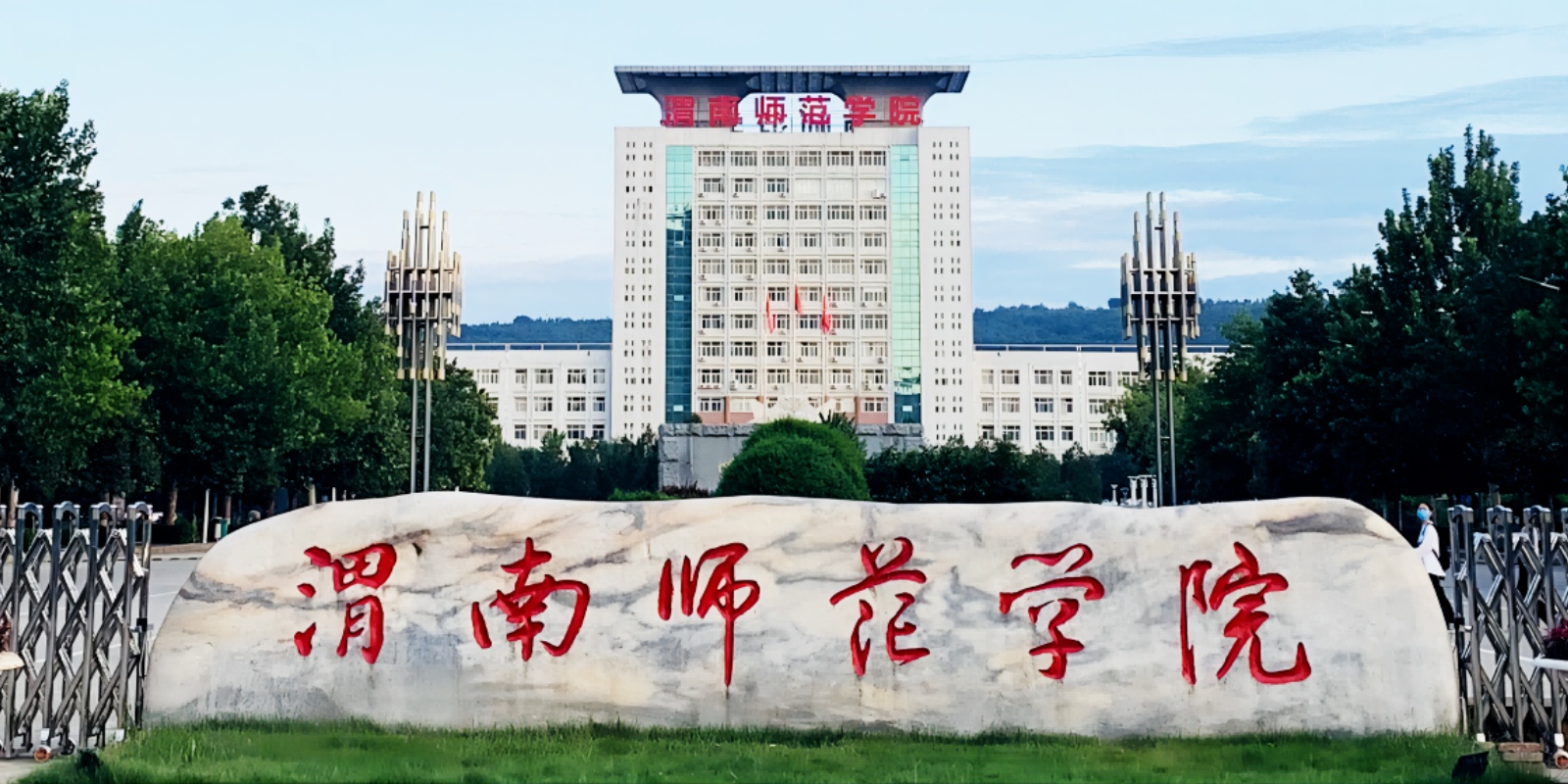
Weinan Normal University was founded twice. Approved in 1960 as a normal college, it was dissolved in 1963 during a period of economic austerity and reduced to a regional teacher training body; in 1978 it was reborn, first as a branch of Shaanxi Normal University and then as an independent teachers college. In 2000 that college merged with the Weinan Education Institute to form the university that carries the name today.
The school sits in Weinan, in the east of Shaanxi, across four campuses, Chaoyang, Fuping, Xiyue and Hanma. Fifteen schools offer 55 undergraduate programs spanning ten discipline categories, enrolling more than 18,000 full-time students, and the university has been listed as a planned master’s degree-granting institution, training postgraduates jointly with Shaanxi University of Technology and Yan’an University.
Teacher education remains the core: Weinan Normal University is the only university in Shaanxi selected for the Ministry of Education’s collaborative quality improvement plan for teacher education, and over six decades it has produced more than 100,000 graduates, among them national model teachers and winners of the national May Day labor medal.
The most distinctive corner of the university is the Moscow School of Arts, a Sino-foreign cooperative institution created with Moscow State Pedagogical University. Approved by the Ministry of Education and witnessed by the premiers of both countries, it anchors ties with 57 universities in 15 countries and regions, with over 1,200 students studying abroad and 300 international students on campus.
Research at the school looks homeward as well as outward. A provincial science park and a national innovation hub support student ventures, 16 provincial and ministerial research institutions carry the academic load, and the university journal’s column on Sima Qian and the Records of the Grand Historian has been named a model column by the Ministry of Education.
Dissolved once, rebuilt once and merged twice, the university now trains teachers, artists and researchers on the plain where the Qin and Han empires rose, still rooted in the classroom work it was founded to do.
Data Source: WNU Official Website (as of 2026)