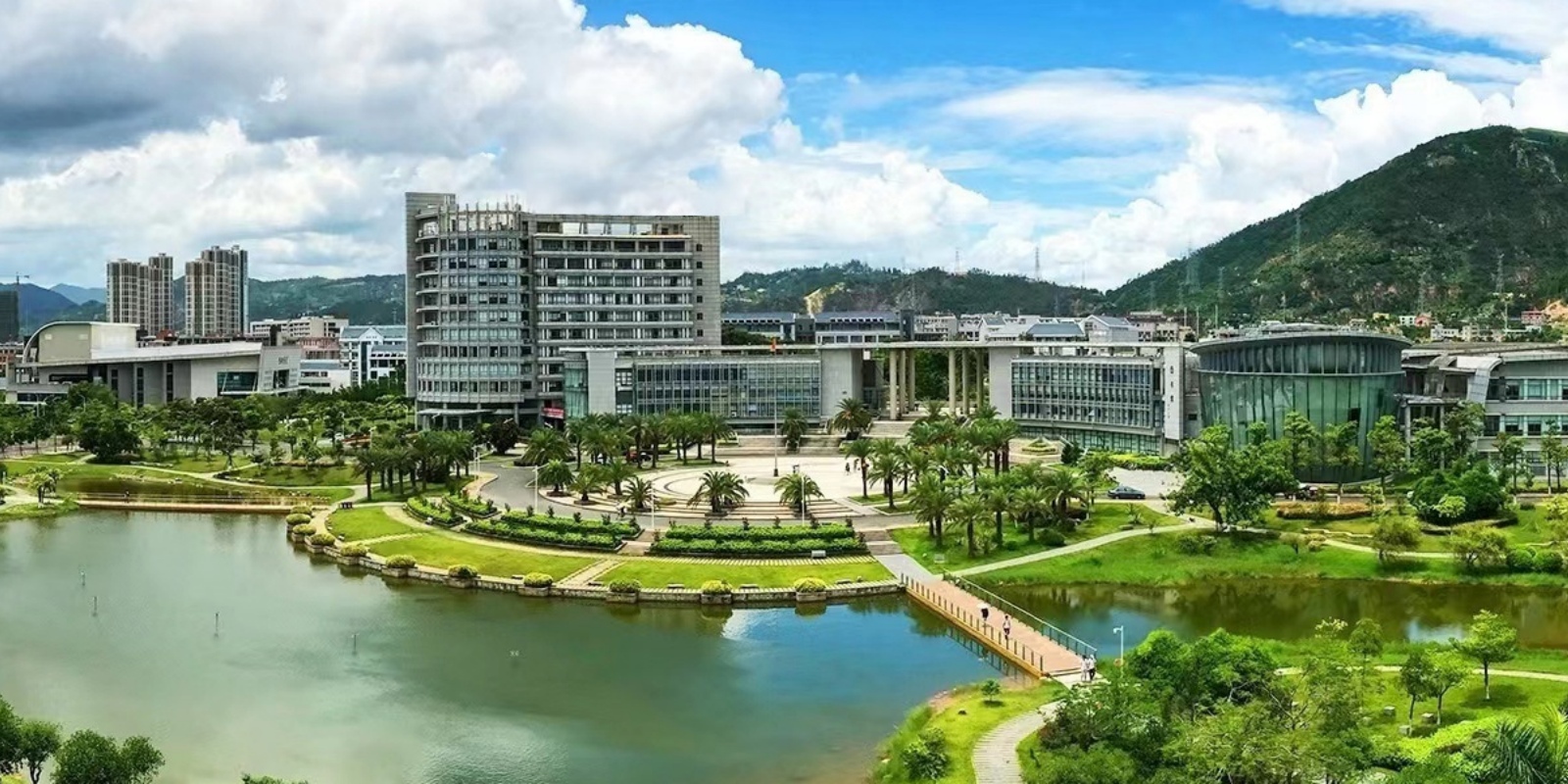
On October 15, 1981, the same day Xiamen’s special economic zone was born, a vocational college opened its doors in the same city. That school, Lujiang Vocational University, grew into Xiamen University of Technology, and its graduates have followed the zone’s own trajectory: more than 120,000 professionals have left the campus for the city’s factories, ports and trading houses since then.
After the Ministry of Education approved its upgrade to a university in 2004, the school grew into a provincial key university and a Class A application-oriented university of Fujian. Its campus covers about 1,800 mu, some 120 hectares, where 19 colleges teach 59 undergraduate programs to about 17,000 undergraduates and nearly 2,200 postgraduates. Faculty numbers 1,200-plus full-time teachers, 600-plus of them with senior titles, including 213 national and provincial high-level talents.
In research strength, engineering ranks in the ESI global top 0.5 percent and materials science in the top 1 percent. The university offers master’s degrees in 6 first-level disciplines and 13 professional categories, and joins Xiamen University, Fuzhou University and others in jointly training doctoral students.
Its application-oriented teaching is certified from every angle: eight programs have passed national engineering-education or housing-ministry review, 11 national first-class programs anchor the undergraduate list, and in 2023 the school became Fujian’s first pilot university for a new round of undergraduate teaching review. A second prize in the national teaching achievement awards rounds out the record.
Students win at a pace rare for a young university: five consecutive years at the top of the national academic-competition ranking for newly established undergraduate institutions, including 283 first prizes in Class A competitions in the past five years, and roughly 60 percent of graduates stay to work in Xiamen. The school runs 9 modern industry colleges with companies such as TPV and ABB, and has built Wenyao, China’s first large model for the shipping and marine-engineering industry, alongside a higher-education large model named Wenkui.
Research infrastructure includes 11 provincial key laboratories and centers among 60 research platforms. In five years the school has taken on 160-plus national and provincial major projects, earned 60-plus provincial and ministerial awards, and filed 1,000-plus invention patents, with research funding topping 600 million yuan.
Internationally, Xiamen University of Technology works with 100-plus universities in 30-plus countries, joined the Maritime Silk Road University Alliance as a founding member, and runs five joint research centers with partners including Malaysia’s Universiti Sains Malaysia and Britain’s Newcastle University. In Fujian-Taiwan cooperation it was among the first in the province to launch joint talent training programs, cooperative colleges and industry colleges with 30-plus universities and companies in Taiwan, earning provincial demonstration status for Fujian-Taiwan higher education integration. A school born on the first day of a special economic zone has spent four decades growing into one of that zone’s most reliable suppliers of engineers.
Data Source: XMUT Official Website (as of 2026)