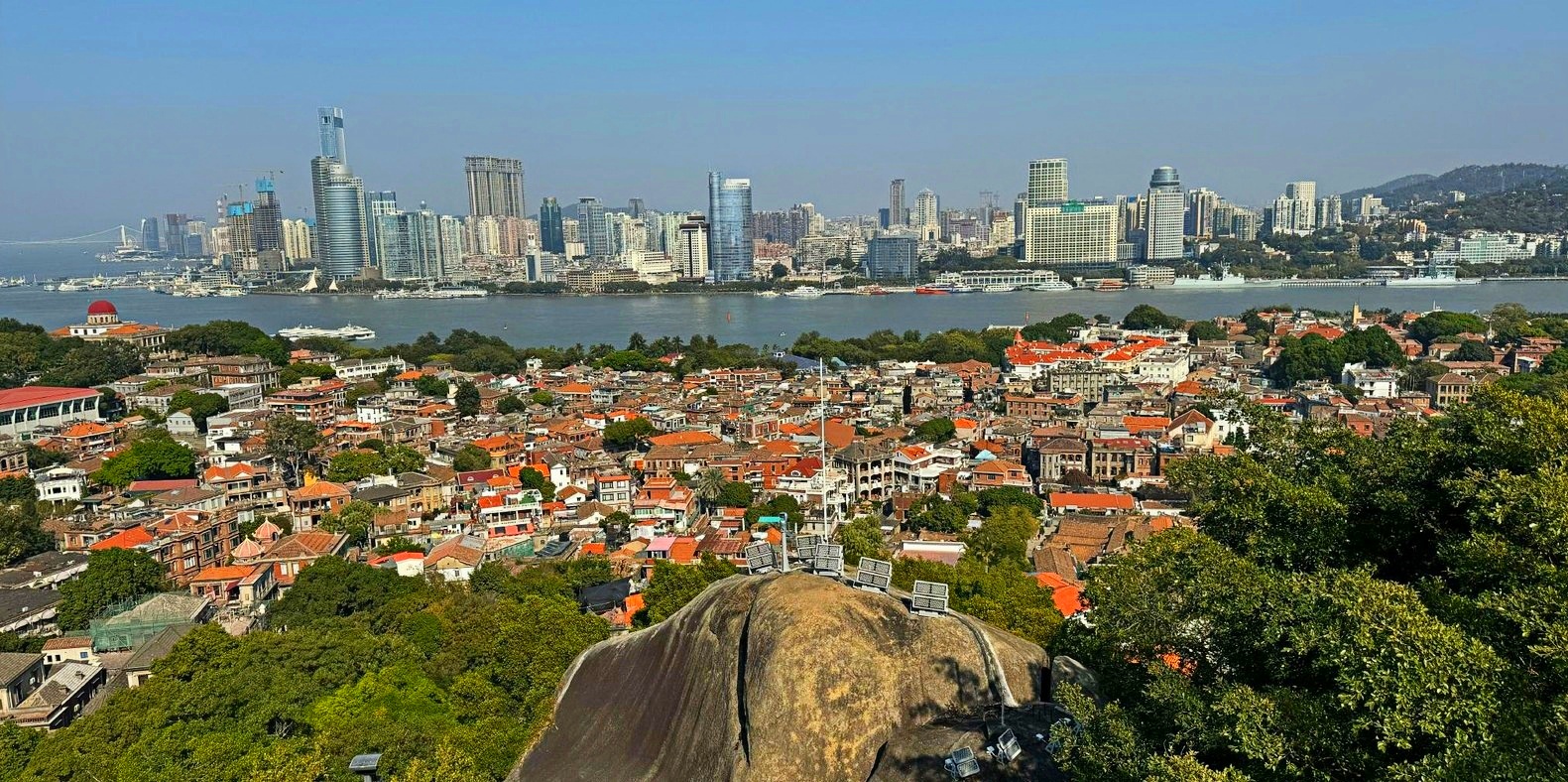
Kulangsu, known in Chinese as Gulangyu (鼓浪屿), is a tiny island of barely 1.88 square kilometers off the coast of Xiamen, Fujian Province, that holds an outsized place in China’s modern history. Inscribed on the UNESCO World Heritage List in July 2017 during the 41st UNESCO session in Krakow, Poland, Kulangsu stands as a living museum of cultural fusion — where Chinese traditions met Western influences and created something entirely new and beautiful.
🎵 The Island of Music: Where Piano Notes Drift on the Sea Breeze
Wander through the narrow, winding lanes of Kulangsu on any given evening, and you will hear the faint strains of piano music drifting from open windows. This is no coincidence — the island is known throughout China as “Piano Island” (钢琴之岛), boasting one of the highest densities of pianos per capita in the world. The Kulangsu Piano Museum, housed in a beautiful colonial-era building, contains over 100 historic pianos from around the world, including rare examples from the 19th and early 20th centuries.
The island’s musical tradition began with the foreign missionaries and residents who brought pianos to their island homes in the late 19th century. The local Chinese population eagerly embraced Western classical music, and by the early 20th century, Kulangsu had produced some of China’s finest musicians. The Organ Museum and the regular concerts held at the Kulangsu Concert Hall continue this glorious tradition to this day. This deep-rooted musical culture earned Kulangsu the affectionate nickname “Island of Music” (音乐之岛).
🏛️ An Architectural Tapestry of East and West
Kulangsu’s architectural heritage is breathtaking in its diversity and quality. The island contains over 1,000 historic buildings representing an extraordinary array of architectural styles — from Neoclassical mansions and Gothic churches to Vernacular Fujianese courtyard houses and Art Deco villas. This remarkable architectural tapestry reflects the meeting of Chinese, Southeast Asian, and European building traditions in a way found nowhere else.
After the Treaty of Nanjing (1842) opened Xiamen as a treaty port, Kulangsu became an enclave where 13 foreign nations established consulates. The island was formally designated the “Kulangsu International Settlement” in 1903, governed by a multinational council of foreign residents. While this colonial arrangement was certainly a product of its time, it created a unique environment where cultures mingled with unusual freedom, and the resulting architectural and cultural fusion is now recognized as a heritage of universal value.
🚶 The Only Car-Free Island in China
One of the most delightful aspects of visiting Kulangsu is that it is China’s only pedestrian-only island — motor vehicles are strictly prohibited, and even bicycles are rare. The only exceptions are small electric sightseeing carts and fire engines. This car-free status preserves the island’s peaceful atmosphere and allows visitors to experience its narrow lanes and quiet gardens as they were meant to be enjoyed: on foot, unhurried, absorbing every detail of the architectural and natural beauty that surrounds you.
The absence of traffic noise means that the sounds of the island — the rustle of banyan leaves, the crash of waves against the shore, the laughter of children, and, of course, the ever-present piano music — create a sensory experience that is increasingly rare in the modern world.
🌿 Gardens and Vistas: Where Nature Meets Architecture
Kulangsu is blessed with dramatic natural beauty. The island’s highest point, Sunlight Rock (日光岩), rises 94 meters above sea level and offers a spectacular 360-degree view of the island, the Xiamen skyline, and the sparkling Taiwan Strait. At the summit, you can trace the island’s entire history in a single glance: the red-tiled roofs of colonial mansions, the spires of Christian churches, the green canopies of ancient banyan trees, and the deep blue of the sea beyond.
The Shuzhuang Garden (菽庄花园) is a masterpiece of Chinese garden design that ingeniously incorporates the sea into its composition. Built in 1913 by a Taiwanese businessman, the garden uses hidden rocks, winding corridors, and the natural coastline to create the illusion of boundless space within a relatively small area. The garden’s “Forty-Four Bridges” pavilion extends out over the water, creating a breathtaking harmony between human artifice and natural beauty.
🌐 A Crucible of Cultures: The International Legacy
What makes Kulangsu truly unique is the depth and intimacy of its cultural fusion. On this small island, Chinese merchants, European diplomats, Southeast Asian traders, and American missionaries lived side by side for nearly a century. They attended each other’s festivals, exchanged culinary traditions, and built a mixed society that was remarkably harmonious for its time.
This cultural synthesis is visible everywhere: in the Yude Girls’ School, one of China’s first institutions for female education; in the island’s network of community parks and public squares, which were open to all residents regardless of nationality; and in the distinctive “Amoy Deco” architectural style that blends Art Deco motifs with traditional Fujianese decorative elements. The Kulangsu heritage site thus preserves not just buildings but a living record of a unique experiment in multicultural coexistence.
📜 UNESCO Recognition
Inscribed in July 2017 at the 41st session of the World Heritage Committee in Krakow, Poland, Kulangsu was recognized under criteria (ii) and (iv). UNESCO notes that “Kulangsu is an outstanding example of the cultural fusion that emerged from these exchanges, which is reflected in its architecture, urban fabric, and the pluralistic community that inhabited the settlement.”
The committee particularly emphasized the island’s role as a meeting place of different cultures and building traditions, creating a unique settlement landscape that illustrates the fusion of Chinese vernacular, Western classical, and Southeast Asian architectural styles during a formative period of globalization.
🏝️ Visitor Information: Getting to the “Piano Island”
Kulangsu is located just a 5-minute ferry ride from Xiamen, one of China’s most popular tourist destinations. Ferries operate regularly from several Xiamen piers, with the main route departing from the International Cruise Terminal (东渡邮轮码头). The ferry journey itself offers lovely views of the Xiamen coastline and the approaching island.
To preserve its unique character, the island has a daily visitor quota, especially during peak seasons and public holidays. It is advisable to book ferry tickets in advance through official channels. The best time to visit is spring (March–May) and autumn (September–November) when the weather is mild. Summer can be hot and crowded, while winter is cool but still pleasant for walking.
Plan to spend at least a full day exploring the island on foot. Overnight stays are possible if you wish to experience the magical atmosphere when day-trippers depart and the island returns to its peaceful, piano-filled nights — but hotel spaces are limited, so advance booking is essential.
💎 Summary
Kulangsu is more than a UNESCO World Heritage site — it is a living poem of cultural fusion, where East and West met in an intimate space of only 1.88 square kilometers and created something that neither could have made alone. Its pianos, its colonial architecture, its car-free lanes, and its breathtaking coastal vistas make it one of the most unique and unforgettable destinations in all of China.