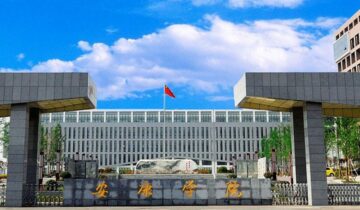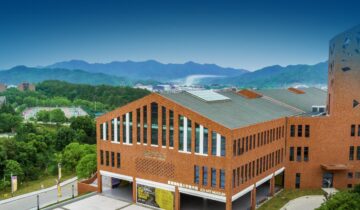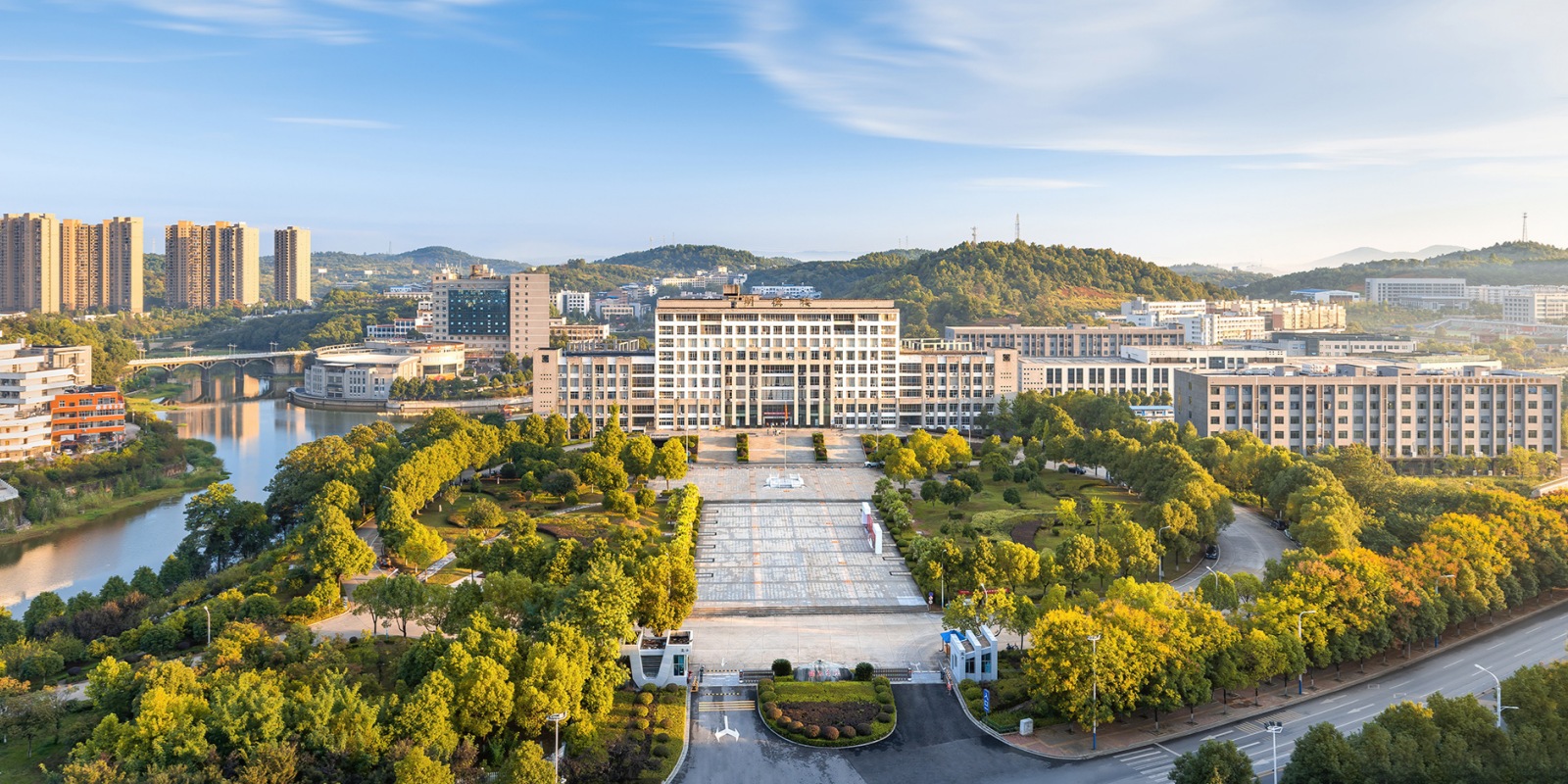
Shaoyang, in the hills of southwestern Hunan, was the home town of Wei Yuan, the 19th-century thinker credited as the first Chinese to open his eyes to the wider world, and the city’s university keeps his name on a research institute today. The city was also home to Cai E, an early-20th-century military leader, and to the historian Lü Zhenyu. Shaoyang University’s own story goes back further than its founding year of 1958: its medical programs trace to 1906, and the present school was assembled by mergers in 2002 and 2016.
In 2002 the Shaoyang Normal Junior College and the Shaoyang Junior College merged to create the university, and in 2016 the Shaoyang Medical Junior College joined it, completing a school that now teaches everything from engineering to medicine. It holds master’s rights through a national program for special-need talent training, in mechanical engineering and in biology and medicine, and was named a high-level applied college of Hunan in 2018.
Twenty-two colleges and schools offer 45 undergraduate programs across eleven fields, with 31 national and provincial first-class programs and two master’s training points. Some 27,625 full-time students study here, taught by 4,176 faculty members, 543 of them with doctorates, and the school’s two top-tier affiliated hospitals and seven teaching hospitals anchor the medical side.
Research mixes engineering with the region’s industries: industry colleges for eco-brewing and soybean products sit beside 39 provincial platforms, including a shared national field observation station for energy equipment safety on the Xuefeng mountains. Eight research institutes carry local names and causes, from a Wei Yuan institute to one for Laos, and the school has led 1,209 research projects in five years, with student teams winning international design and modeling prizes along the way.
Cooperation reaches universities in Britain, the United States and Laos, backed by two ministry-approved Sino-foreign programs and students from more than ten countries. Its 260,000 alumni include Xia Ningzhao, an academician of the Chinese Academy of Engineering, and the university’s employment record has kept it on national lists of exemplary graduate-work universities.
Like its city, the university grew by combining things: normal and technical, medical and industrial, local and Lao. A medical school of 1906 and a college of 1958 have become a merged university of 27,000 students, and in a place that once taught China to look outward, the school now teaches its own students to look both ways, at home and abroad.
Data Source: Shaoyang University Official Website (as of 2026)