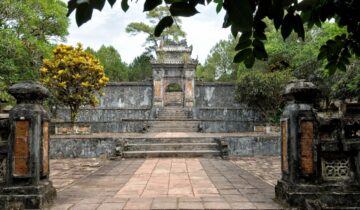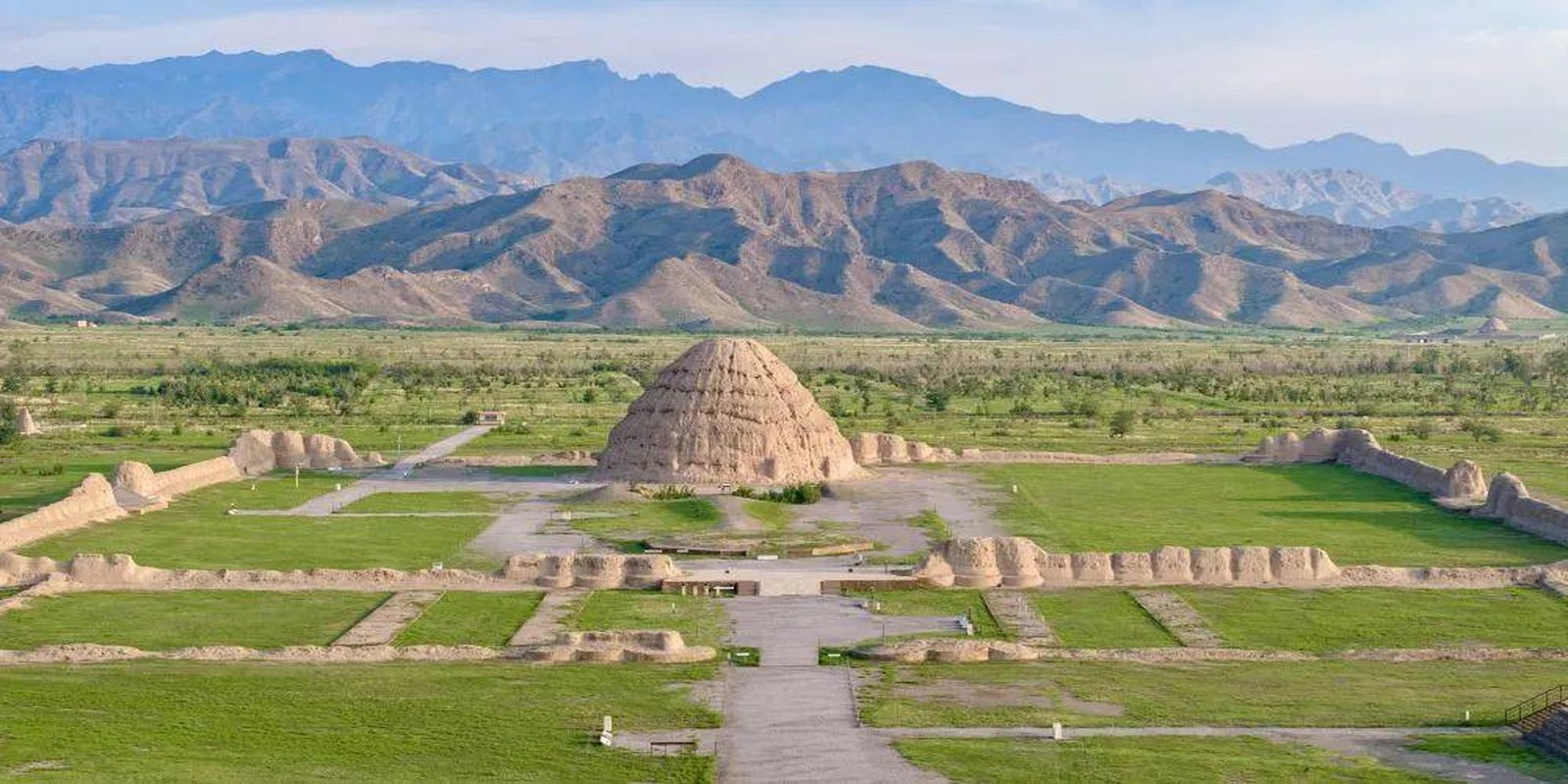
The Western Xia Imperial Tombs, often called the “Oriental Pyramids,” form one of the most extraordinary imperial necropolises in Chinese history. Located at the eastern foot of the Helan Mountains, approximately 30 kilometers west of Yinchuan, Ningxia Hui Autonomous Region, this sprawling complex of mausoleums bears silent witness to the once-mighty Tangut Empire — a sophisticated civilization that flourished for nearly two centuries before vanishing into the sands of history.
🏛️ A Lost Empire: The Rise and Fall of Western Xia
The Western Xia dynasty (1038–1227), known to its people as the Great Xia or the Tangut Empire, was founded by Emperor Li Yuanhao (also known as Jingzong) of the Tuoba clan. At its peak, the empire controlled vast territories spanning what is now Ningxia, Gansu, eastern Qinghai, northern Shaanxi, and parts of Inner Mongolia — a strategic region along the Silk Road that brought immense wealth and cultural exchange.
The Tanguts developed their own unique Tangut script, a logographic writing system of over 6,000 characters that ranks among the most complex ever devised. They embraced Tibetan Buddhism while preserving their own shamanistic traditions, creating a distinctive cultural synthesis. In 1227, the Mongol armies of Genghis Khan annihilated the Western Xia with such thoroughness that much of its history and language was lost for centuries. The imperial tombs remained as one of the few physical testaments to this lost civilization.
📍 The Tombs: Layout and Architecture
Covering a vast area of 58 square kilometers, with a core zone of 20.9 square kilometers, the necropolis contains nine imperial mausoleums and more than 250 satellite tombs for nobles, generals, and royal relatives. Each imperial tomb forms an independent architectural complex oriented north-south, laid out in a rectangular pattern comparable in scale to the Ming Tombs near Beijing.
The most remarkable feature is the qoito-shaped mounds — truncated pyramid-like structures built of rammed earth that rise dramatically from the Gobi desert floor. These distinctive mounds, unique in Chinese imperial tomb architecture, gave rise to the “Oriental Pyramids” nickname. The largest surviving mound reaches approximately 20 meters in height and once supported an elaborate wooden palace hall above the underground burial chamber.
Each mausoleum complex originally included inner and outer city walls, corner towers, gate towers, sacrificial halls, and spirit ways lined with stone statues of civil and military officials, foreign envoys, and mythical beasts — following Tang dynasty tradition while incorporating distinct Tangut and Buddhist elements. The architectural design draws from Han Chinese, Tibetan Buddhist, and indigenous Tangut traditions, creating a style found nowhere else in China.
🔬 Archaeological Discoveries
Systematic archaeological work began in the 1970s and has continued for over five decades. Excavations have revealed a wealth of artifacts including gilded bronze oxen, life-sized stone horsemen, exquisite lacquerware, Tangut-inscribed stone tablets, Buddhist silk paintings, and ceramic figurines of remarkable craftsmanship. In 2023, archaeologists unearthed a large-scale colorful mural in Mausoleum No. 7 depicting Tangut Buddhist rituals, offering new insights into the empire’s religious practices.
The site has been recognized as one of China’s 100 Greatest Archaeological Discoveries of the 20th Century and was designated a National Cultural Relic Protection Unit in 1988. In 2011, the site launched its National Archaeological Park and World Heritage application, and in 2012 it was formally added to China’s tentative list for UNESCO World Heritage nomination.
🏛️ Visiting the Tombs Today
The site is open as the Western Xia Imperial Tombs Scenic Area, a National AAAA-level tourist attraction. Visitors can explore the Western Xia Museum, which houses over 10,000 artifacts including Tangut manuscripts, weapons, jewelry, and architectural components. The museum’s centerpiece is a restored life-size replica of an imperial tomb chamber with original artifacts on display.
The No. 3 Mausoleum, widely believed to be the tomb of Emperor Li Yuanhao, is the best-preserved and most extensively excavated. Its towering rammed-earth pyramid, rising against the dramatic backdrop of the Helan Mountains, remains the iconic image of the site. An on-site archaeological preservation hall allows visitors to view ongoing excavations up close.
The best time to visit is spring (April–May) and autumn (September–October) when temperatures are pleasant. The site is approximately a 40-minute drive from downtown Yinchuan and easily accessible by taxi or tour bus.
💡 Visitor Tips
Plan at least three to four hours to explore the museum and main tomb sites. Comfortable walking shoes are essential, as the necropolis is vast. Sun protection and water are highly recommended, especially in summer when temperatures can exceed 35°C (95°F). Electric sightseeing carts are available for those who prefer not to walk the entire distance. Photography is permitted throughout, and the sunset views of the pyramid tombs against the Helan Mountains are truly spectacular.