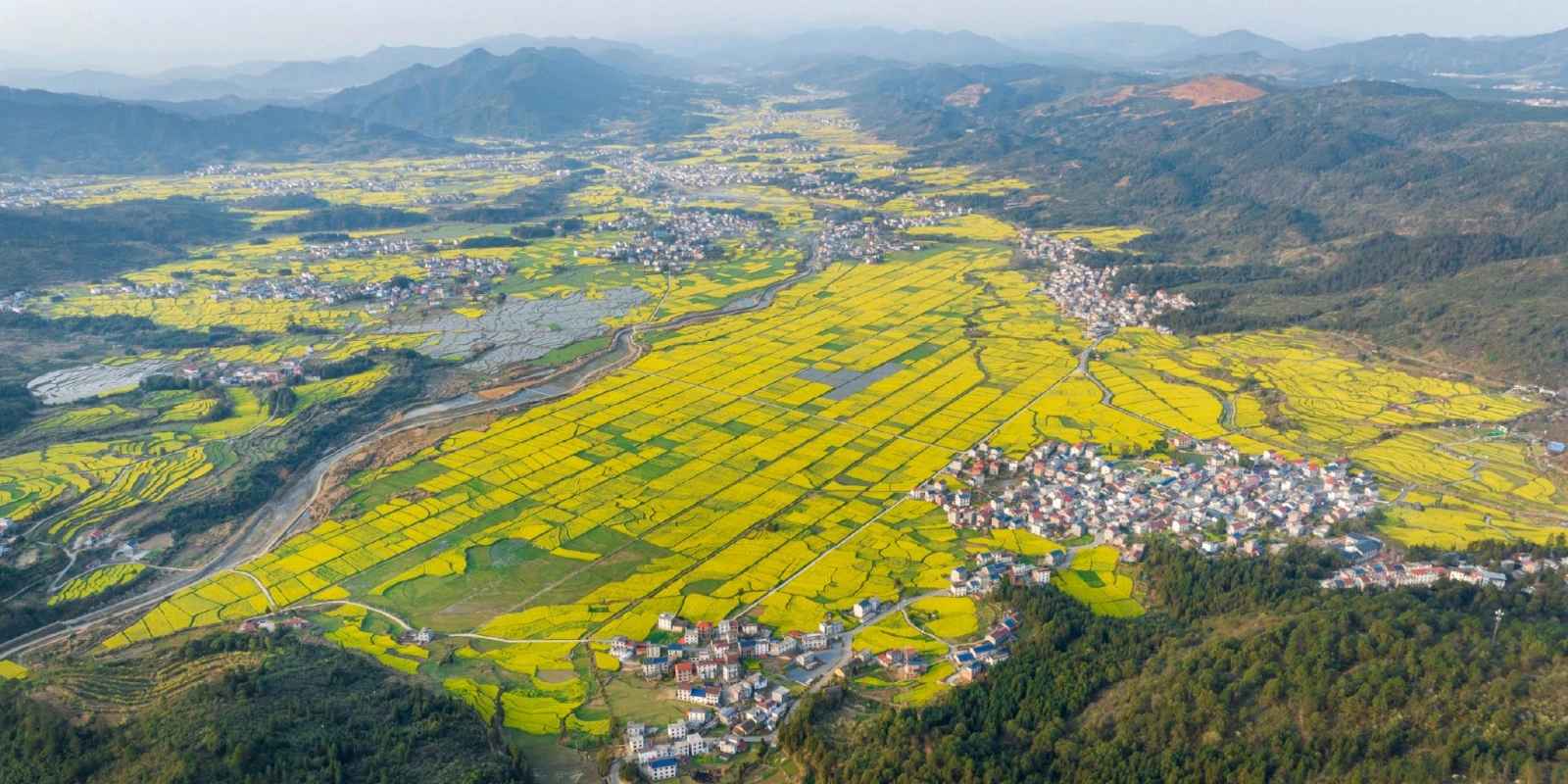
China’s only administrative county named after a flower, Lianhua County lies in western Jiangxi Province under Pingxiang City, nestled in the Luoxiao Mountains at the northern foot of the Jinggang range. Covering 1,072 square kilometers, it is the largest county in Pingxiang City. As of 2024, the total population was 271,000, with 211,300 permanent residents across 13 townships and 157 villages. Lianhua was established as Guangxing County in 280 AD during the Jin dynasty and was renamed Lianhua County in 1912. It is recognized as “China’s Lotus Hometown,” a National Ecological Civilization Demonstration County, a National Sanitary County, and a Chinese Couplet Culture County.
🔬 Featured Industries
- Special Materials and Machinery: Lianhua is a provincial-level military support industrial base. Its “1+2+N” industrial system centers on three pillar sectors: compressors, new materials, and electronic information. The county has 77 regulated industrial enterprises with a combined output of 6.42 billion yuan (up 19.4 percent as of 2022). Key enterprises include Baohai Weiyuan (national IP advantage enterprise), Dadi Pharmaceutical, and Haotai Metallurgy. Six companies are listed in the provincial key IPO reserve.
- Agricultural Processing: The county produced 135,000 tonnes of grain and is a provincial hybrid rice seed breeding base. It is a Class A selenium-rich functional agricultural county. Shenglong Beef was listed as a national key agricultural leading enterprise and was named among Jiangxi’s top ten emerging consumer brands. National famous agricultural products include Lianhua hemp duck, Lianhua rice, Lianhua beef, and Lianhua white goose (national geographical indication).
- Lotus-Based Industry: As “China’s Lotus Hometown,” Lianhua cultivates ornamental lotus, seed lotus, and lotus root across thousands of hectares. Processed products include lotus seed paste, lotus root starch, and dried lotus seeds. The county hosts a national leisure agriculture and rural tourism demonstration zone.
🗺 Tourist Attractions
- Lotus Expo Garden: A 4A-level national tourist attraction covering extensive lotus fields with dozens of varieties planted across terraced ponds. It features viewing platforms, boardwalk trails, an agriculture museum, and lotus-themed dining. The annual Lotus Cultural Festival is held here during summer.
- Lianjiang Wetland Park: A riverside park along the Lianjiang River with boardwalks, bird-watching towers, and cycling paths. It is part of the county’s greenway system and a popular spot for local recreation.
- Yiyu Mountain Scenic Area: A provincial-level scenic area with forested slopes, hiking trails, and panoramic views of the county. It is one of Lianhua’s best natural lookout points.
- Gaozhou Rape Flower Sea: A seasonal hillside attraction covered in blooming rapeseed flowers from February to April. It draws photographers and day-trippers each spring.
- Liushi Rural Scenic Area: A village tourism destination with farm stays, peach orchards, and hiking trails. It was named a Jiangxi summer resort destination. Key spots include Haitao Peach Garden and Tianxin Lily Valley.
🎭 Culture
- One Gun Legacy: The “Lianhua One Gun” story tells how local revolutionaries preserved a single rifle during the White Terror, symbolizing the county’s revolutionary spirit. Lianhua produced 13 founding generals in 1955, ranking 14th among all counties in China. General Gan Zuchang is famous for giving up his military post to become a farmer in his hometown.
- Gong Quanzhen: Known as the “Old Auntie,” Gong was the wife of General Gan Zuchang and a respected educator. She dedicated her life to rural education and community service. She was named a National Moral Model and a Touching China figure.
- Revolutionary History: Lianhua was a key part of the Jinggangshan Revolutionary Base and the Hunan-Jiangxi Soviet Area. Mao Zedong made the decision to march to Jinggangshan while in Lianhua. The county has 3,486 registered revolutionary martyrs.
- Local Arts: Lianhua has a strong tradition of Caicha Opera (tea-picking opera) and couplet culture, recognized as a national Chinese Couplet Culture County. The county also hosts Liushi folk songs and Lantern Festival performances.
🚗 Getting There
- Road: Lianhua is connected by the Quannan and Pinglian expressways, plus national highways G319 and G322. It has been named a national “Four Good Rural Roads” model county with 1,967 kilometers of paved roads.
- Rail: The county currently has no high-speed rail station. The Changgan High-Speed Railway has a Lianhua East Station under construction, which will end the county’s history of no rail service once completed.
- Air: Changsha Huanghua International Airport is about 2.5 hours away by car. Pingxiang city center is about 1 hour away.
🍜 Local Cuisine
- Lianhua Blood Duck: A signature dish made by stir-frying duck meat with duck blood and chili. It has a dark reddish color and a rich, savory flavor. It is one of the county’s four calling cards.
- Lianhua White Goose: A state geographical indication product. The goose is raised free-range in the county’s mountainous areas and is known for tender meat.
- Lianhua Sugarcane: A local variety with thin peel and high sugar content. It is grown in several townships and sold fresh during harvest.
- Lianhua Old Rice Wine: A traditional fermented wine made from local glutinous rice. It has a sweet aroma and moderate alcohol content.