The Archaeological Ruins of Liangzhu City, located in Yuhang District, Hangzhou, Zhejiang Province, represent one of the most significant Neolithic archaeological discoveries of the 20th century. Dating from approximately 3,300 to 2,300 BCE, this early regional state in the Yangtze River Delta was built on a rice-cultivating economy and sustained a unified belief system expressed through elaborate jade ritual objects. Inscribed as a UNESCO World Heritage site in 2019 under criteria (iii) and (iv), the site spans 1,433.66 hectares with a 9,980.29-hectare buffer zone.
🏛️ A Four-Tier Urban Plan
Ruins of Liangzhu City follows a concentric four-tier structure: the palace area at the center (39 hectares), the inner city (approximately 280 hectares), the outer city (around 351 hectares), and an extensive water conservancy system on the periphery. Discovered in 2007, this carefully planned capital features earthen walls, advanced drainage, and clearly demarcated functional zones that reveal a highly organized society with sophisticated urban planning capabilities for its time. The site comprises four component areas: the City Site, the Yaoshan Site, the High-dam at the Mouth of the Valley, and the Low-dam on the Plain.
💧 The Earliest Water Conservancy System
Discovered and confirmed in 2015, Liangzhu’s peripheral water conservancy system is the earliest known large-scale water management system in China, pushing the history of Chinese hydraulic engineering back by over a millennium. Located northwest of the ancient city, the system formed a reservoir covering approximately 13 square kilometers with a storage capacity of over 46 million cubic meters. Built with well-preserved bundled grass and clay blocks, the dams served multiple functions: water storage, flood control, irrigation for rice paddies, and transportation via canals. This sophisticated system predates similar projects in ancient Egypt and Mesopotamia.
💎 Jade Culture and Social Hierarchy
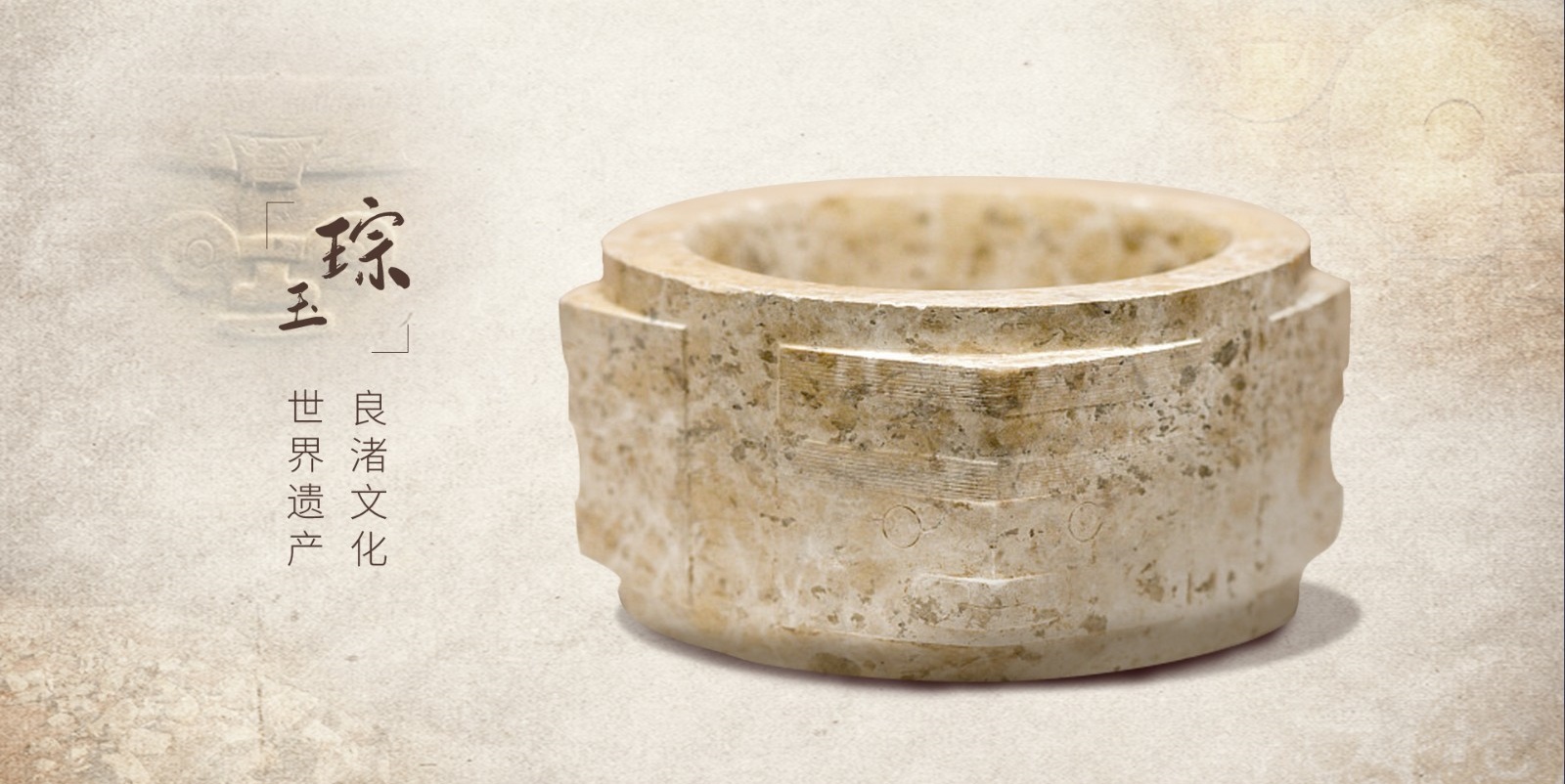
Liangzhu is renowned as the pinnacle of prehistoric jade culture in China. The jade assemblage includes a complete ritual system represented by cong (cylindrical tubes), bi (flat disks), and yue (ceremonial axes), many bearing the iconic “divine man and beast face” pattern — known as the Divine Emblem. Excavations at Fanshan, Yaoshan, and other cemeteries yielded over 1,200 precious artifacts in a single site, revealing distinct class divisions: elite tombs filled with jade contrasted sharply with modest burials of commoners. Yaoshan’s altar-and-tomb complex, dating to about 5,300 years ago, is the first such structure discovered in Liangzhu culture and testifies to the fusion of spiritual authority with political power.
📍 Visiting the Liangzhu National Archaeological Site Park
Located in Yuhang District, approximately 30 minutes from Hangzhou city center, the Liangzhu National Archaeological Site Park offers an immersive experience of the ancient capital. The park is accessible by metro and bus, and the adjacent Liangzhu Museum houses an extensive collection of excavated jade, pottery, and stone artifacts. The best time to visit is spring (March–May) and autumn (September–November). For up-to-date opening hours and admission policies, check the official website at lzsite.cn. Allow at least half a day to explore the museum and the main archaeological areas.
Data Source: UNESCO World Heritage Centre