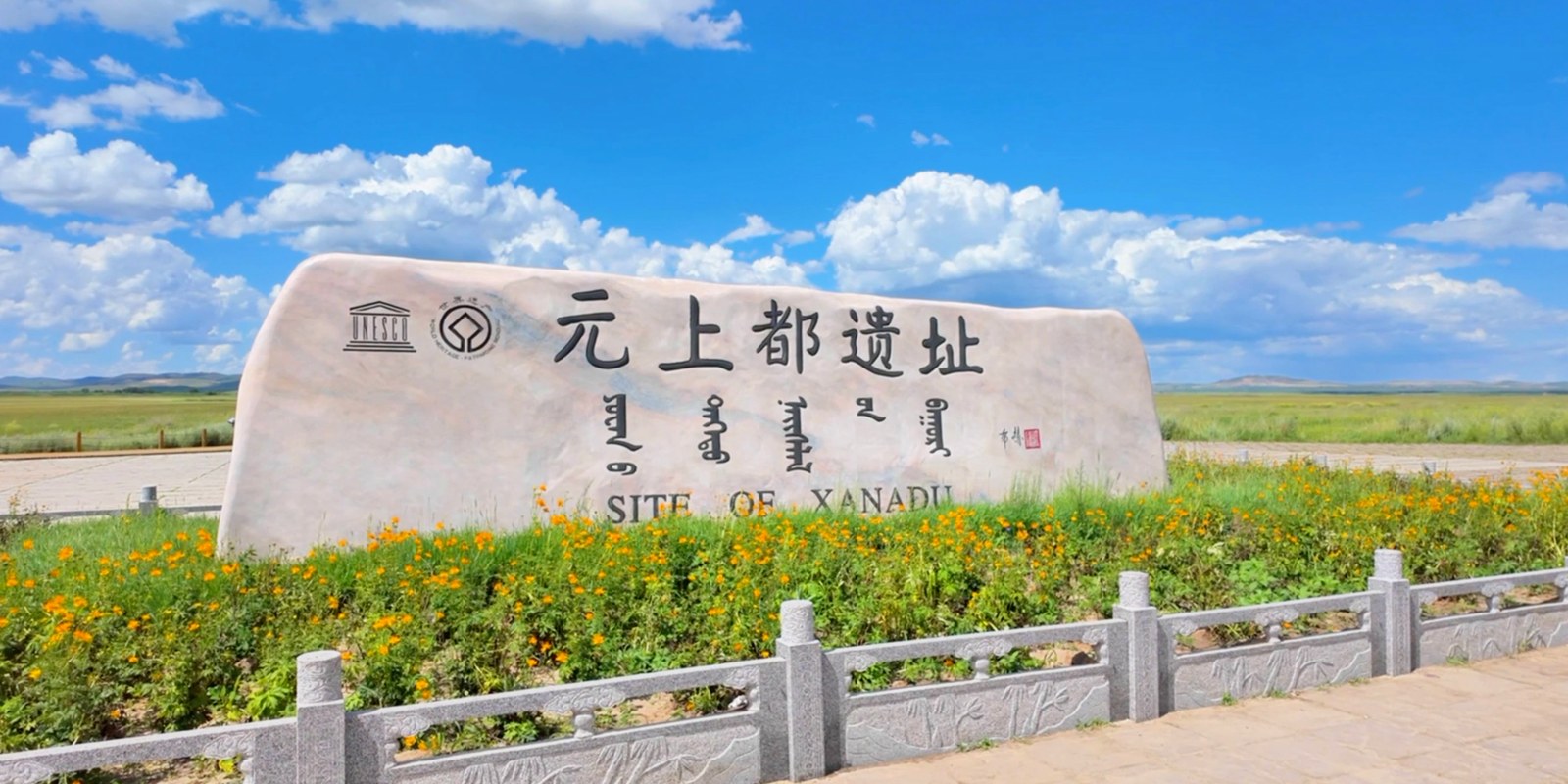
The Site of Xanadu (Shangdu), inscribed as a UNESCO World Heritage site in 2012 on the vast grasslands of Inner Mongolia (42°21’N, 116°10’E), holds a unique place in the global imagination. Known to the English-speaking world through Samuel Taylor Coleridge’s visionary poem “Kubla Khan” — “In Xanadu did Kubla Khan / A stately pleasure-dome decree” — this was the summer capital of Kublai Khan, the Mongol emperor who ruled the largest contiguous land empire in human history. Here, on the windswept steppes of Zhenglan Banner, East met West, nomadic tradition met Chinese imperial civilization, and a city of legend was born.
🏰 The City That Inspired a Poem
When the Venetian merchant Marco Polo visited Xanadu (as Shangdu was known in the West) in 1275, he encountered a city unlike any he had ever seen — a blend of Chinese palace architecture and Mongol nomadic traditions, complete with a park of rare animals, a forest planted on moving carts, and a palace built of bamboo that could be disassembled and moved with the seasons. Polo’s vivid descriptions found their way into his “Travels,” which in turn inspired Coleridge’s opium-fueled dream of “Kubla Khan” in 1797. The poem, with its “sacred river” and “sunny pleasure-dome with caves of ice,” transformed the historical city of Shangdu into a mythical Xanadu — a byword for earthly paradise and lost splendor.
🌾 The Summer Capital of the Mongol Empire
Strategically located on the boundary between the agricultural south and the pastoral north, Shangdu (上都) — meaning “Upper Capital” — was Kublai Khan’s summer retreat from the heat and Confucian formality of his winter capital, Dadu (modern Beijing). From June to August each year, the Mongol court relocated here, bringing with it thousands of officials, soldiers, merchants, and craftsmen. The city became a meeting point for the diverse peoples of the Mongol Empire — Chinese scholars, Persian astronomers, Tibetan lamas, European merchants, Central Asian warriors — all converging on the edge of the grasslands to attend the imperial court. For a few weeks each summer, Shangdu was the center of the known world.
🏛️ A City of Three Circles
The archaeological remains of Shangdu reveal a city planned in three concentric zones. The outer city (外城), a rectangle measuring 2,200 by 800 meters, contained the residential and commercial quarters. The inner city (内城), enclosed by a rammed-earth wall, housed government offices and the residences of the imperial clan. At the heart lay the palace city (宫城), a square enclosure where Kublai Khan’s audience halls and living quarters once stood. The excavated foundations reveal a fusion of Chinese axial planning with Mongol preferences for large, open spaces suitable for nomadic gatherings. A channel of the Luan River was diverted to supply the city’s moats and gardens, and remnants of the imperial bamboo groves can still be traced in the surrounding landscape.
🌸 Xanadu in Bloom: The Grassland Capital
What makes the Site of Xanadu unlike any other ancient capital in China is its setting. The city was built not among mountains or on a river delta, but on the open steppe, surrounded by the golden grasslands of the Xilingol region. In summer, when the wildflowers bloom and the grass reaches waist height, the landscape surrounding the ruins is breathtaking — a sea of green and gold stretching to the horizon under immense blue skies. Kublai Khan chose this location deliberately, wanting a capital that honored his Mongol identity while also embracing the civilized grandeur of the Chinese tradition he had conquered.
📜 The Fall and Ruin of a Mythic City
Shangdu’s glory was relatively brief. After the fall of the Yuan dynasty (1271–1368), the city was abandoned and gradually fell into ruin. By the 15th century, it had been largely dismantled, its stones carried away for other construction projects. The grasslands reclaimed the site, and for centuries, Xanadu existed only in the pages of Polo’s book and Coleridge’s poem. Archaeological excavations since the 1990s have uncovered the city’s foundations, revealing the outlines of its streets, palaces, and markets. Today, a small museum at the entrance to the site displays artifacts recovered from the excavations — porcelain fragments, bronze coins, and stone carvings that once adorned the halls of the Great Khan.
🧭 Walking Through a Poem
The Site of Xanadu today is a place of haunting beauty. Visitors walk along ancient stone-paved roads where Mongol horsemen once rode, past the grassy mounds that mark the foundations of temples and palaces, and out onto the open steppe where the wind carries the scent of wild sage and thyme. The best time to visit is between June and August, when the grasslands are green and the wildflowers are in bloom. From Beijing, the site is approximately a 5-hour drive north, passing through the dramatic landscapes of the Great Wall and the Bashang grasslands. Standing among the ruins, with the endless sky above and the whispering grass at one’s feet, it is easy to understand why Coleridge dreamed of Xanadu.